
A screenshot or flow map of the current decision interface.
Teaching Kit
Product Choice-Architecture Audit
A product and UX kit for testing whether defaults, decoys, metrics, and automation are helping users choose or quietly manufacturing preference.
60-90 minutes
Biases In Product And UX
6 biases
Audience
Product managers, designers, researchers, founders, growth teams, and policy designers.
Objectives
- Make the choice architecture visible as part of the decision environment.
- Test whether user preference survives without defaults, decoys, anchors, or proxy metrics.
- Turn ethical UX concerns into concrete redesign experiments.
Materials
Prep these before using the kit live.
A cue inventory: default, order, price anchor, recommendation, metric, friction.
One alternate version that removes or neutralizes the strongest cue.
Agenda
A suggested run of show. Adjust timing to fit the group.
0-15 min
Name the user's actual decision and list every cue that makes one option easier or safer.
15-35 min
Compare the current flow against default effect, framing effect, anchoring, decoy effect, automation bias, and surrogation.
35-60 min
Design a cleaner test that removes one steering cue and preserves the user's real task.
60-75 min
Choose the smallest experiment that would tell whether preference survives the cleaner frame.
Worksheet prompts
- What is the user deciding, not merely clicking?
- Which cue would be most embarrassing if we had to defend it as a recommendation?
- What would the choice look like if no option were preselected, anchored, or boosted?
Facilitator notes
- Distinguish persuasion from evidence; conversion lift is not automatically user benefit.
- Treat the current default as one contestant, not as neutral ground.
- End with a testable redesign, not just a critique.
Linked study tools
These are the supporting pieces to open before or after the live activity.
Biases In Product And UX
A hub for product decisions, interfaces, pricing, defaults, metrics, and AI-assisted workflows where choice architecture can quietly manufacture preference.
12 biases
3 paths
3 AI prompts
Is the interface helping users express a preference, or shaping the preference before they notice?
Product managers, designers, researchers, founders, growth teams, policy designers, and anyone building decision environments.
Comparison Traps And Choice Architecture
A path for the biases that reshape preference by changing the frame, the menu, the proxy, or the amount of visible motion in the decision process.
7 biases
Teaching And Team Use
55 min
What in the frame or comparison structure is deciding the choice before the merits are cleanly weighed?
Best for product design, pricing, purchasing, strategy, and anyone building or choosing among options.
Loss, Ownership, And Omission
A decision path for the biases that make change feel costly, surrender feel painful, and inaction feel cleaner than it is.
7 biases
Applied
45 min
How do defaults, ownership, and downside language quietly decide the choice before the merits are weighed?
Best for managers, household decisions, policy tradeoffs, pricing, and resource allocation.
Before You Let The Menu Decide
A choice-architecture check for decisions that may be getting bent by the comparison set, the proxy being used, or the pressure to act visibly.
Applied
Before a framed comparison
4 min
Question: Am I choosing the best option, or the option the current frame is making easiest to endorse?
- Rewrite the target question so the real decision criterion is explicit.
- Compare the core options pairwise without the decoy, preselection, or prestige cue if possible.
- Ask whether action is being preferred because it is action rather than because it is fit.
- Check what your judgment would be before the system recommendation or crowd signal is shown.
Before You Treat The Default As Neutral
A choice-architecture check for the moments when the preselected option starts feeling invisible, safe, or morally cleaner.
Applied
Before accepting the current path
3 min
Question: Is the default genuinely best, or just easiest to leave in place?
- Rewrite the default as one explicit option on the list.
- Name the friction or emotional cost attached to changing it.
- Compare the cost of acting with the cost of preserving the current path.
- Ask what you would choose if no option had been preselected.
Default Effect vs Status Quo Bias
The default effect is a choice-architecture pull toward the preselected option; status quo bias is a broader preference for leaving things as they are.
Quick rule: Ask whether people are staying because the option was preselected or because change itself feels costly, risky, or abnormal.
Anchoring Effect vs Framing Effect
Anchoring pulls judgment toward a starting value; framing changes judgment by changing how the same substance is described.
Quick rule: Ask whether the distortion is caused by a starting point or by a presentation shift.
Loss Aversion vs Sunk Cost Effect
Loss aversion overweights losses relative to gains; the sunk cost effect keeps investment going because prior costs feel like they must be redeemed.
Quick rule: Ask whether the pain comes from possible future loss or from refusing to accept an unrecoverable past cost.
Bias pages in this kit
Use these entries as the reference layer after the activity surfaces the problem.
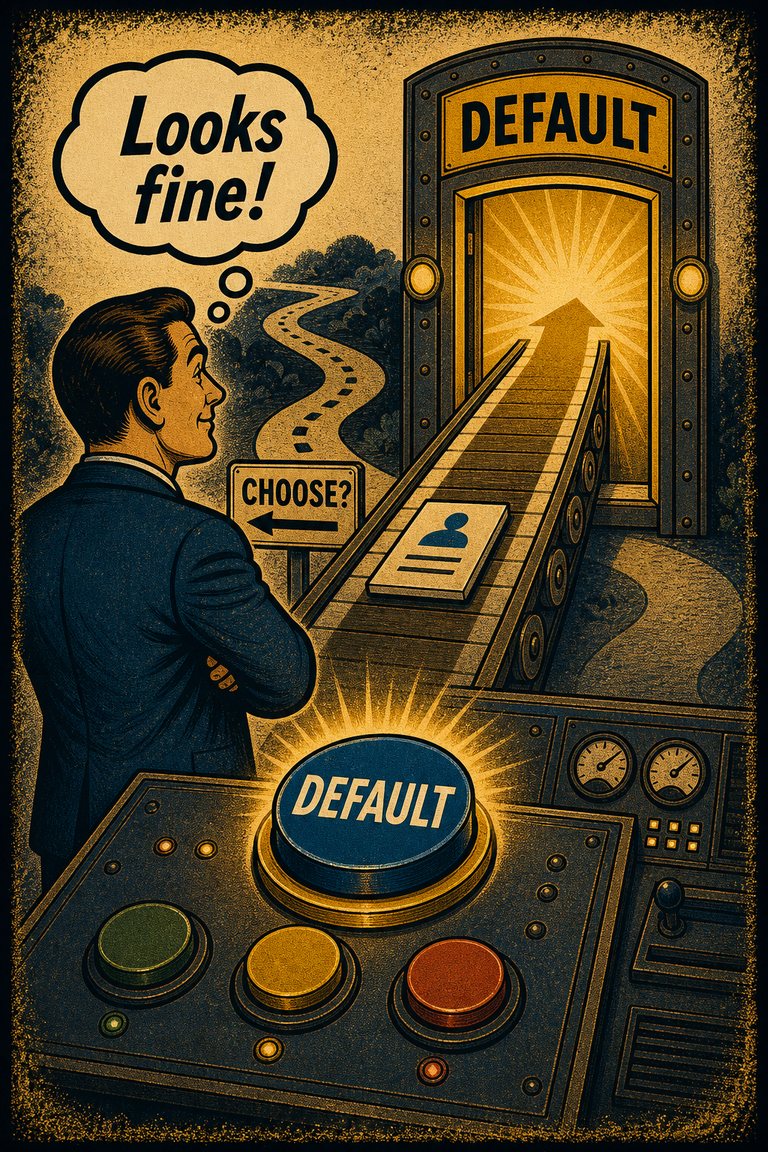
Default effect
The tendency to favor the preselected or default option simply because it is already positioned as the path of least resistance.
DecisionAssociationChoice architecturePersonal decisions
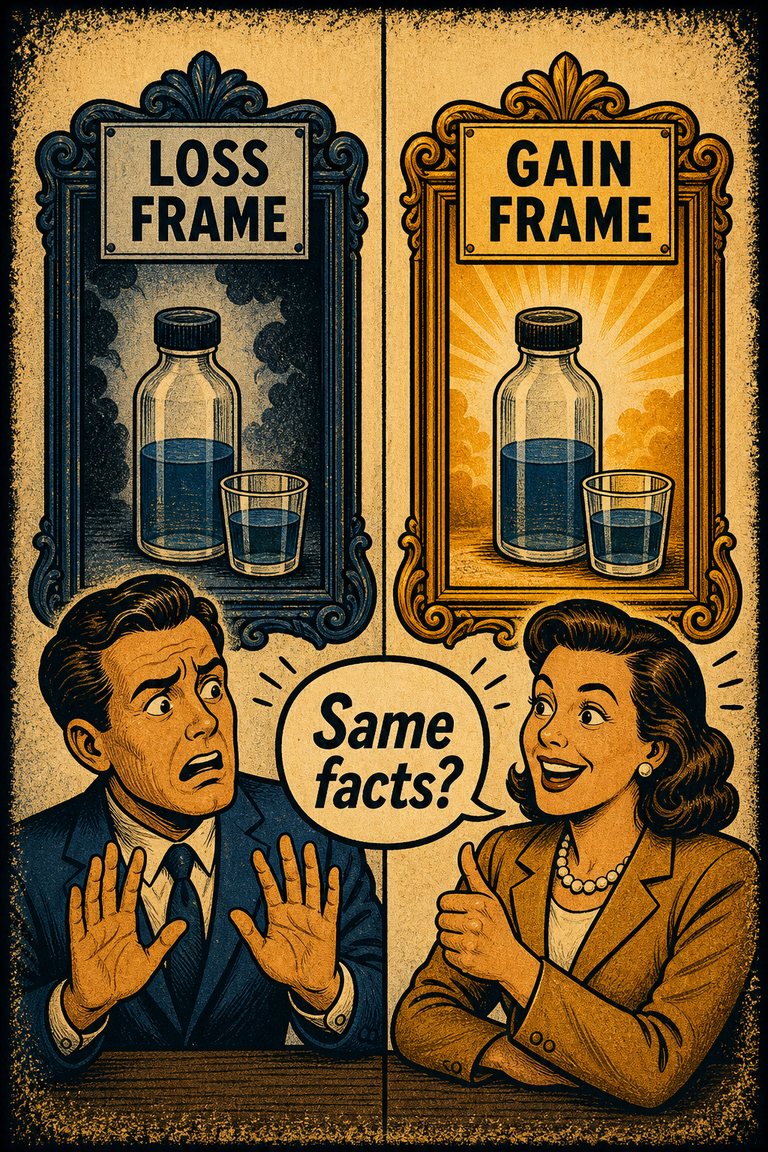
Framing effect
The tendency for the same underlying information to produce different judgments depending on how the options or outcomes are described.
DecisionAssociationMedia & politicsPersonal decisions
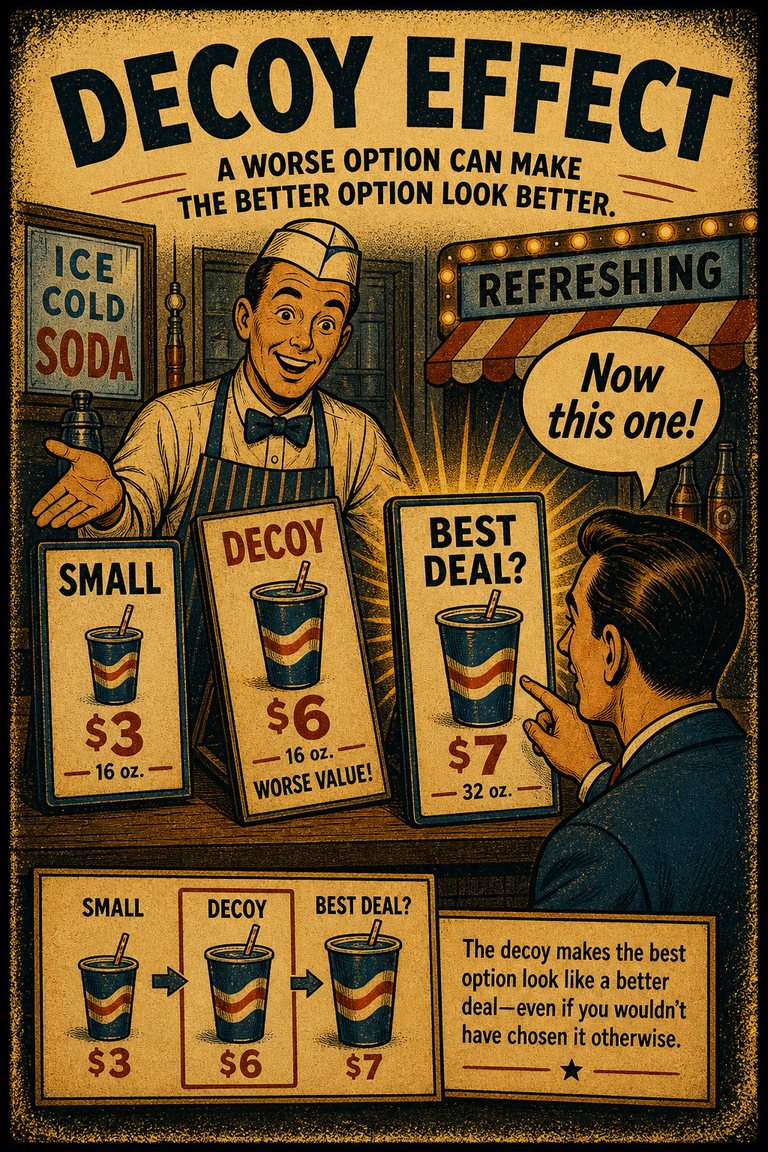
Decoy effect
The tendency for a dominated third option to shift preference toward a nearby target option.
DecisionBaseline
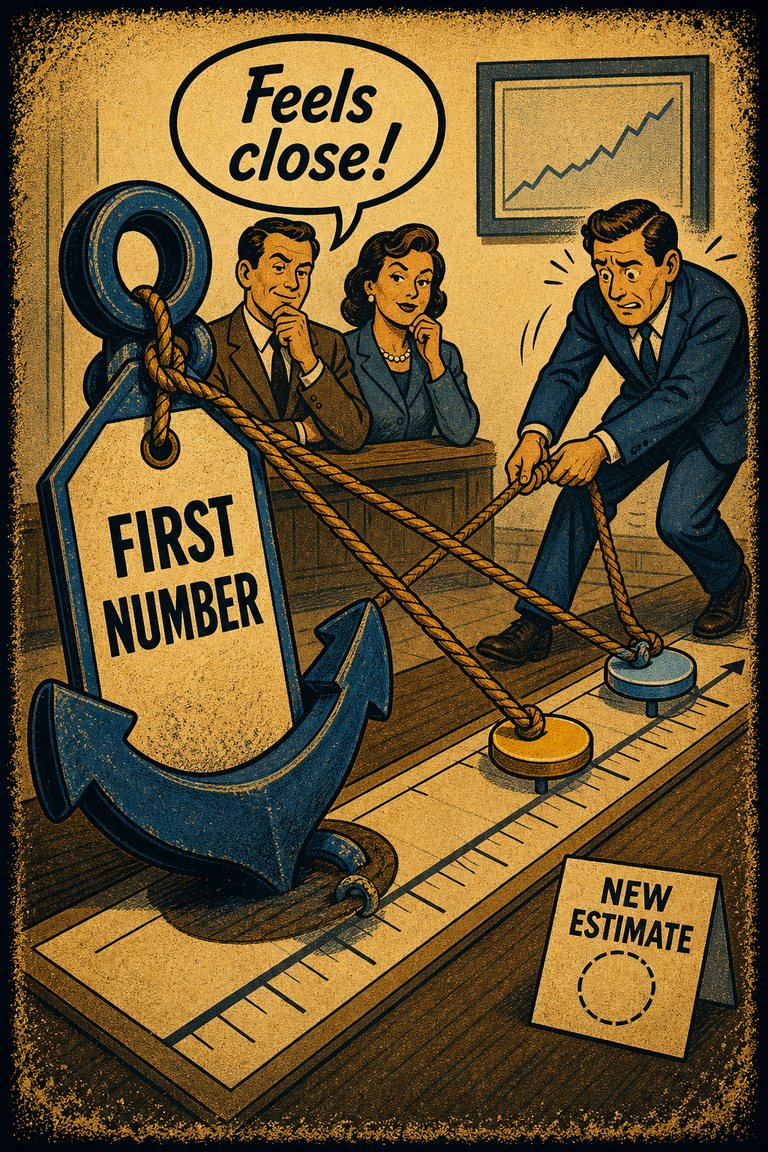
Anchoring effect
The tendency for the first salient number, frame, or option to pull later estimates toward itself even when it is arbitrary or weakly relevant.
EstimationBaselineForecasting & planningPersonal decisions
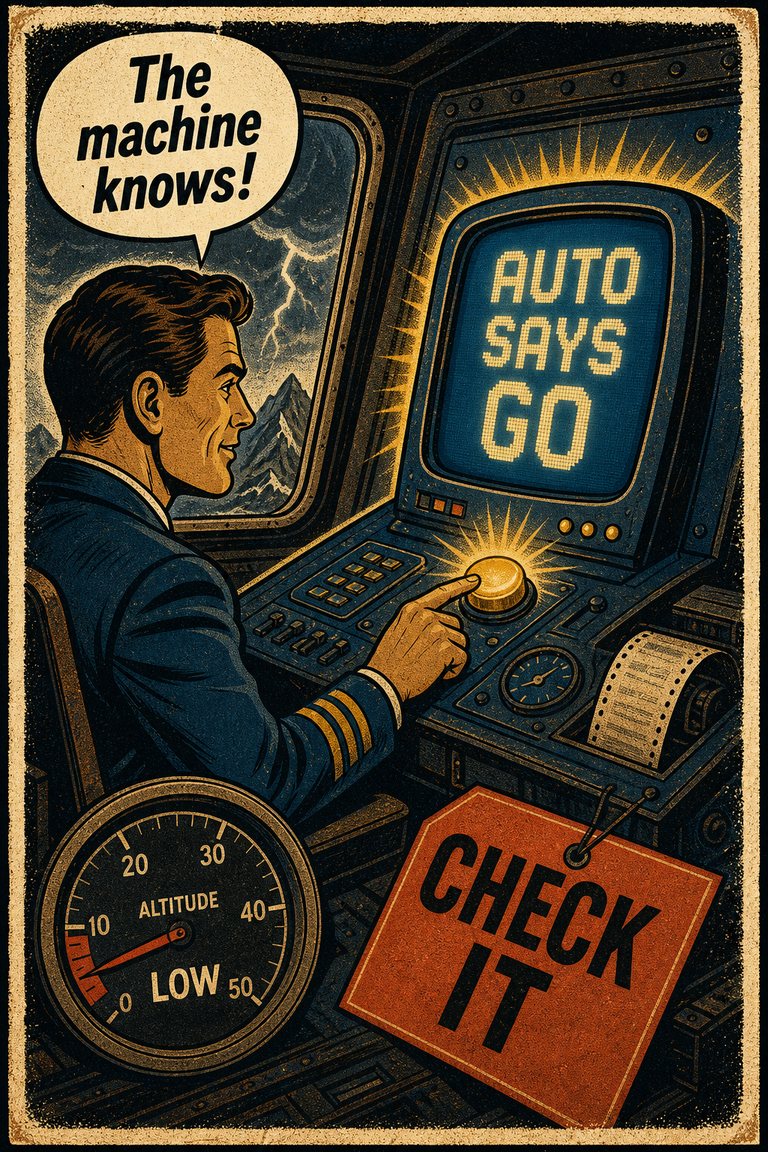
Automation bias
The tendency to depend excessively on automated systems which can lead to erroneous automated information overriding correct decisions.
DecisionAssociation
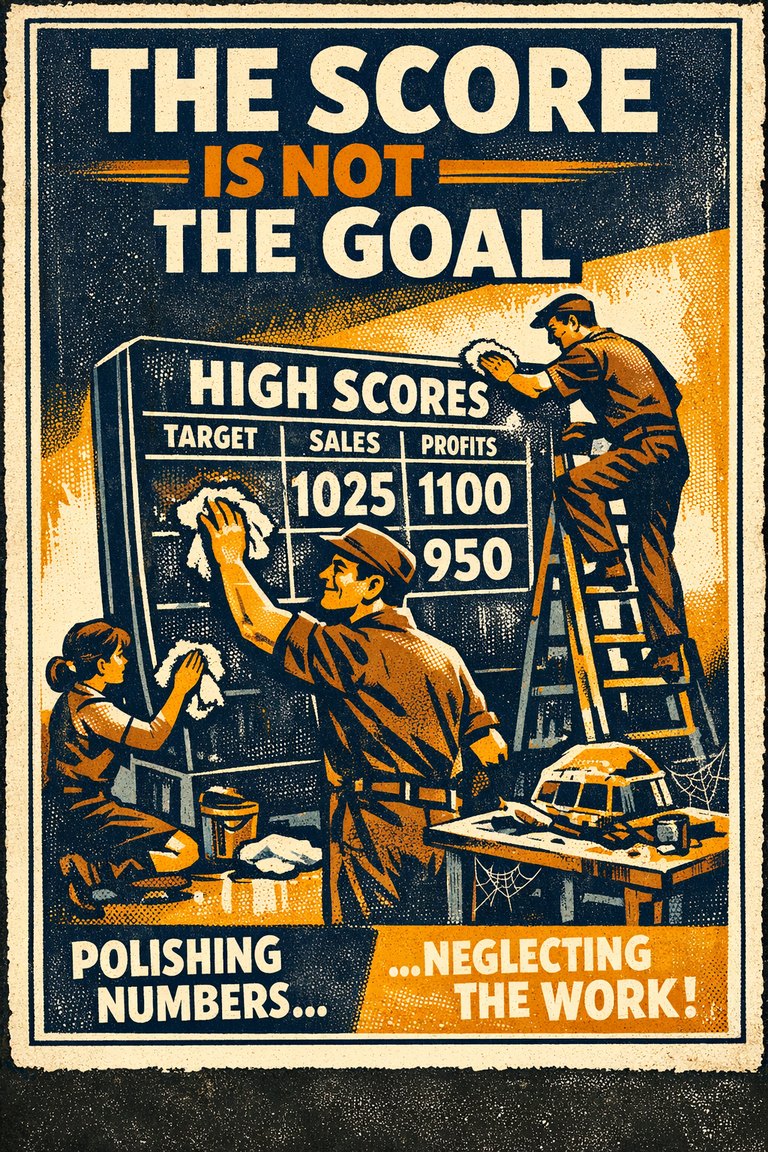
Surrogation
Losing sight of the strategic construct that a measure is intended to represent, and subsequently acting as though the measure is the construct of interest.
Causal AttributionOutcome