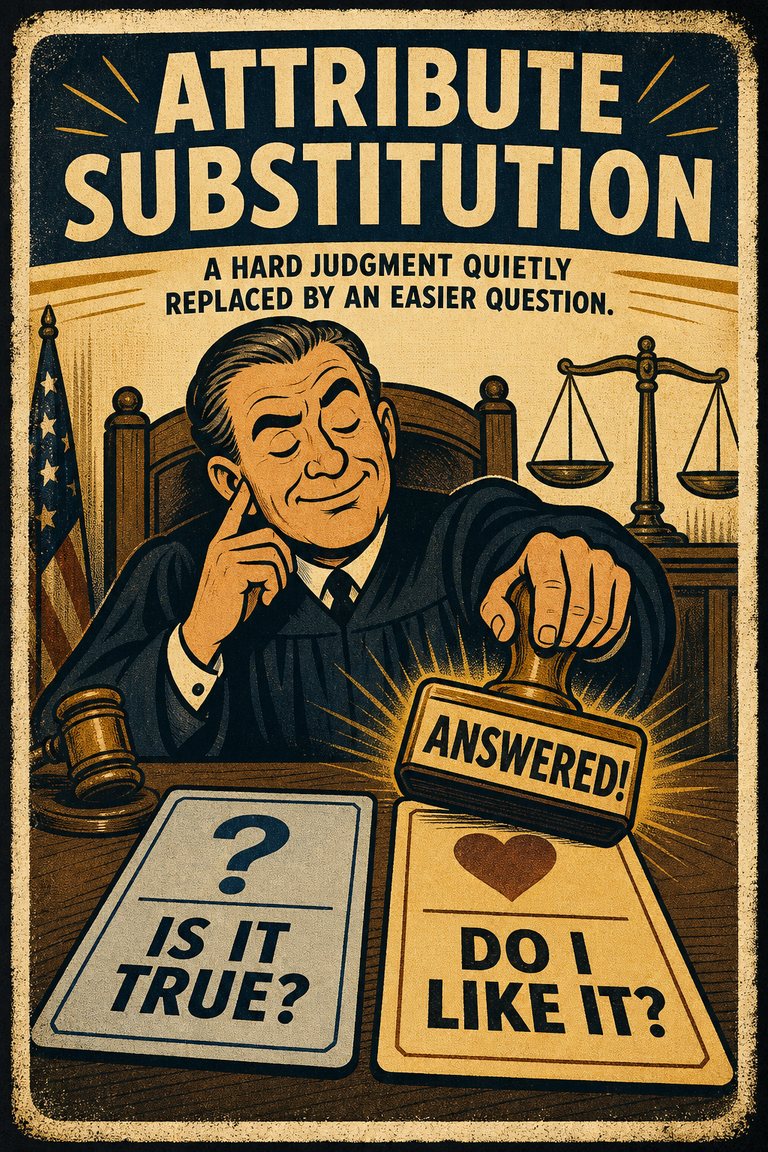
Attribute substitution
The tendency to answer a hard judgment question by unconsciously substituting an easier one.
EstimationAssociation

Cognitive Biases
A practical cognitive-bias site with clear definitions, learning paths, assessments, self-audits, and debiasing tools.
Learning Path
A path for the biases that reshape preference by changing the frame, the menu, the proxy, or the amount of visible motion in the decision process.
Work the pages in order, then loop back and compare which distortions happened earliest, which ones protected the first impression, and which ones interfered with later learning.
Next:
This is a deliberate sequence, not just a themed pile. Start at the top if the context is new to you.
The tendency to answer a hard judgment question by unconsciously substituting an easier one.
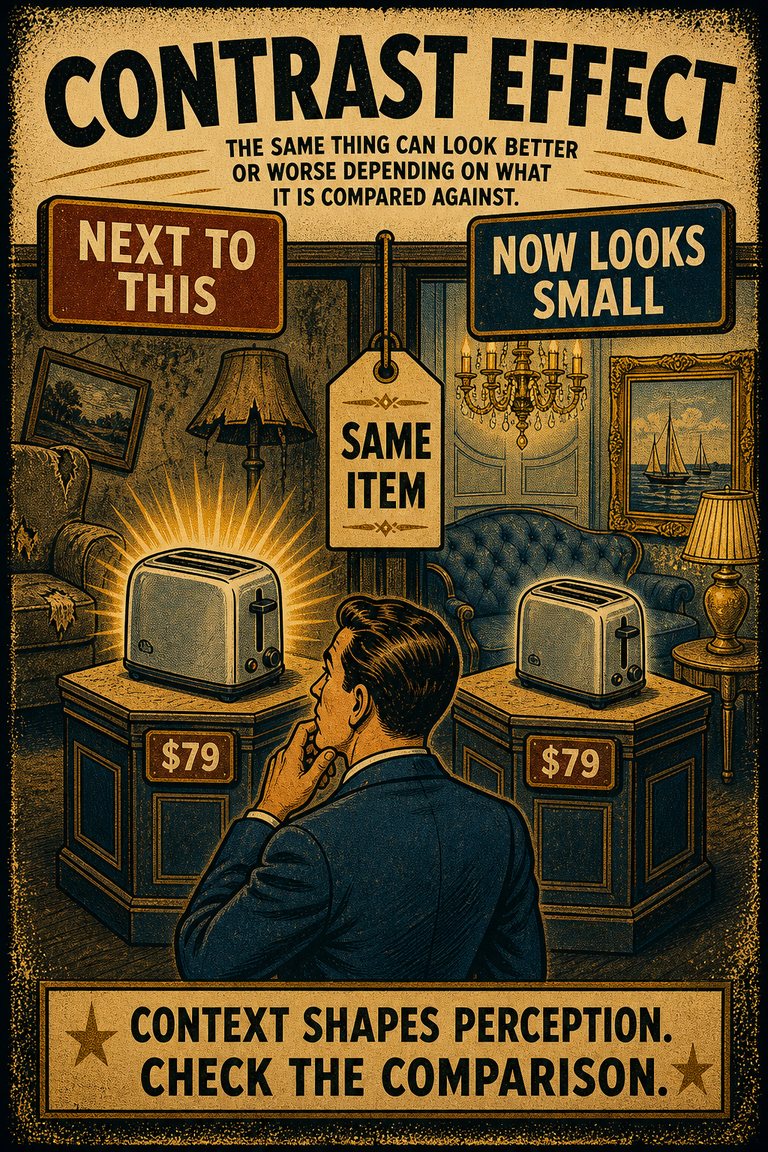
The enhancement or reduction of a certain stimulus's perception when compared with a recently observed, contrasting object.
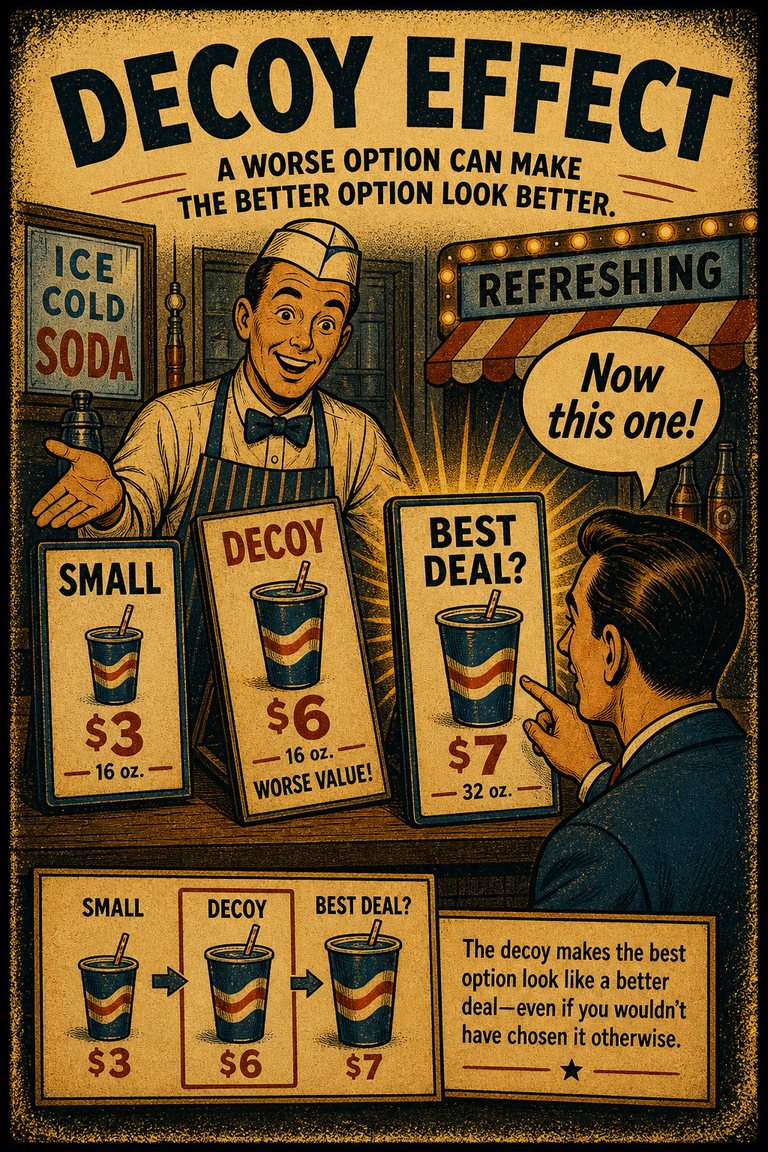
The tendency for a dominated third option to shift preference toward a nearby target option.
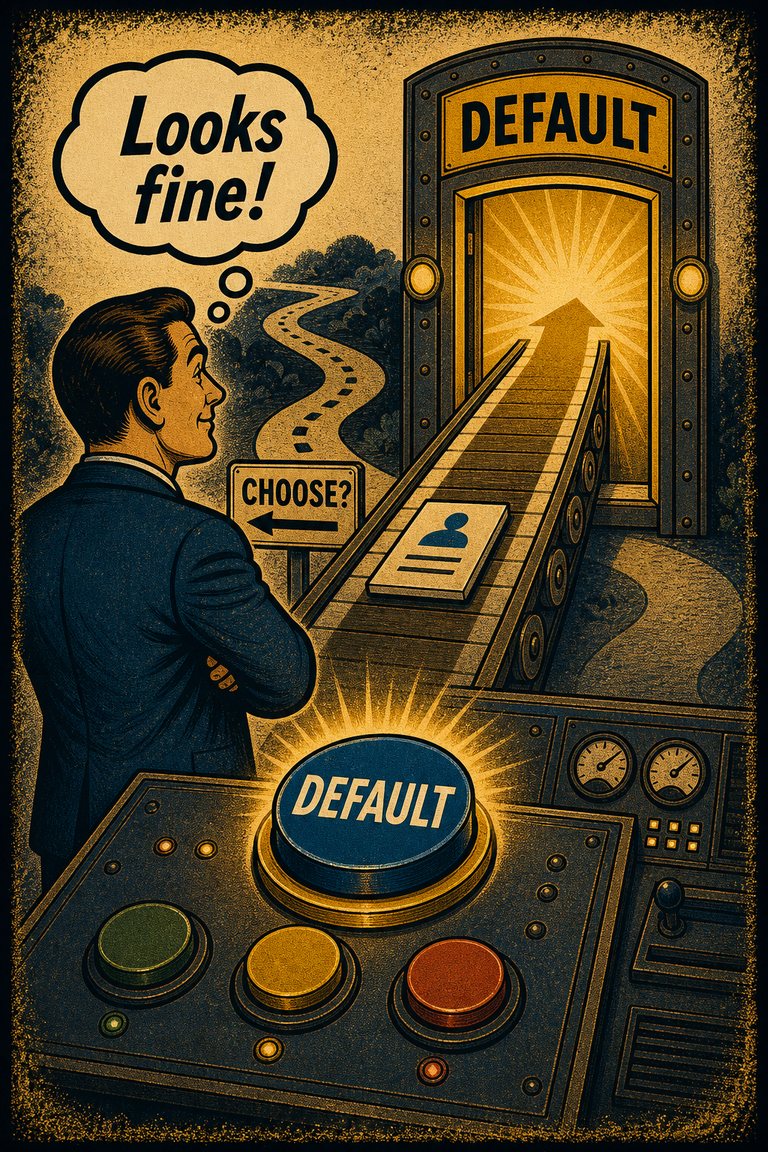
The tendency to favor the preselected or default option simply because it is already positioned as the path of least resistance.

The tendency for someone to act when faced with a problem even when inaction would be more effective, or to act when no evident problem exists.

The tendency to depend excessively on automated systems which can lead to erroneous automated information overriding correct decisions.

The tendency to assume that specific conditions are more probable than a more general version of those same conditions.