Common in live pressure
79
Strong where visible leadership and time pressure are fused.
Rare
Frequent

Cognitive Biases
A practical cognitive-bias site with clear definitions, learning paths, assessments, self-audits, and debiasing tools.
Cognitive Bias
The tendency for someone to act when faced with a problem even when inaction would be more effective, or to act when no evident problem exists
What it distorts
Biases that shape choices, commitments, avoidance, preference drift, and action under uncertainty.
Typical trigger
Situations where decision is already difficult and the baseline cue feels easier to trust than a fuller review.
First countermove
Start with the decision question instead of the first intuitive answer, then check whether the baseline pattern is doing invisible work.
Best use
Quick reference
Am I solving the problem, or just solving the discomfort of not yet moving?
In decision problems, judgment is pulled by the wrong starting point, default frame, or prior expectation before a fuller check catches up.
These are classroom-facing editorial estimates for comparing how the bias behaves in use. They are teaching aids, not measured statistics.
Common in live pressure
79
Strong where visible leadership and time pressure are fused.
Easy to spot from outside
52
Often clearer to observers than to the actor who feels virtuous urgency.
Easy to innocently commit
86
Motion is easy to confuse with responsibility.
Teaching difficulty
33
Becomes vivid as soon as waiting is treated as a live option rather than a failure.
This comparison makes the hidden pull easier to see before the technical label has to do all the work.
Biased move
This is like yanking on every control in turbulence because stillness feels too much like helplessness.
Clearer comparison
Visible motion can soothe anxiety without improving the outcome. Good intervention has to beat thoughtful restraint, not merely look busier than it.
Do not use this label whenever someone acts quickly. Sometimes speed is exactly right. The issue is that action itself is being treated as evidence of quality.
Use this label when doing something starts to feel inherently superior to waiting, diagnosing, or preserving optionality.
Use the quick check, caveat, and nearby confusions together. The fastest diagnosis is often the noisiest one.
Each example changes the surface context while keeping the same hidden distortion in place.
A parent intervenes immediately in a small conflict before enough is known because quick action feels more responsible than observation.
A manager launches a visible initiative after a rough week mainly so the team can see movement, even though the first need is cleaner diagnosis.
Commentators praise leaders for rapid visible response before asking whether the action actually addressed the real failure mode.
Doing something feels like competence, care, or leadership, while waiting can feel like passivity even when waiting would produce the better result.
Teaching note: This page helps show that motion and judgment are not the same thing. Students often need permission to see restraint as a real decision.
The strongest debiasing moves change the process, not just the label.
Write one sentence for what waiting would teach you before you default to intervention.
Ask someone to argue for deliberate inaction or observation as a live option rather than as indecision.
Use pause rules for ambiguous incidents so action has to compete against explicit watch-and-learn alternatives.
Practice And Repair
Action bias is attractive because agency feels morally and socially superior to visible restraint.
A problem appears under uncertainty, stress, or observation.
Quick intervention feels like competence while waiting feels like negligence.
Action becomes the default standard instead of one option that has to earn its place.
Write the best case for watchful inaction or delayed action before committing to visible movement.
What would I do here if nobody could see whether I acted immediately?
Spot It
Slow It
Reframe It
These are nearby labels that can share the same outer appearance while differing in what actually drives the distortion. Use the overlap, the distinction, and the diagnostic question together before settling the call.
Why compare it: Reactance resists pressure; action bias prefers visible motion even without coercion.
Why compare it: Overconfidence inflates certainty; action bias makes movement feel inherently superior to restraint.
Why compare it: Omission bias privileges inaction morally; action bias privileges action psychologically and performatively.
These are useful when the label seems roughly right but the process change still feels underspecified.
If I could not be seen acting, would this still look like the best move?
What information would become available if I delayed action briefly?
Am I solving the problem or solving the discomfort of not yet acting?
These sourced cases do not prove what was in someone's head with perfect certainty. They are teaching cases for showing where the bias pressure becomes visible in practice.
Goalkeeper penalty-kick studies
Goalkeepers often dive on penalty kicks even though staying centered can sometimes be statistically better, because visible action feels more defensible than stillness.
Why it fits: The action is partly chosen because inaction feels harder to justify socially if the outcome goes badly.
Modern sports research
Crisis interventions chosen for visible motion
The action-bias literature is often used to explain why leaders, coaches, and managers prefer visibly doing something in crises even when restraint or more diagnosis would likely produce the better expected result.
Why it fits: The defensibility of motion becomes part of the decision rule, independent of whether motion improves the outcome.
Modern decision contexts
These linked tools turn the page into practice instead of leaving it at the level of definition.
Follow the related path to see where this bias most often travels with nearby distortions.
Direct path
Comparison Traps And Choice Architecture
Use this path when you suspect the choice set itself is manufacturing preference rather than merely revealing it.
Use this short audit when you suspect this bias is starting to steer the call.
Direct audit
Before You Let The Menu Decide
Am I choosing the best option, or the option the current frame is making easiest to endorse?
These scenarios mix direct and nearby cases so you can practice the label itself and the broader judgment pattern around it.
Direct scenario
Doing something feels like leadership
A director insists on launching an immediate visible intervention after a confusing incident even though the team has not yet established what actually failed and waiting one day…
Nearby scenario
The plan added only to make another plan shine
A checkout page adds a third plan that is worse than the premium plan on every important dimension but close in price. Premium conversions rise even though the premium plan did no…
These links widen the frame around the bias without interrupting the core lesson on this page.
An article on how menus, proxies, defaults, system outputs, and urgency cues can manufacture what later feels like a straightforward preference.
CogBias theory
These neighbors were selected from shared categories, shared patterns, and explicit editorial links where available.
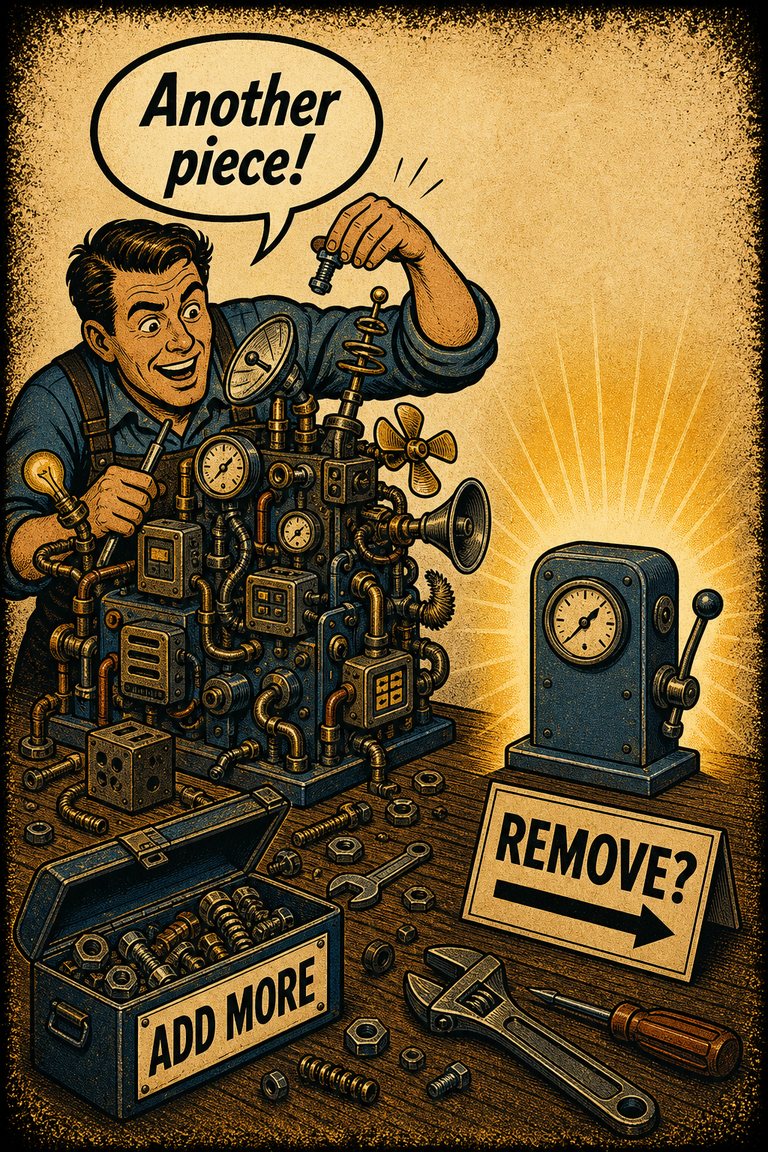
The tendency to solve problems through addition, even when subtraction is a better approach.
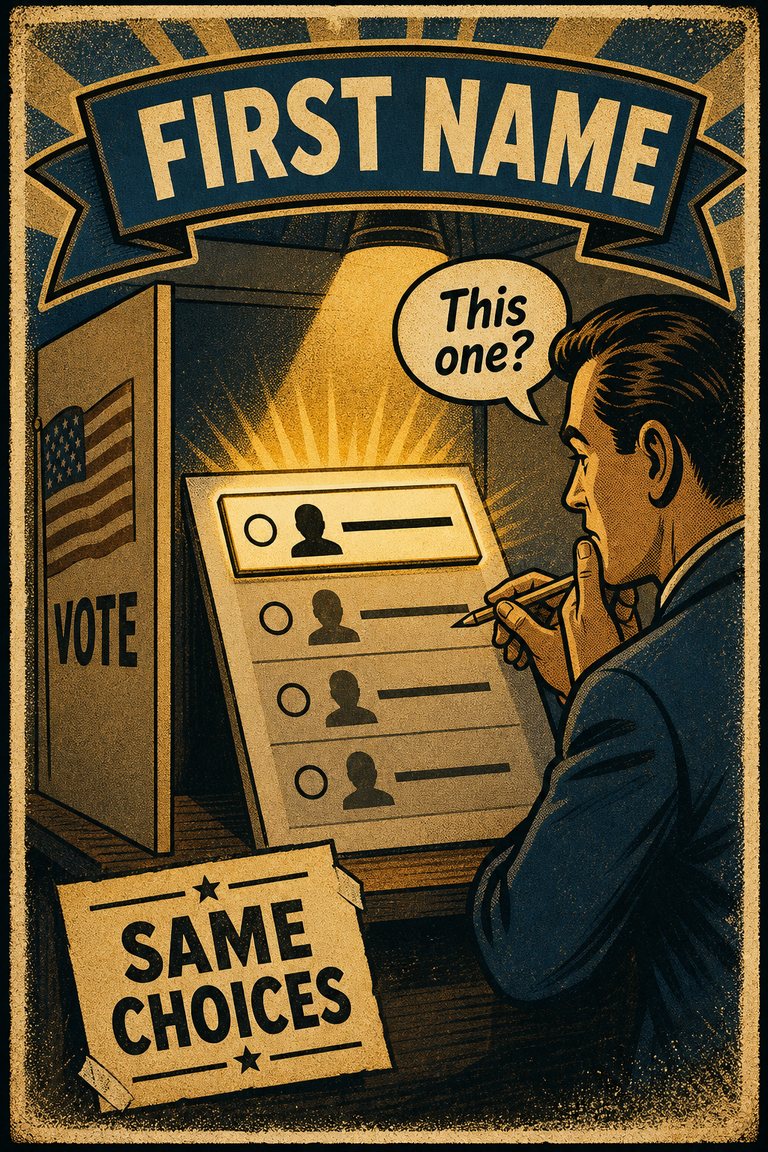
The tendency for candidates listed first on a ballot to gain a small voting advantage.
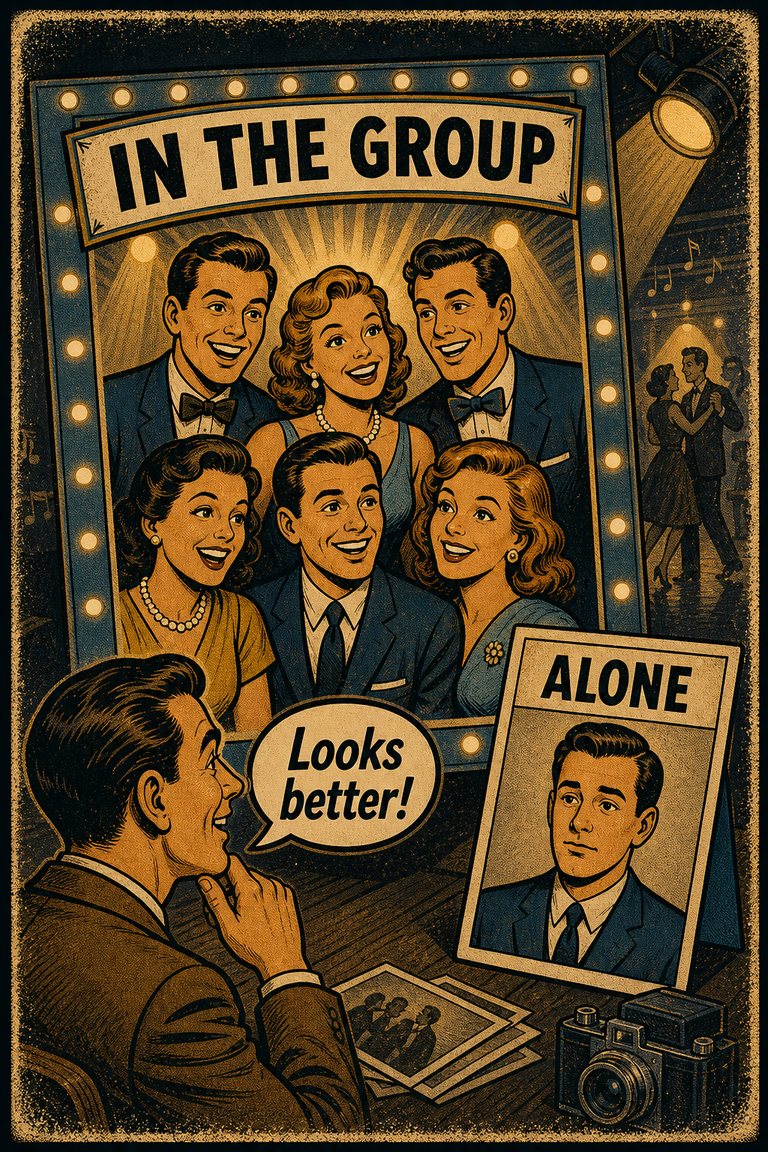
The tendency for people to appear more attractive in a group than in isolation.
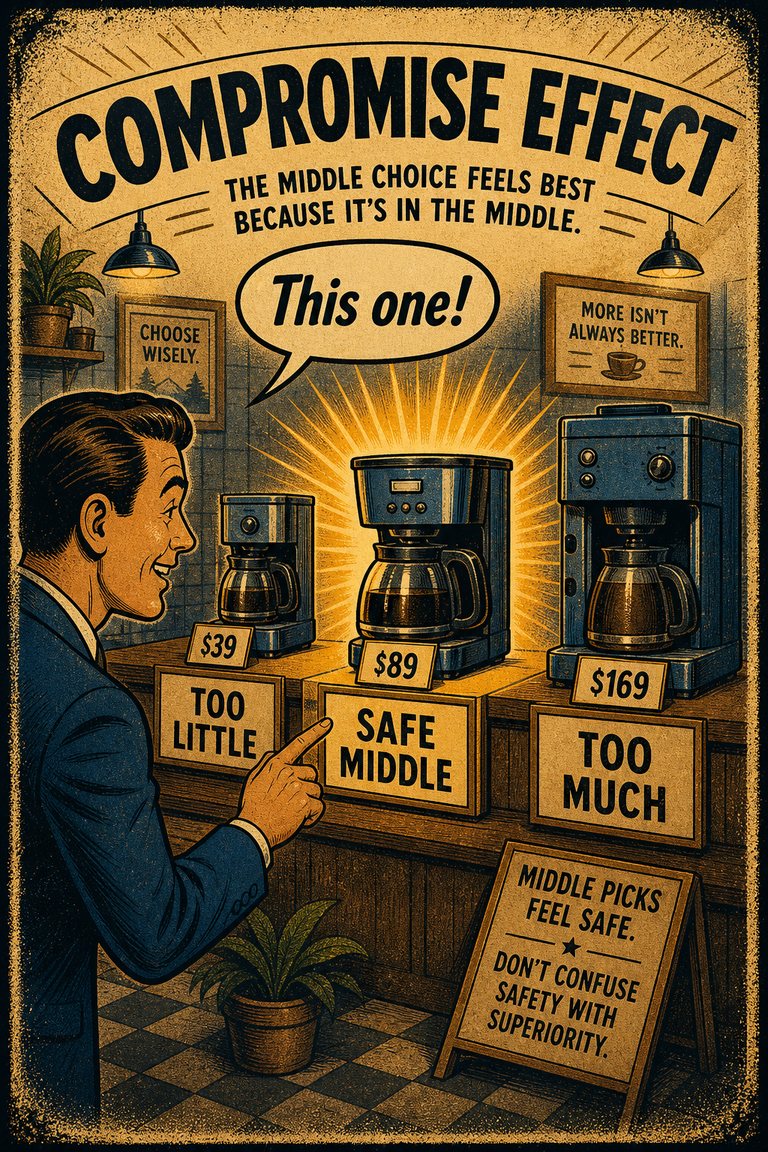
The tendency for an option to seem better when it appears as a middle compromise.
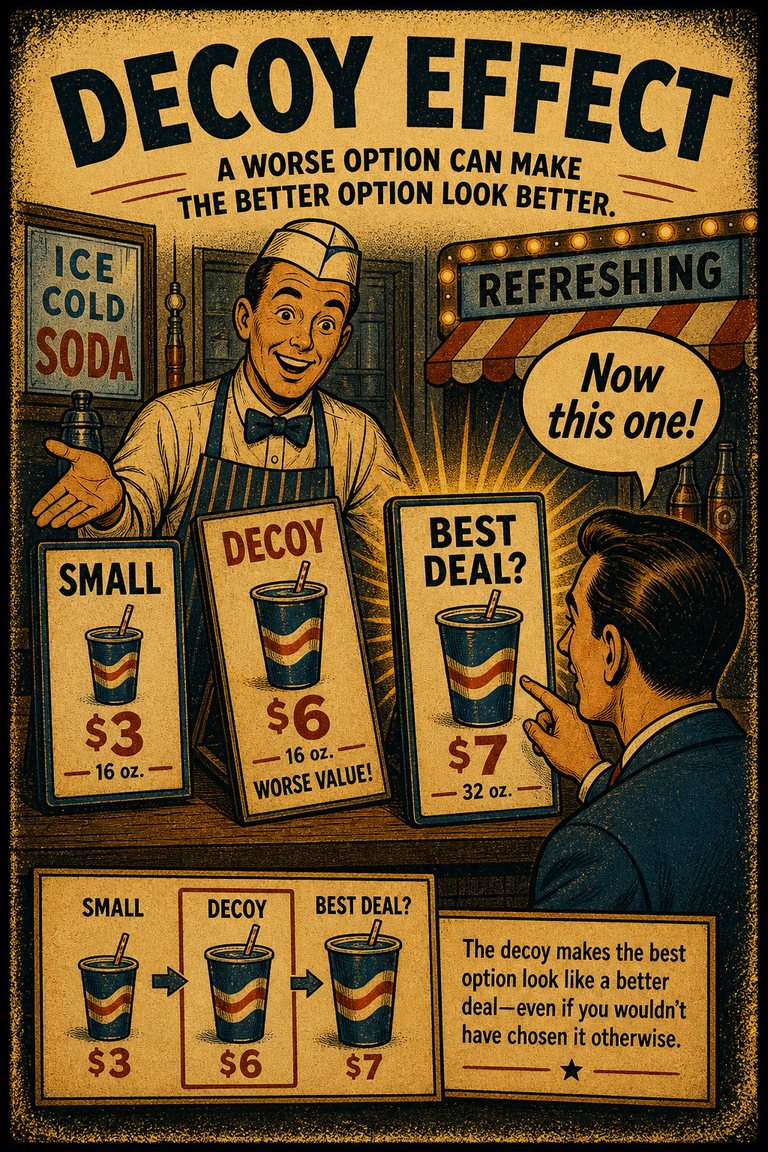
The tendency for a dominated third option to shift preference toward a nearby target option.
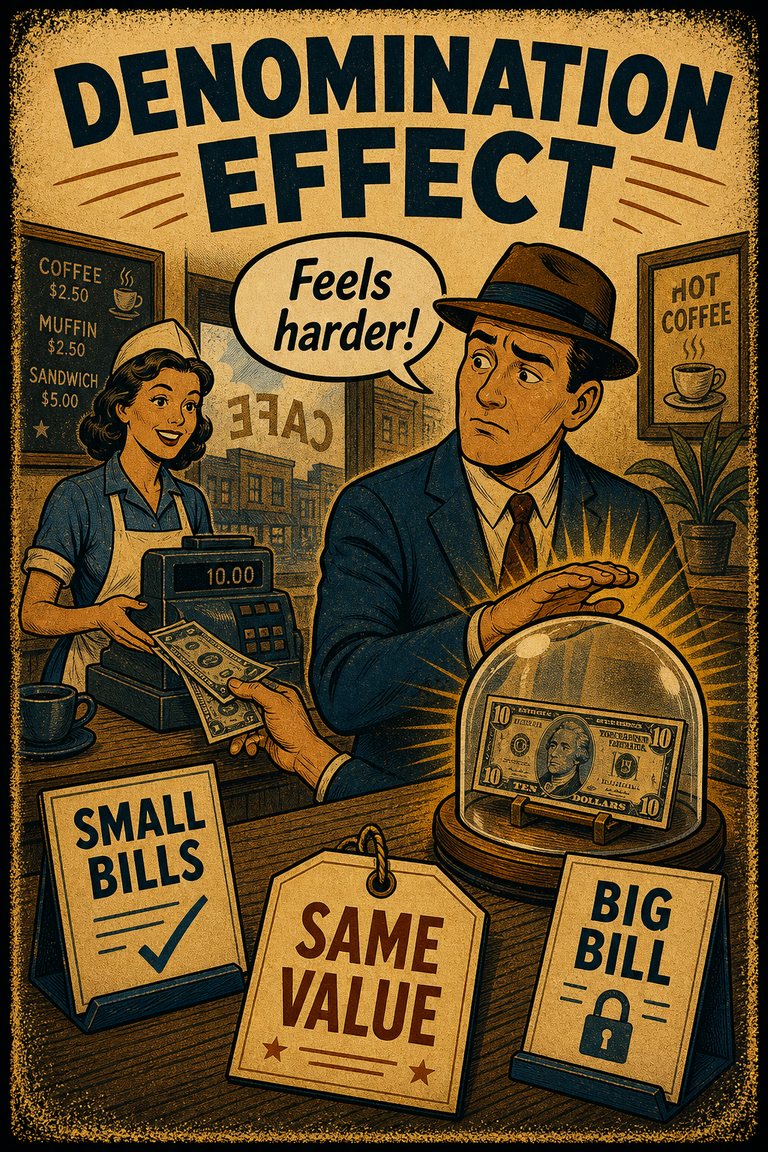
The tendency to spend more money when it is denominated in small amounts rather than large amounts.