Common in tool-heavy work
77
More important as algorithmic decision support spreads.
Rare
Frequent

Cognitive Biases
A practical cognitive-bias site with clear definitions, learning paths, assessments, self-audits, and debiasing tools.
Cognitive Bias
The tendency to depend excessively on automated systems which can lead to erroneous automated information overriding correct decisions
What it distorts
Biases that shape choices, commitments, avoidance, preference drift, and action under uncertainty.
Typical trigger
Situations where decision is already difficult and the association cue feels easier to trust than a fuller review.
First countermove
Start with the decision question instead of the first intuitive answer, then check whether the association pattern is doing invisible work.
Best use
Quick reference
If the system output were hidden, what would my own first pass actually say?
In decision problems, the mind overweights resemblance, vividness, proximity, or intuitive linkage before a fuller check catches up.
These are classroom-facing editorial estimates for comparing how the bias behaves in use. They are teaching aids, not measured statistics.
Common in tool-heavy work
77
More important as algorithmic decision support spreads.
Easy to spot from outside
47
Often visible after an obvious override opportunity was passed up.
Easy to innocently commit
84
Machine output feels like a low-blame source of certainty.
Teaching difficulty
44
Requires teaching both tool value and tool limits at the same time.
This comparison makes the hidden pull easier to see before the technical label has to do all the work.
Biased move
This is like treating the autopilot as if it were the weather.
Clearer comparison
Automation can inform the route without becoming the sky itself. A tool is still one part of the evidential picture, not the whole landscape.
Do not use this label whenever software is trusted. Some systems deserve significant trust. The issue is overdependence that suppresses correction or independent judgment.
Use this label when automated recommendations or alerts are getting more deference than their actual reliability and fit justify.
Use the quick check, caveat, and nearby confusions together. The fastest diagnosis is often the noisiest one.
Each example changes the surface context while keeping the same hidden distortion in place.
A driver follows the navigation app into the wrong place because the device feels more authoritative than local cues.
An analyst waves through a system recommendation even after noticing a small inconsistency because the model output feels safer than personal override.
Institutions treat automated scoring as objective enough to excuse not inspecting where the system fit is weak.
The automated answer feels like a neutral starting point, and disagreeing with it begins to feel like extra work or extra personal risk.
Teaching note: This page becomes more valuable as AI and scoring systems spread because it helps readers separate tool support from tool surrender.
The strongest debiasing moves change the process, not just the label.
Write your own first-pass judgment before revealing the automated output whenever the workflow allows it.
Assign explicit responsibility for naming when the system is likely outside its strongest conditions.
Require reason codes for both accepting and overriding automated recommendations in high-stakes workflows.
Practice And Repair
Automation bias turns recommendation into gravitational center. The system no longer merely informs the judgment; it narrows what judgment feels permissible.
An automated output arrives before or during human evaluation.
The output feels objective and safer to follow than a personally owned override.
Human correction weakens, even where contextual evidence points the other way.
Force one independent pass and one explicit review of the system's likely failure conditions.
What domain assumption is the system making here that I may be forgetting to test?
Spot It
Slow It
Reframe It
These are nearby labels that can share the same outer appearance while differing in what actually drives the distortion. Use the overlap, the distinction, and the diagnostic question together before settling the call.
Why compare it: Authority bias defers to status figures; automation bias defers to system output because it feels machine-neutral.
Why compare it: Default effect privileges the preselected option; automation bias privileges the automated recommendation as if it were the natural baseline.
Why compare it: Overconfidence inflates personal certainty; automation bias outsources certainty to the system.
These are useful when the label seems roughly right but the process change still feels underspecified.
What would I conclude here if the automated output were hidden for the first pass?
Which conditions make this system less reliable than it sounds?
Am I using the tool as evidence or as permission not to think harder?
These sourced cases do not prove what was in someone's head with perfect certainty. They are teaching cases for showing where the bias pressure becomes visible in practice.
Clinical and cockpit automation examples
Research on automation bias shows that people may miss errors of omission or commission because the system recommendation becomes the assumed baseline.
Why it fits: The automation does not just assist. It begins shaping what the human treats as sufficiently checked.
Modern human-factors research
Silent systems treated as all-clear signals
When automated monitors fail to flag a problem, operators can treat the silence itself as evidence that everything is fine and skip checks they would otherwise have performed.
Why it fits: The absence of a machine warning becomes overtrusted even though it is just another fallible output.
Modern human-factors research
Cockpit decision aids produce omission and commission errors
Automation-bias studies in aviation contexts found that people could miss problems or follow faulty recommendations when automated aids appeared to have the situation covered.
Why it fits: The system output became too much of the evidential baseline.
International Journal of Aviation Psychology · 1998
These linked tools turn the page into practice instead of leaving it at the level of definition.
This bias appears directly in one guided sequence and also in nearby paths that frame the same judgment problem from a slightly wider angle.
Direct path
Comparison Traps And Choice Architecture
Use this path when you suspect the choice set itself is manufacturing preference rather than merely revealing it.
Same path family · Choice architecture
Use this path when the real pull seems to be preserving what is already in hand rather than comparing options cleanly.
These audits combine direct and nearby checks so you can test the label itself and the broader judgment pattern around it.
Direct audit
Before You Let The Menu Decide
Am I choosing the best option, or the option the current frame is making easiest to endorse?
Same audit family · Choice architecture
Before You Treat The Default As Neutral
Is the default genuinely best, or just easiest to leave in place?
These workshop packets mix direct coverage with nearby classroom material that makes the same distortion easier to teach.
Direct workshop
Product Choice-Architecture Audit
A product and UX kit for testing whether defaults, decoys, metrics, and automation are helping users choose or quietly manufacturing preference.
Nearby workshop
A facilitation kit for rooms where agreement, hierarchy, and speed may be replacing independent judgment.
2 mixed scenarios let you diagnose this bias from the case rather than the heading.
Direct scenario
The recommendation nobody checked
A design tool suggests a layout automatically. The team accepts it because it came from the system, even though the layout buries the most important user action.
Direct scenario
The system already decided it for us
A reviewer notices that the automated triage tool has likely misread a case, but still leaves the recommendation untouched because overriding the system feels riskier than accepti…
These links widen the frame around the bias without interrupting the core lesson on this page.
An article on how menus, proxies, defaults, system outputs, and urgency cues can manufacture what later feels like a straightforward preference.
CogBias theory
These neighbors were selected from shared categories, shared patterns, and explicit editorial links where available.
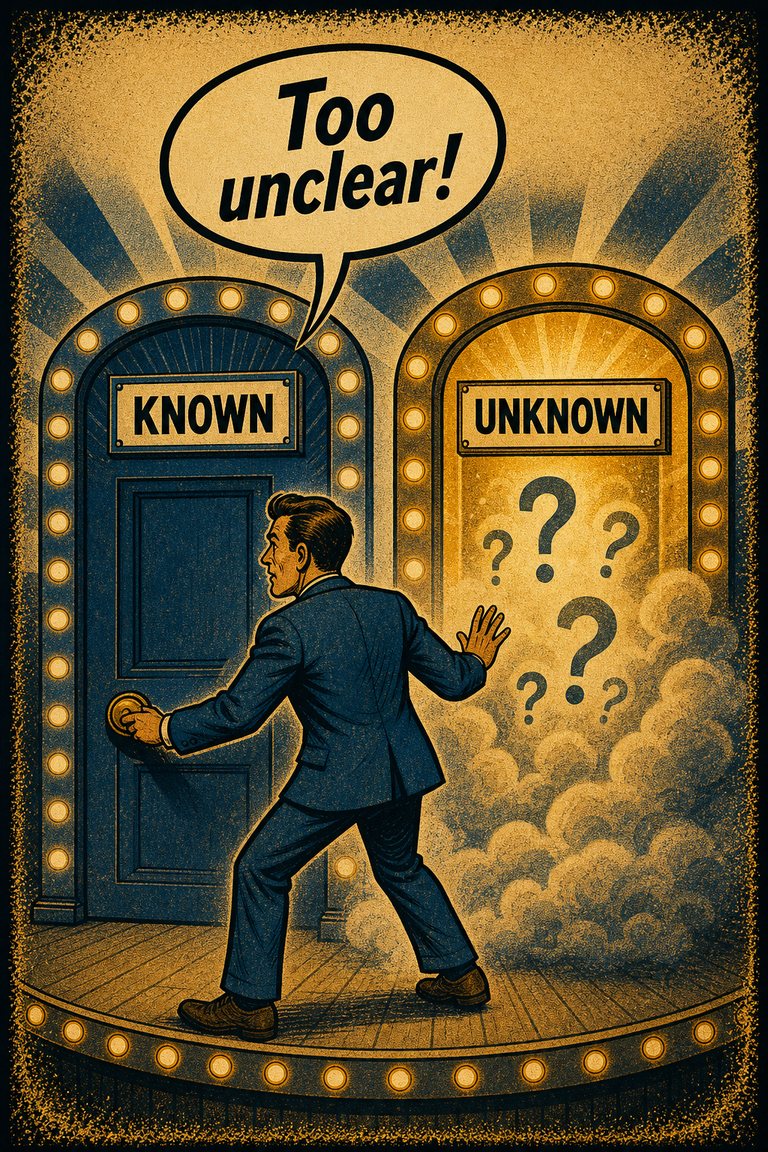
The tendency to avoid options when their probabilities are unclear, even if the unclear option may not actually be worse than the familiar one.
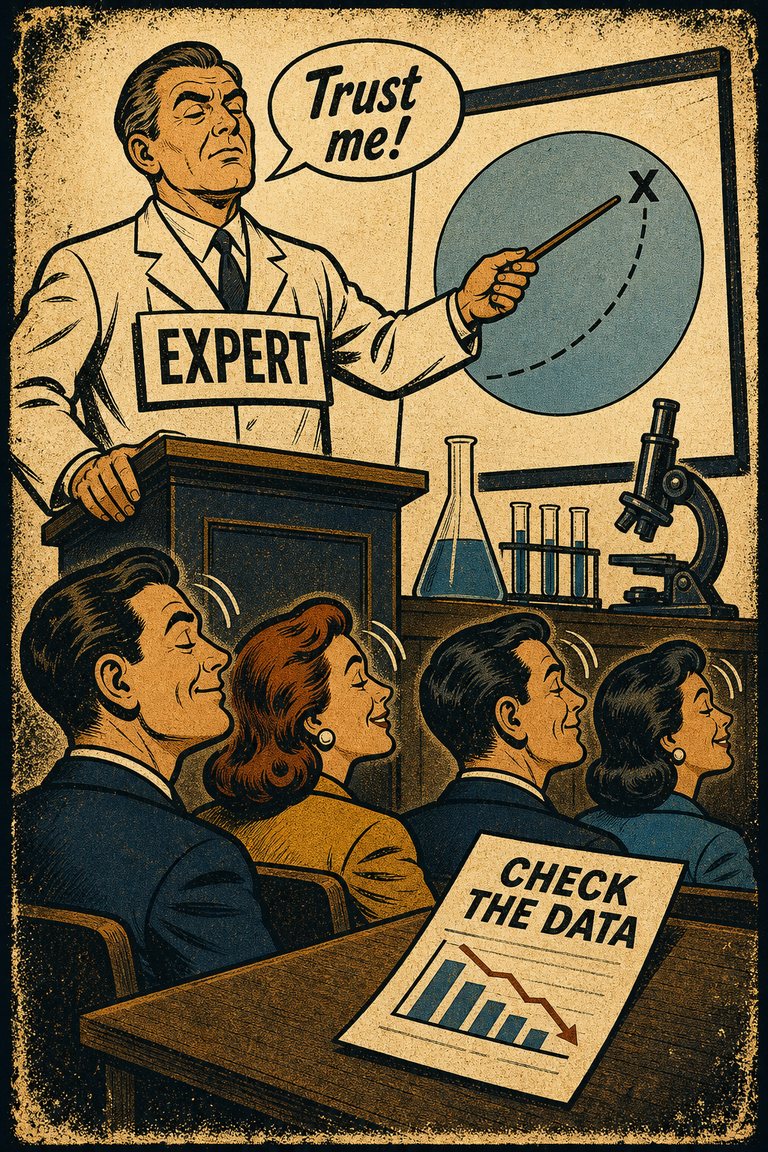
The tendency to give excess weight to the opinion of a high-status or authoritative source independent of whether the source has earned that weight on the specific issue.
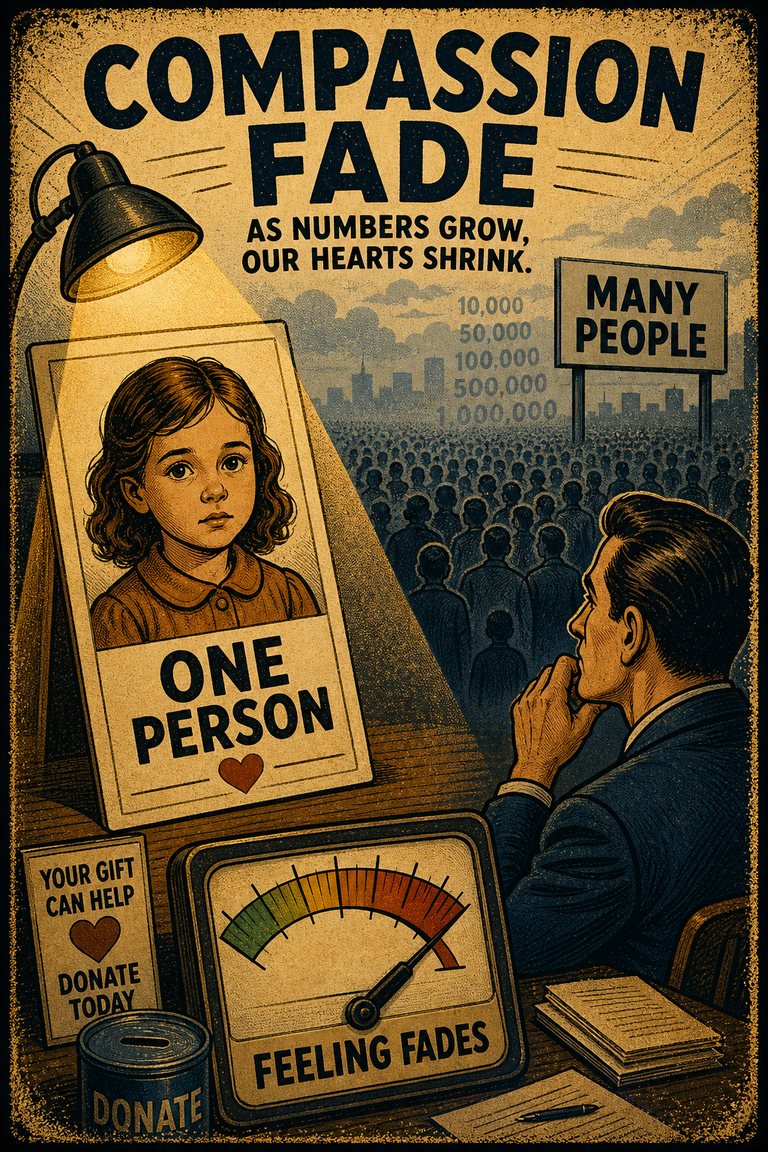
The tendency to behave more compassionately towards a small number of identifiable victims than to a large number of anonymous ones.
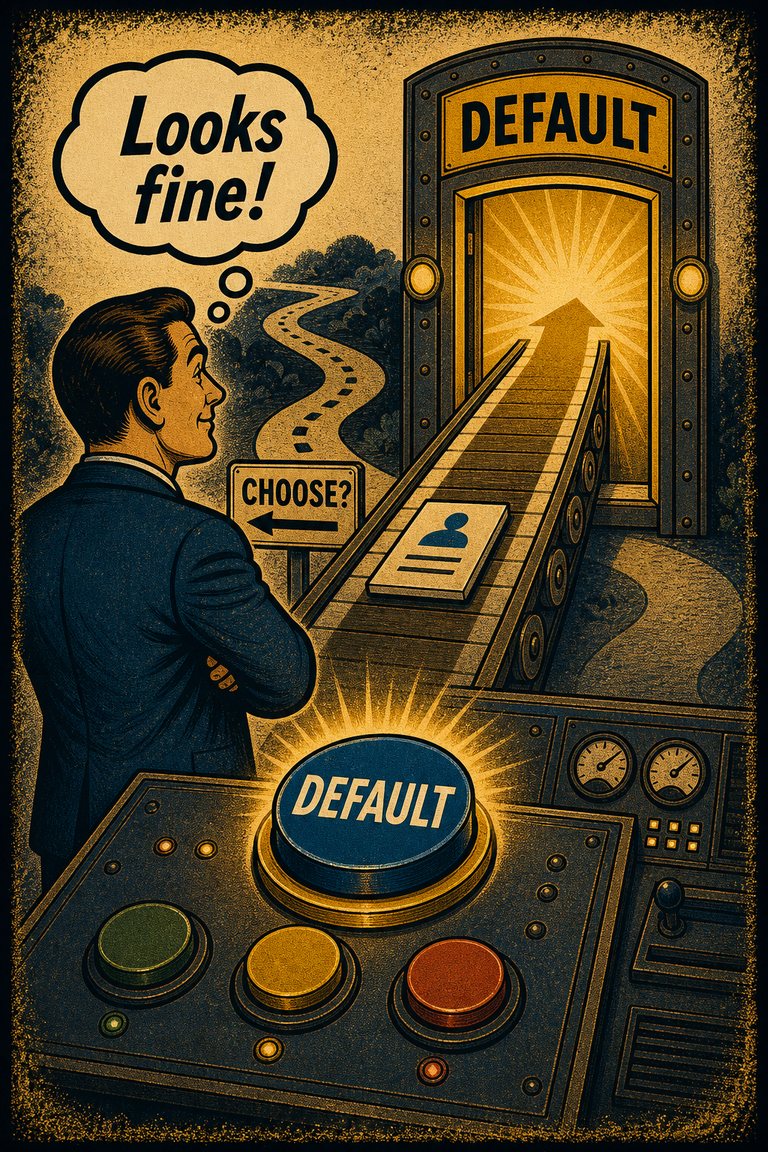
The tendency to favor the preselected or default option simply because it is already positioned as the path of least resistance.
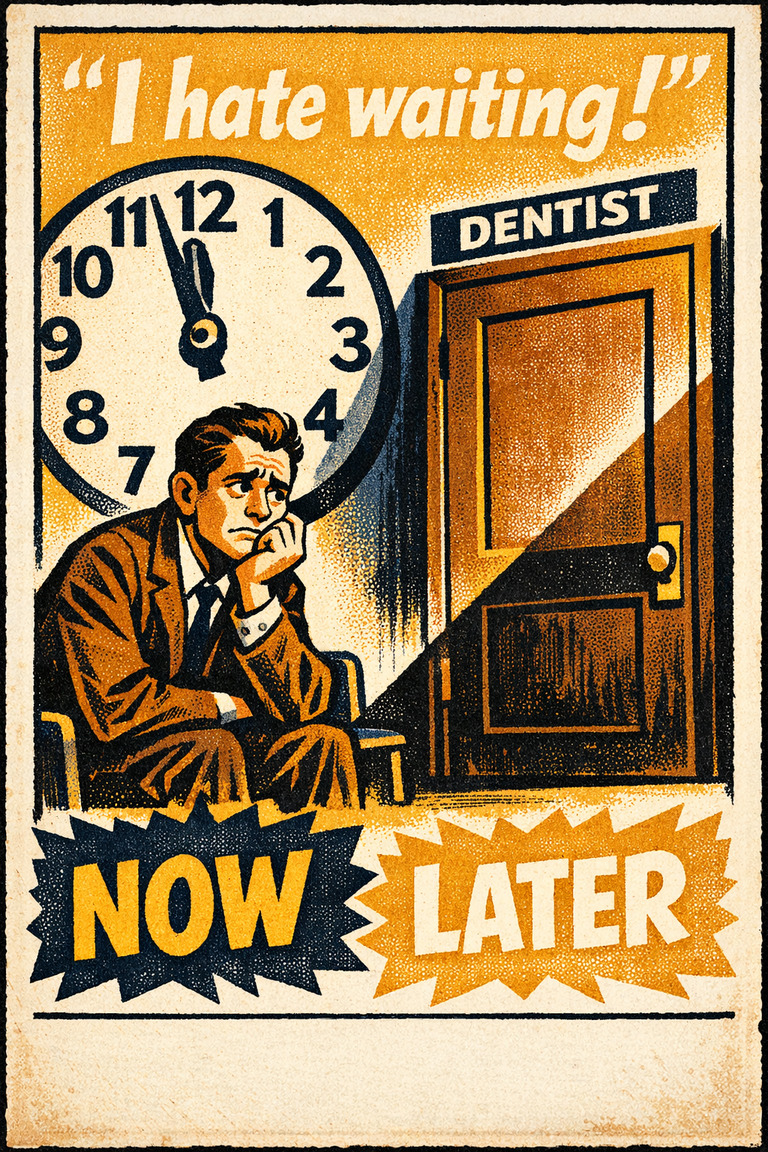
Just as losses yield double the emotional impact of gains, dread yields double the emotional impact of savouring.
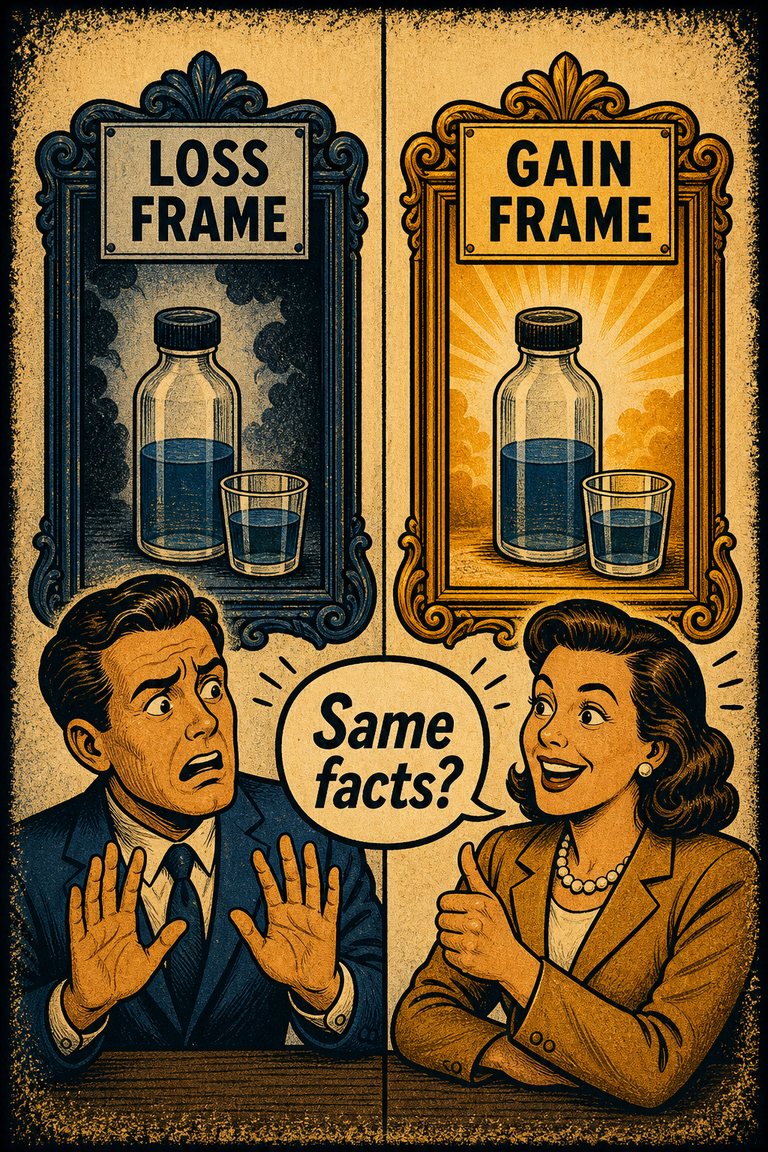
The tendency for the same underlying information to produce different judgments depending on how the options or outcomes are described.