
A real or simulated decision the group is considering.
Teaching Kit
Meeting Dissent Reset
A facilitation kit for rooms where agreement, hierarchy, and speed may be replacing independent judgment.
50-75 minutes
Biases In Teams And Meetings
5 biases
Audience
Managers, leadership teams, boards, project groups, and classroom discussion leaders.
Objectives
- Distinguish real agreement from public compliance.
- Make unshared information visible before a decision closes.
- Protect dissent without turning the meeting into theater.
Materials
Prep these before using the kit live.
Private first-pass slips or a shared anonymous form.
A decision record template: criteria, risks, dissent, decision rule.
Agenda
A suggested run of show. Adjust timing to fit the group.
0-10 min
Everyone writes a private first-pass judgment and confidence level.
10-25 min
Facilitator collects strongest objections and unshared information before open advocacy.
25-45 min
The group compares authority bias, groupthink, shared-information bias, and social desirability pressure.
45-60 min
The room records the decision rule, unresolved risks, and what evidence would trigger revision.
Worksheet prompts
- What would someone hesitate to say publicly in this room?
- Which information is known by only one or two people?
- How will we later judge the process separately from the outcome?
Facilitator notes
- Open with writing, not discussion.
- Ask the highest-status person to speak after independent judgments are captured.
- Treat silence as missing data, not agreement.
Linked study tools
These are the supporting pieces to open before or after the live activity.
Biases In Teams And Meetings
A hub for rooms where agreement, hierarchy, speed, and social comfort can quietly replace independent judgment.
12 biases
4 paths
3 AI prompts
Is the room converging because the case is strong, or because dissent has become socially expensive?
Managers, facilitators, leadership teams, boards, classrooms, and project groups.
Social Pressure And Belonging
A path for the distortions that show up when agreement, status, loyalty, and fear of standing apart start doing cognitive work.
6 biases
Teaching And Team Use
50 min
What changes in the reasoning once dissent becomes socially expensive?
Best for teams, classrooms, leadership groups, and politically charged conversations.
Decision Under Uncertainty
Biases that quietly bend choice, forecasting, escalation, and project planning when the future is still unresolved.
9 biases
Foundational
50 min
What makes a plan feel decisive before it is actually well-calibrated?
Best for managers, founders, operators, and anyone who makes plans under pressure.
Before You Go With The Room
A meeting and conformity check for consensus that may be social before it is evidential.
Teaching And Team Use
Before group convergence
5 min
Question: Would I still hold this view if I had to write it down alone before hearing the room?
- Write your own initial judgment before the most senior or confident person speaks.
- Ask which live objection has not yet been given equal airtime.
- Separate agreement pressure from evidence pressure.
- Check whether silence is being mistaken for support.
Before You Decide
A quick pre-choice audit for defaults, sunk costs, anchors, and false certainty.
Foundational
Before a choice
3 min
Question: Am I choosing the best forward-looking option, or the most comfortable inherited one?
- Write the current default as just one option on the list.
- Ignore past sunk costs for one clean pass through the decision.
- Ask whether the first number or frame is still pulling the choice.
- State what would have to be true for the current favorite to fail.
Groupthink vs Social Desirability Bias
Groupthink is a group decision dynamic that suppresses dissent; social desirability bias is distorted reporting caused by wanting to look acceptable.
Quick rule: Ask whether the main distortion is convergence in group deliberation or self-presentational reporting.
Hindsight Bias vs Outcome Bias
Hindsight bias makes the outcome feel predictable after the fact; outcome bias uses the result to grade the earlier decision process.
Quick rule: Ask whether the claim is about prior predictability or decision quality.
Bias pages in this kit
Use these entries as the reference layer after the activity surfaces the problem.
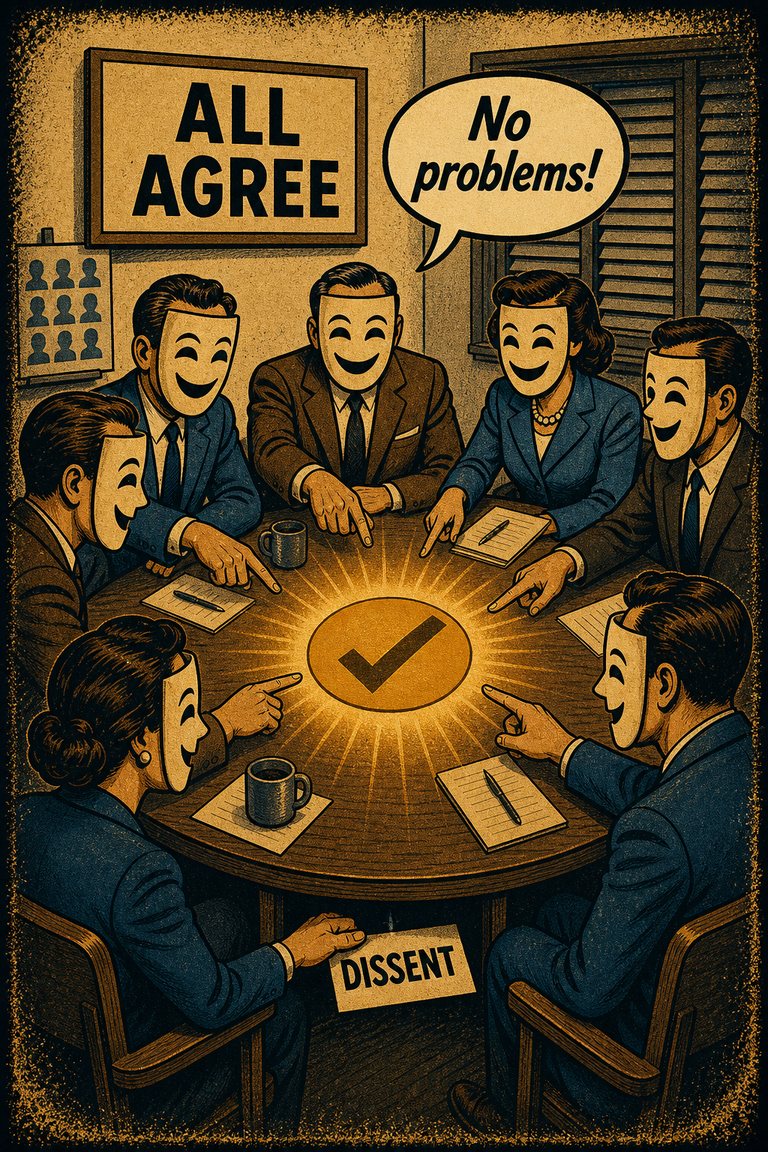
Groupthink
The tendency for groups to protect harmony or momentum at the cost of critical evaluation and dissent.
Hypothesis AssessmentAssociationTeams & managementPolitics & institutions
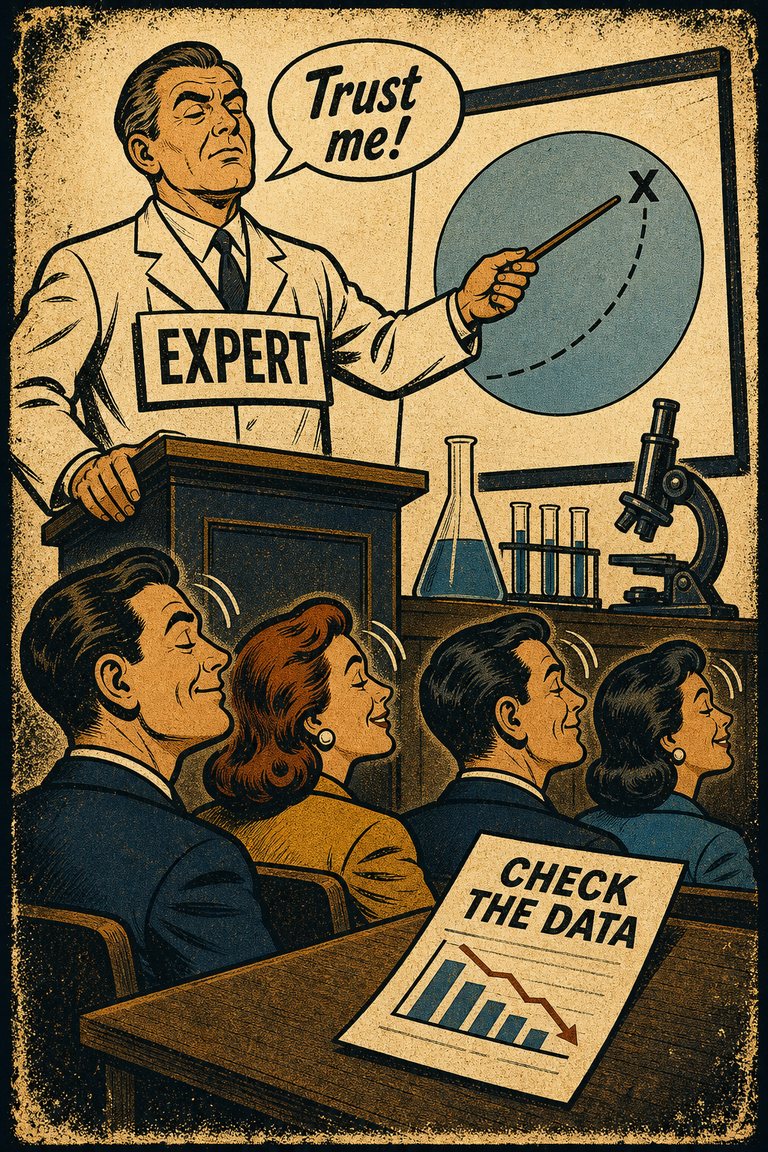
Authority bias
The tendency to give excess weight to the opinion of a high-status or authoritative source independent of whether the source has earned that weight on the specific issue.
DecisionAssociationTeams & managementMedia & politics

Shared information bias
The tendency for groups to spend too much time discussing shared information and too little on unique information.
DecisionInertia
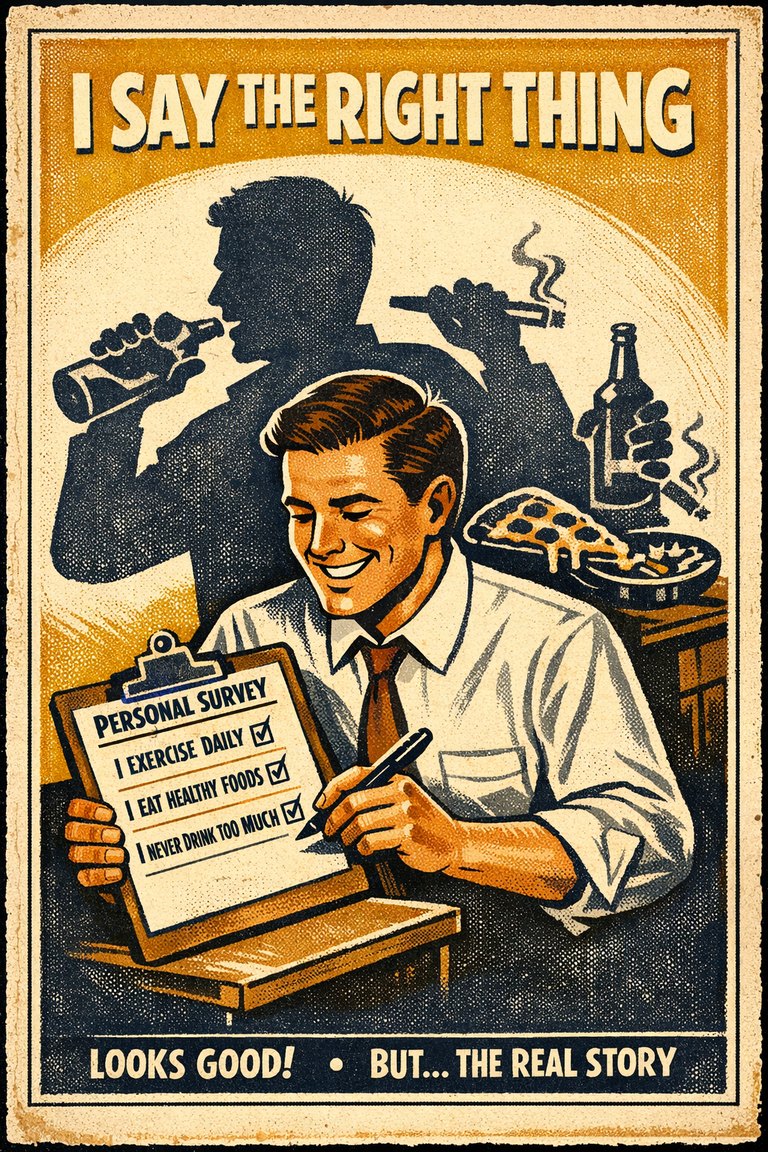
Social desirability bias
The tendency to over-report socially approved attitudes or behaviors and under-report the ones likely to invite embarrassment, judgment, or sanction.
Opinion ReportingOutcomeSurveys & interviewsTeams & management
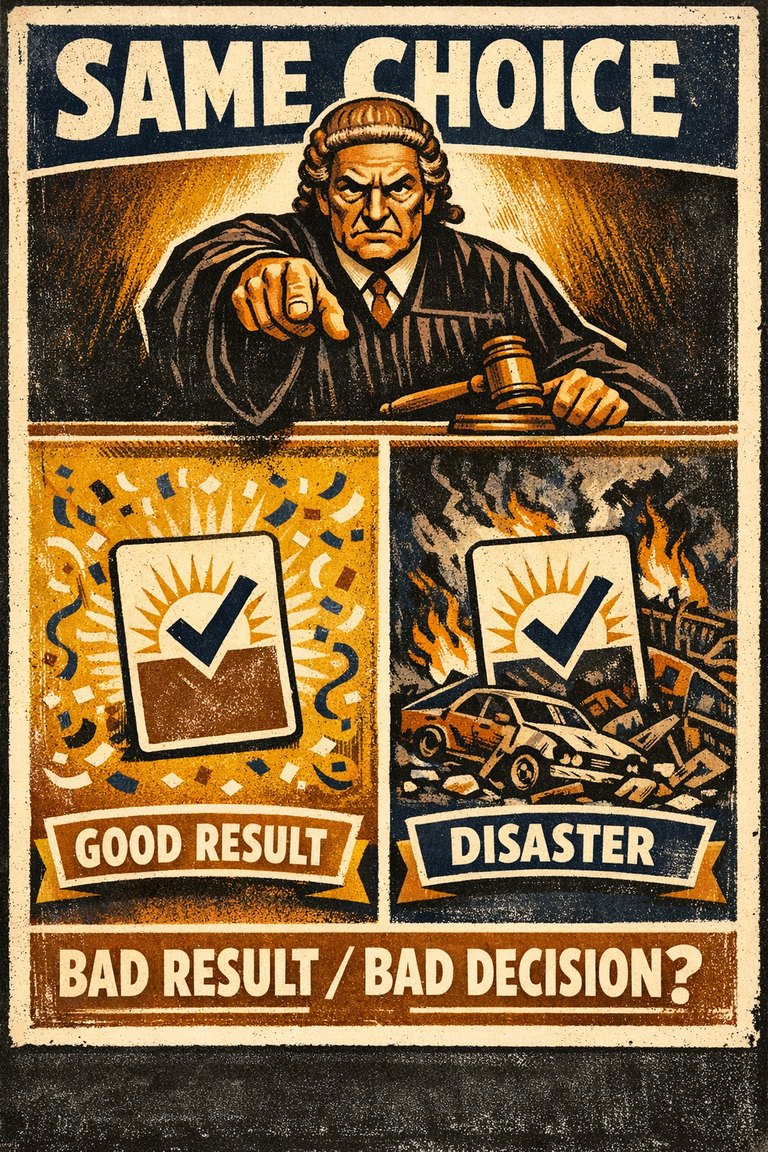
Outcome bias
The tendency to judge a decision mainly by its result rather than by the quality of the reasoning behind it.
EstimationOutcomePostmortems & learningTeams & management