Common in groups and online spaces
82
Homogeneous local networks make this bias feel especially natural.
Rare
Frequent

Cognitive Biases
A practical cognitive-bias site with clear definitions, learning paths, assessments, self-audits, and debiasing tools.
Cognitive Bias
The tendency to overestimate how many other people share one's own beliefs, preferences, habits, or reactions.
What it distorts
It bends social estimation, public judgment, and strategy by making one's own position feel closer to the common sense center than the evidence supports.
Typical trigger
Homogeneous social circles, partisan media, strong local cultures, online feedback loops, and situations where the broader sample is mostly imagined.
First countermove
Ask what real sample, not just your own intuition, supports the claim that most people think this way.
Best use
Structured process
Am I treating my own view as more common, obvious, or privately shared than the evidence for distribution actually supports?
The self becomes the easiest available sample. Because one's own view is highly accessible and often socially reinforced by local circles, it starts to feel more typical than it really is.
These are classroom-facing editorial estimates for comparing how the bias behaves in use. They are teaching aids, not measured statistics.
Common in groups and online spaces
82
Homogeneous local networks make this bias feel especially natural.
Easy to spot from outside
45
Usually visible when actual distributions are finally measured.
Easy to innocently commit
86
Your own view is the easiest anchor for estimating what seems normal.
Teaching difficulty
41
Simple to define, but it often travels with homophily and social pressure.
This comparison makes the hidden pull easier to see before the technical label has to do all the work.
Biased move
This is like assuming the whole theater enjoyed the movie because your row laughed at the same scenes you did.
Clearer comparison
Your local experience is real, but it is still a sample. Good judgment asks how much of the audience you actually observed before upgrading your preference into a norm.
Do not use this label for every mistaken prediction about public opinion. The key sign is that one's own preference quietly becomes the baseline estimate for what most other reasonable people must also think.
Use this label when people overestimate how widely their own choices, intuitions, or moral reads are shared, especially when disagreement becomes surprising or hard to interpret.
Use the quick check, caveat, and nearby confusions together. The fastest diagnosis is often the noisiest one.
Each example changes the surface context while keeping the same hidden distortion in place.
A person assumes their preferences are basically universal and is genuinely surprised when others do not share them.
A team member speaks as though the room already agrees because their immediate peers do, even though the wider organization does not.
Partisans misread the country because their own coalition, feed, or local environment makes their view feel like the obvious majority.
Your view feels not only correct but normal, so disagreement starts to look fringe, performative, or less common than it is.
Teaching note: This entry matters for polarization and team drift because it shows how people can sincerely mistake local reinforcement for broad social reality.
The strongest debiasing moves change the process, not just the label.
Replace vague majority language with a smaller, testable claim about the audience you actually know.
Ask whose reactions have been sampled and whose have merely been presumed.
Use anonymous surveys, broader sampling, or cross-group feedback before claiming that a view is normal, mainstream, or obvious.
Practice And Repair
False consensus effect turns familiarity into a distribution estimate. Because your own view is vividly accessible and socially reinforced nearby, it starts to feel much more universal than it is.
A person wants to estimate what most other people think, choose, or privately prefer while standing inside a partial local sample.
The person's own preference feels so natural that disagreement starts to look unusual, confused, or rare.
Private preference gets upgraded into an overestimate of public consensus.
Look for actual distribution data or anonymous first-pass responses before treating your local agreement pocket as a population read.
What evidence do I have about the wider distribution beyond my own network and the people most comfortable speaking first?
Spot It
Slow It
Reframe It
These are nearby labels that can share the same outer appearance while differing in what actually drives the distortion. Use the overlap, the distinction, and the diagnostic question together before settling the call.
Why compare it: Naive realism makes your own interpretation feel like the facts; false-consensus effect additionally makes that interpretation feel more widely shared than it is.
Why compare it: Social desirability bias changes what people say under evaluation; false-consensus effect changes what you estimate other people genuinely think.
Why compare it: Ingroup bias grants extra trust to your side; false-consensus effect misjudges how representative that side is.
These are useful when the label seems roughly right but the process change still feels underspecified.
What actual evidence do I have about how common this view is?
Am I sampling the public, or just sampling my own environment?
How different would my estimate look if I started from outside my circle rather than from myself?
These sourced cases do not prove what was in someone's head with perfect certainty. They are teaching cases for showing where the bias pressure becomes visible in practice.
The sandwich-board studies
People who agreed to wear a sandwich board often overestimated how many others would make the same choice, while refusers made the opposite overestimate.
Why it fits: Each side used its own preference as a noisy estimator of the population's likely preference.
1977
Team silence mistaken for broad agreement
Groups often overread local conversational ease or silence as evidence that most members privately share the same view.
Why it fits: The available local sample is treated like a clean read of wider consensus even though dissent cost and sampling limits remain uninspected.
Modern group dynamics
The sandwich-board choice experiment
Participants who agreed or refused to wear a sandwich-board sign each tended to overestimate how many other people would make the same choice.
Why it fits: One's own response became a poor estimate of the broader distribution.
Journal of Experimental Social Psychology · 1977
These linked tools turn the page into practice instead of leaving it at the level of definition.
This bias appears directly in one guided sequence and also in nearby paths that frame the same judgment problem from a slightly wider angle.
Direct path
Use this path when a room feels aligned too quickly or when private judgment is likely being bent by social cost.
Same path family · People judgment
Use this path when ambiguous behavior is being read through threat, bad faith, or us-versus-them interpretation.
These audits combine direct and nearby checks so you can test the label itself and the broader judgment pattern around it.
Direct audit
Would I still hold this view if I had to write it down alone before hearing the room?
Same audit family · People judgment
Before You Read Hostility Into It
What else could explain this besides threat, contempt, or bad faith?
These workshop packets mix direct coverage with nearby classroom material that makes the same distortion easier to teach.
Direct workshop
Relationship Conflict Attribution Reset
A reflective kit for slowing motive-reading, character verdicts, and self-protective memory during conflict.
Nearby workshop
A facilitation kit for rooms where agreement, hierarchy, and speed may be replacing independent judgment.
2 mixed scenarios let you diagnose this bias from the case rather than the heading.
Direct scenario
Everyone probably wants the same holiday
One family member assumes everyone else wants a quiet holiday because that is what sounds obviously restorative to him. Later he learns others wanted a larger gathering but did no…
Direct scenario
Everyone probably agrees with me
A manager assumes most of the team privately supports a new policy because the people he talks to most often support it and because open disagreement in meetings has been sparse.
These links widen the frame around the bias without interrupting the core lesson on this page.
An essay on how social cost changes what gets noticed, said, and challenged long before a formal group decision is written down.
CogBias theory
An article on how self-report shifts under observation, embarrassment, and audience cost long before anyone intentionally decides to lie.
CogBias theory
These neighbors were selected from shared categories, shared patterns, and explicit editorial links where available.
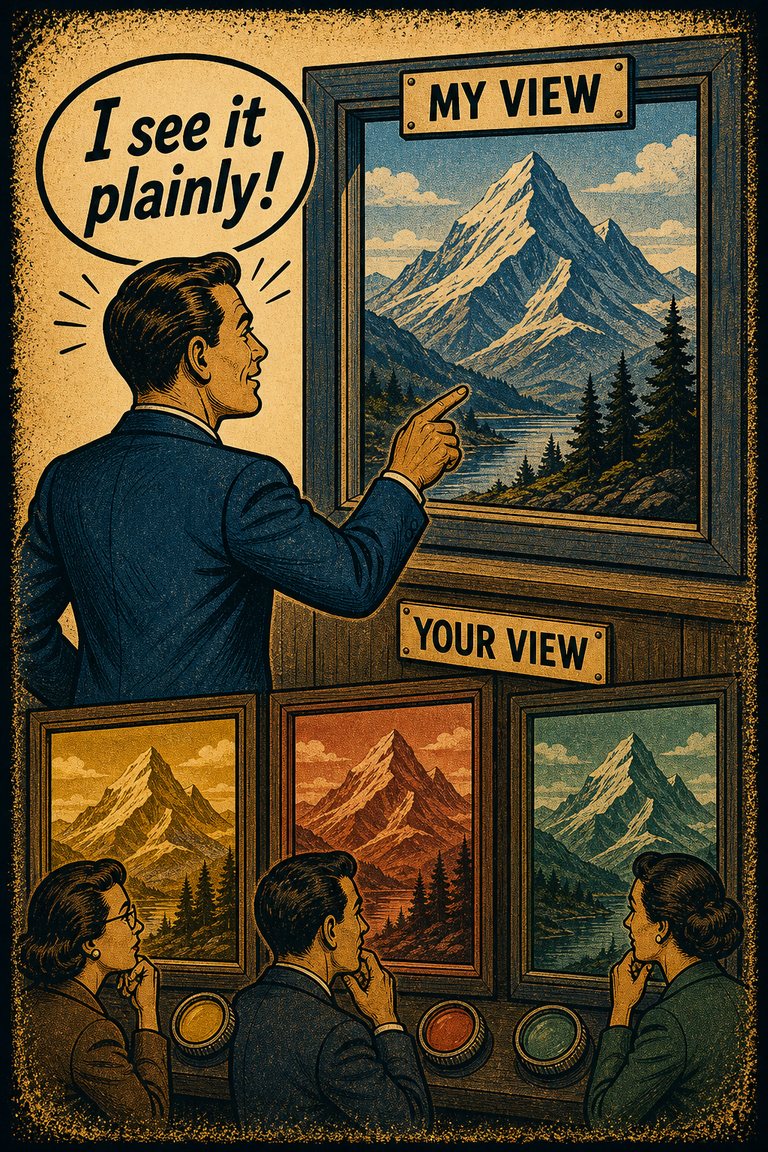
The tendency to see one's own view as plain reality and disagreement as ignorance, bias, or irrationality.
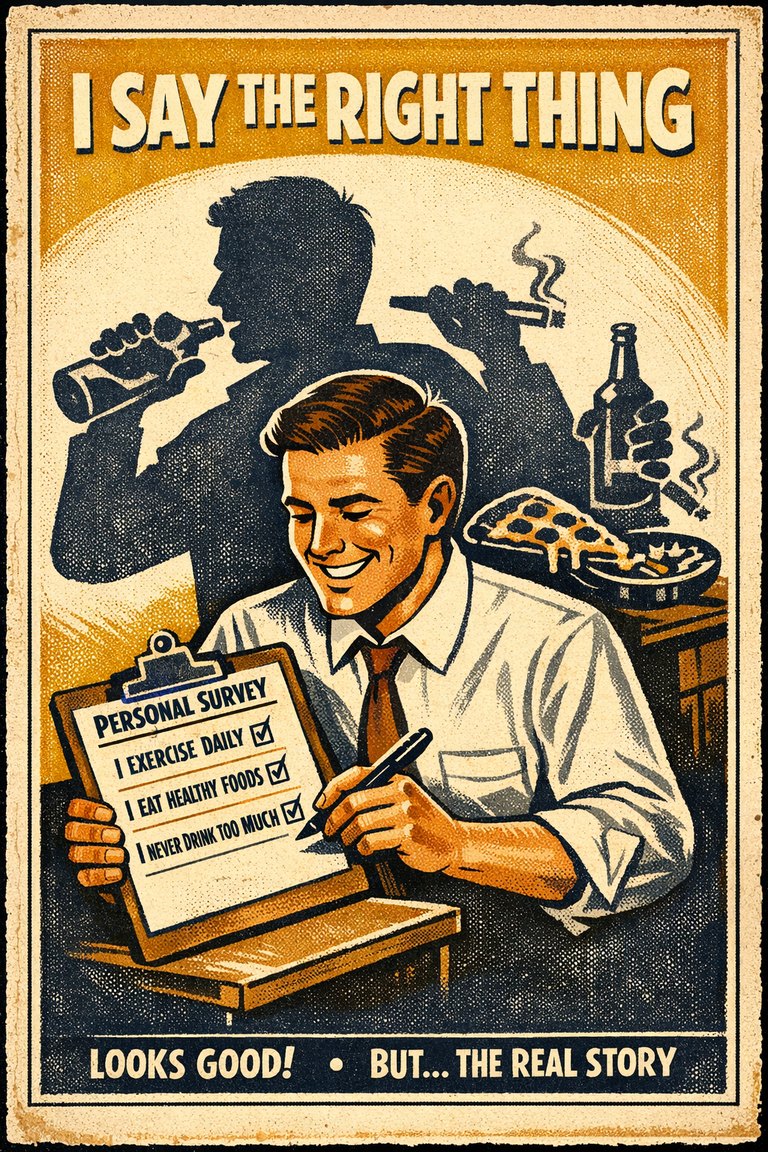
The tendency to over-report socially approved attitudes or behaviors and under-report the ones likely to invite embarrassment, judgment, or sanction.
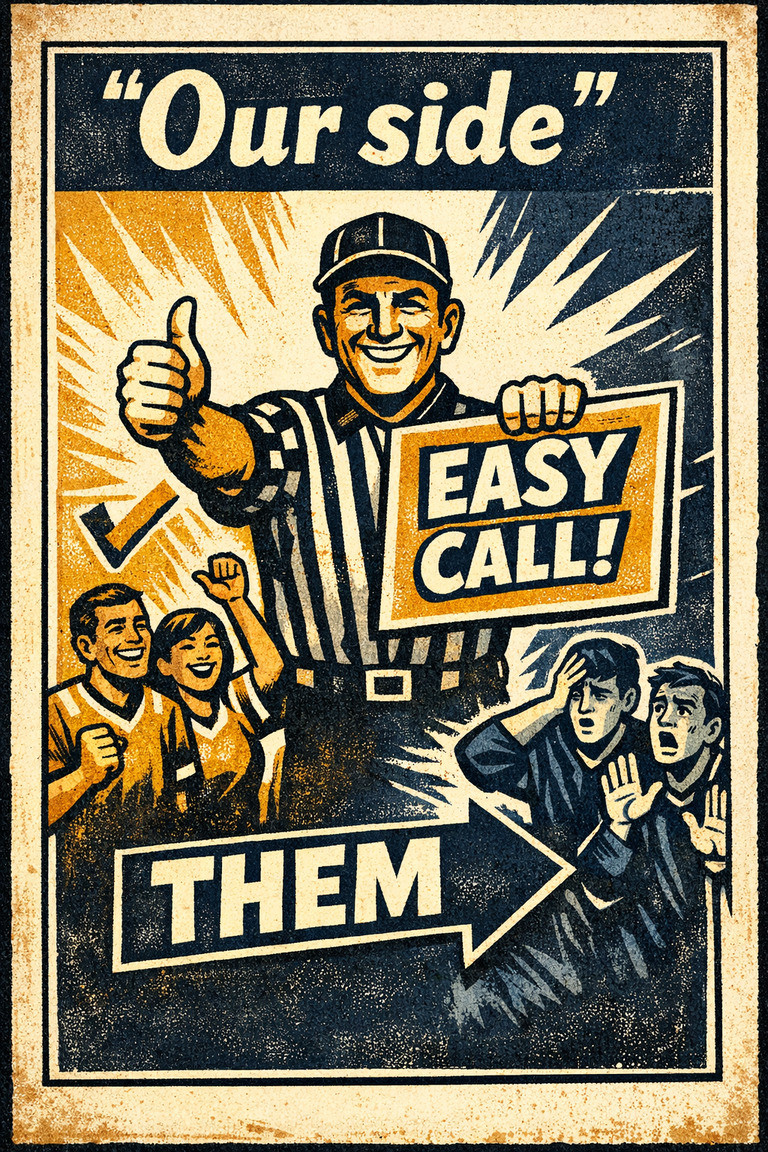
The tendency to favor, trust, defend, or positively interpret people and claims associated with one's own group more readily than comparable outsiders.
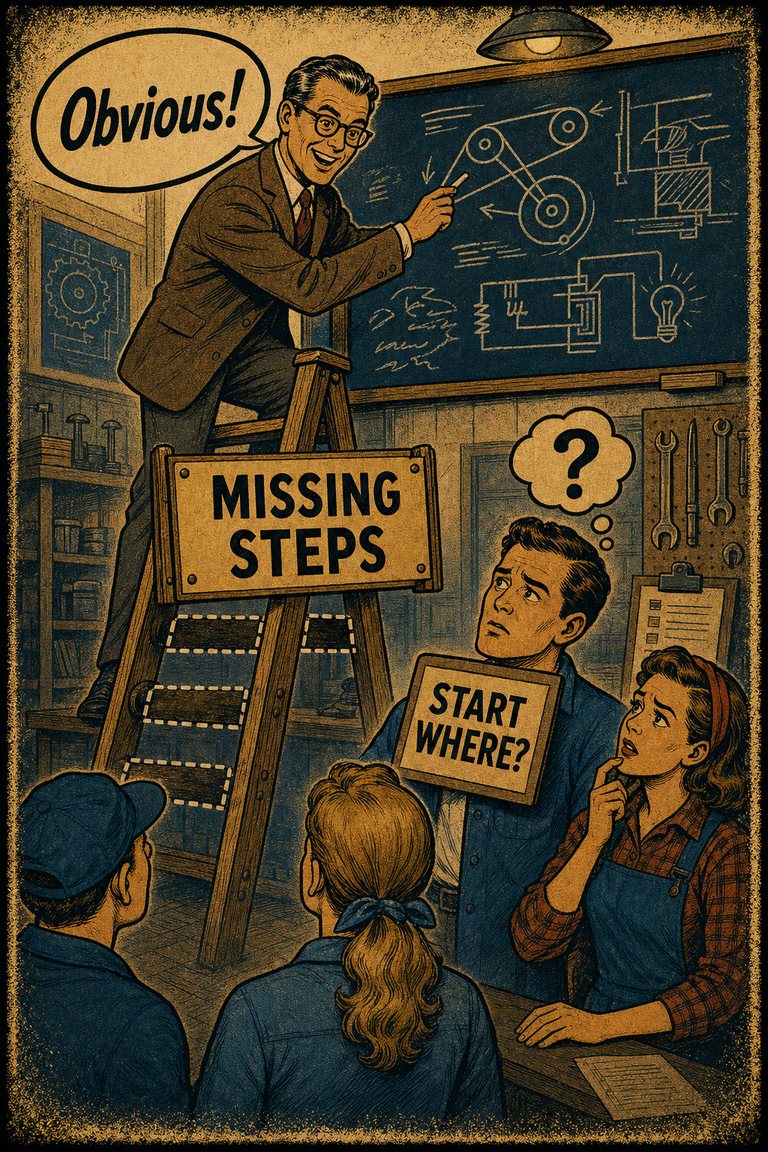
The tendency for better-informed people to underestimate how hard the issue looks to less-informed people.
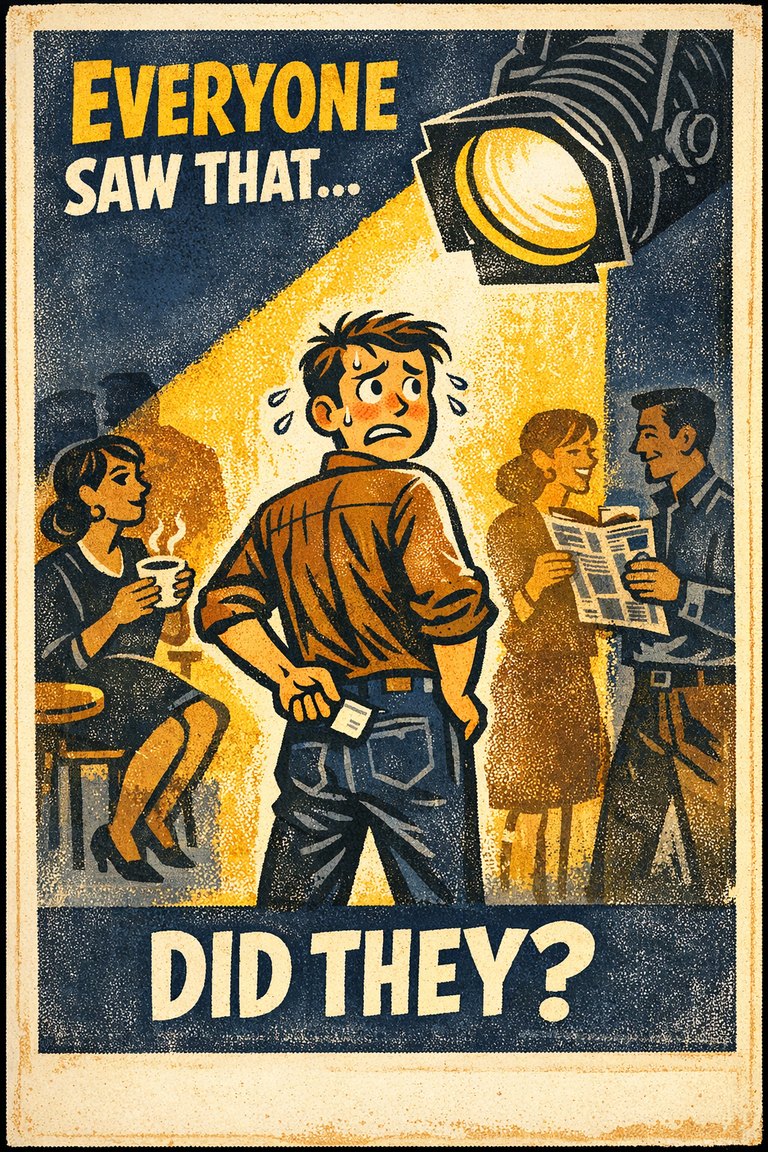
The tendency to overestimate how much other people notice, remember, or care about one's appearance, mistakes, or behavior.

An exception to the fundamental attribution error, where people view others as having extrinsic motivations, while viewing themselves as having intrinsic motivations.