Hindsight bias
Core pattern
After knowing the result, people remember the earlier uncertainty as cleaner and more predictable.
Ask: What did we actually believe before the outcome was known?

Cognitive Biases
A practical cognitive-bias site with clear definitions, learning paths, assessments, self-audits, and debiasing tools.
Compare Biases
Hindsight bias makes the outcome feel predictable after the fact; outcome bias uses the result to grade the earlier decision process.
Hindsight bias
After knowing the result, people remember the earlier uncertainty as cleaner and more predictable.
Ask: What did we actually believe before the outcome was known?
Outcome bias
The result is used as evidence that the decision process was good or bad.
Ask: Was the process sound by the evidence available at the time?
Postmortems often slide from 'we should have known' into 'therefore the decision was bad.'
Ask whether the claim is about prior predictability or decision quality.
Use these before deciding which label should carry the lesson.
Are people saying the result was obvious, or that the process was proven good or bad?
Do timestamped forecasts contradict the current story?
Would the process get the same grade if luck had gone the other way?
The same surface area can point to different underlying mechanisms.
After a vendor fails, people say the warning signs were obvious all along.
Why: The known result is making prior uncertainty disappear.
A risky launch is praised as smart because it happened to work.
Why: The result is being used to grade the process.
Repair Move
Use decision journals: recover prior forecasts first, then grade process separately from outcome.
Use the comparison as a bridge into the fuller pages.
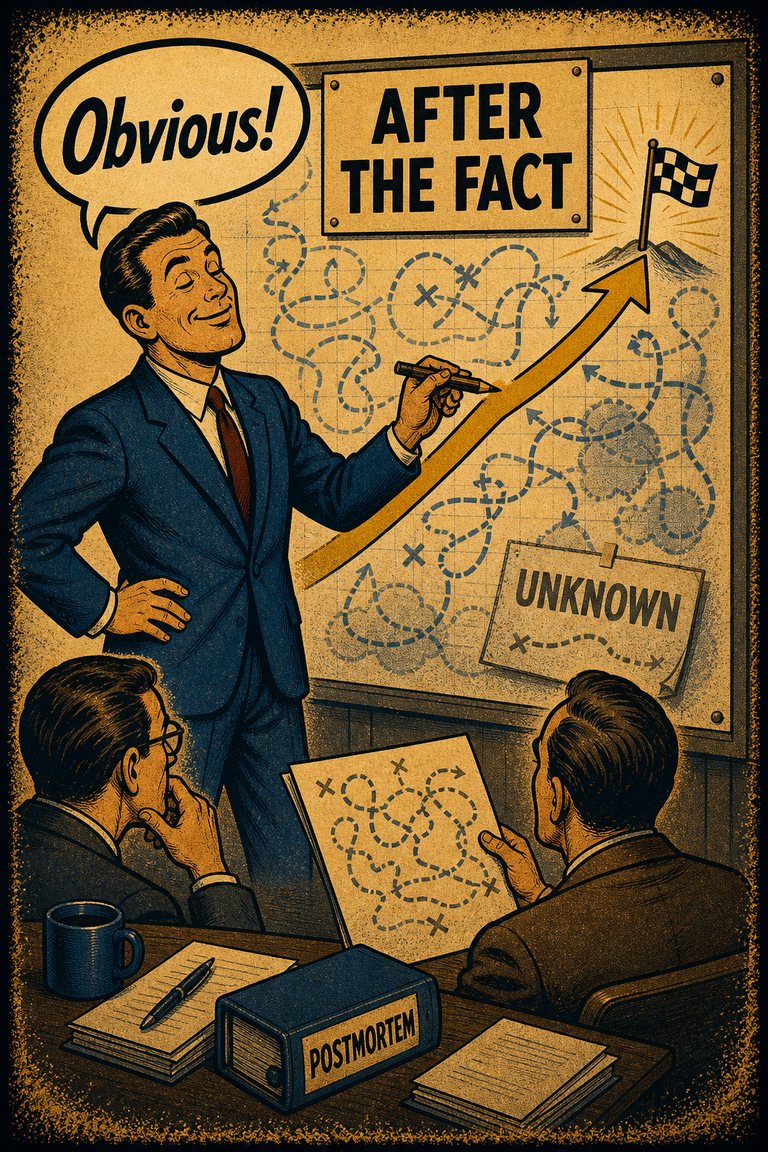
The tendency after an outcome is known, to see it as having been more obvious or predictable than it actually was beforehand.
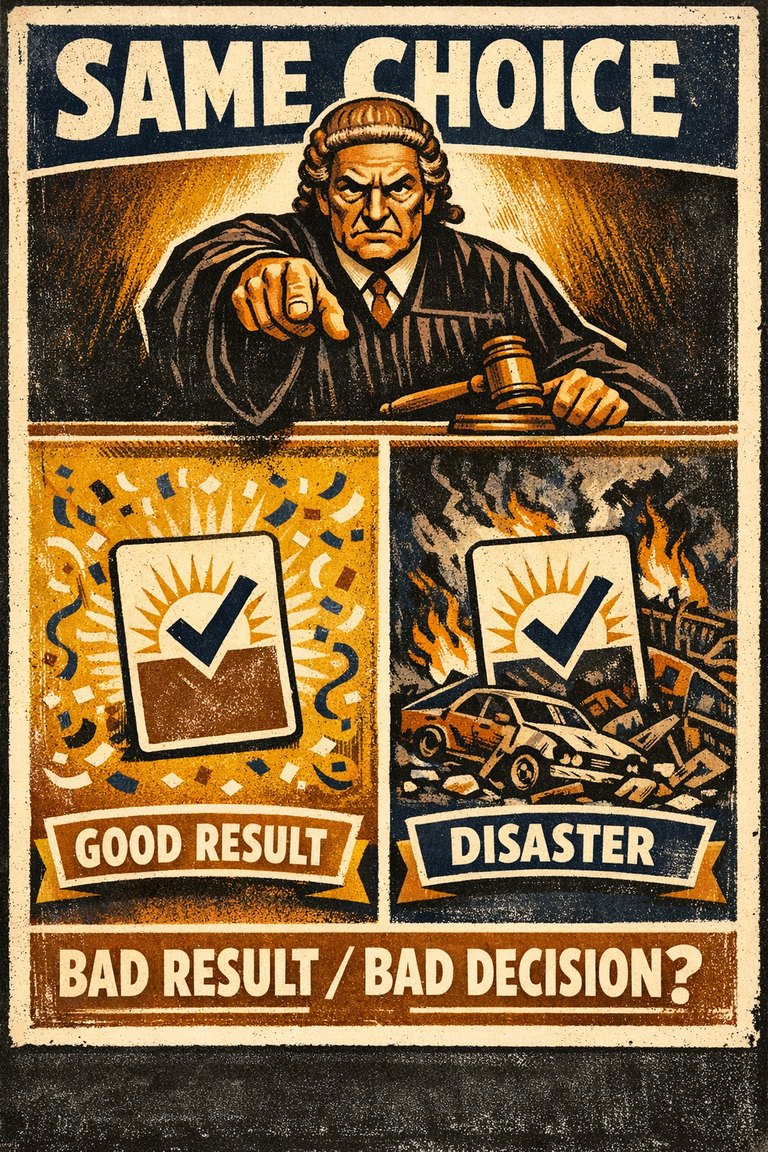
The tendency to judge a decision mainly by its result rather than by the quality of the reasoning behind it.