Common in hierarchies
84
Especially strong when dissent feels socially costly or procedurally awkward.
Rare
Frequent

Cognitive Biases
A practical cognitive-bias site with clear definitions, learning paths, assessments, self-audits, and debiasing tools.
Cognitive Bias
The tendency to give excess weight to the opinion of a high-status or authoritative source independent of whether the source has earned that weight on the specific issue.
What it distorts
It bends belief, compliance, and collective decision-making by letting position or aura substitute for issue-specific evidence.
Typical trigger
Hierarchies, experts speaking outside their domain, charismatic leaders, branded institutions, and urgent situations where independent evaluation feels costly.
First countermove
Ask what the content would sound like if it came from someone without the same status marker.
Best use
Quick reset
How much of this judgment is coming from the reasons, and how much is coming from who delivered them?
Status compresses evaluation. The mind uses prestige, hierarchy, or symbolic authority as a shortcut for credibility, often before the content has been properly inspected.
These are classroom-facing editorial estimates for comparing how the bias behaves in use. They are teaching aids, not measured statistics.
Common in hierarchies
84
Especially strong when dissent feels socially costly or procedurally awkward.
Easy to spot from outside
52
Often visible once names and titles are stripped from the recommendation.
Easy to innocently commit
81
Using prestige as a shortcut can feel efficient and respectful.
Teaching difficulty
36
The line between legitimate expertise and overdeference needs careful handling.
This comparison makes the hidden pull easier to see before the technical label has to do all the work.
Biased move
This is like treating a gold microphone as if it improved the truth of whatever was spoken into it.
Clearer comparison
Credibility can be relevant, but prestige is not a substitute for issue-specific evidence. A strong source still needs the right kind of support.
Do not use this label whenever expertise matters. Expertise often should matter. The distortion begins when status or prestige gets more weight than domain fit, evidence quality, or argument strength deserves.
Use this label when deference to rank, fame, institutional aura, or confident delivery starts doing evidential work that should have stayed with the reasons themselves.
Use the quick check, caveat, and nearby confusions together. The fastest diagnosis is often the noisiest one.
Each example changes the surface context while keeping the same hidden distortion in place.
A person defers to a confident authority figure on a topic where the authority's status is only loosely related to the actual question.
A senior leader's preferred interpretation gains traction before the evidence is examined because people treat role rank as substantive validation.
Celebrities, founders, officials, or prestigious commentators move belief not mainly through argument but through symbolic authority.
The argument seems almost pre-evaluated by who delivered it, so the content arrives wearing borrowed credibility.
Teaching note: This page becomes especially powerful when paired with groupthink because it shows how social structure distorts judgment without needing overt coercion.
The strongest debiasing moves change the process, not just the label.
Restate the claim without the source label and evaluate the reasons on their own.
Ask lower-status voices to speak first or independently before the senior view sets the frame.
Separate evidence review from hierarchy whenever the decision quality matters more than ritual deference.
Practice And Repair
Authority bias often sounds like practical trust. The problem is not that source quality matters. The problem is that hierarchy or prestige starts outrunning issue-specific fit.
A recommendation arrives from a person or institution with high status, rank, prestige, or symbolic authority.
The source's standing makes the conclusion feel safer to accept and more awkward to challenge.
Borrowed credibility starts substituting for direct evaluation of the reasons, evidence, or domain fit.
Evaluate the recommendation once with source labels hidden and once with them visible, then compare how much the reasons themselves were doing.
If the same claim came from someone unknown, what evidence would I say I still needed?
Spot It
Slow It
Reframe It
These are nearby labels that can share the same outer appearance while differing in what actually drives the distortion. Use the overlap, the distinction, and the diagnostic question together before settling the call.
Why compare it: Groupthink suppresses dissent across the room; authority bias is the specific overweighting of the high-status voice inside that room.
Why compare it: Halo effect spreads one admired trait across many judgments; authority bias is the special case where status itself is doing the spreading.
Why compare it: Social desirability shapes what people say under evaluation; authority bias shapes what they are willing to believe or endorse because of the evaluator's status.
These are useful when the label seems roughly right but the process change still feels underspecified.
What would I think of this claim if it came from a low-status source with the same evidence?
Is the authority relevant to this specific issue or merely impressive in general?
Am I borrowing certainty from rank because evaluating the content directly feels harder?
These sourced cases do not prove what was in someone's head with perfect certainty. They are teaching cases for showing where the bias pressure becomes visible in practice.
The Milgram obedience experiments
Participants often continued harmful actions because the institutional authority of the experimenter strongly shaped what felt permissible and required.
Why it fits: The pressure of authority changed behavior and judgment even when personal hesitation remained present.
1961 onward
Prestige cues dominating weak domain fit
Authority bias shows up when a famous or high-status figure receives extra deference on issues where the real expertise is only loosely connected to the claim at hand.
Why it fits: Status starts impersonating evidence even though domain fit is thin.
Modern examples
Milgram's obedience experiments
Participants often continued administering what they believed were painful shocks when prompted by an experimenter in an authoritative setting.
Why it fits: The authority cue changed what participants treated as permissible, expected, and evidentially settled.
Journal of Abnormal and Social Psychology · 1963
Biblical authority as a public moral anchor
A moral-discussion episode argues that judgments about what is good, right, true, and harmful need to be rooted in biblical authority.
Why it fits: This is an intentionally borderline authority-bias example. Scripture can be a legitimate internal authority in confessional theology; the bias risk appears when ingroup authority is treated as a shortcut for public justification across worldviews.
Frank Turek, I Don't Have Enough FAITH to Be an ATHEIST · 2023-03-10
These linked tools turn the page into practice instead of leaving it at the level of definition.
This bias appears directly in one guided sequence and also in nearby paths that frame the same judgment problem from a slightly wider angle.
Direct path
Use this path when a room feels aligned too quickly or when private judgment is likely being bent by social cost.
Same path family · Conflict and social threat
Use this path when a discussion is drifting from behavior into identity, motive, or character verdict.
These audits combine direct and nearby checks so you can test the label itself and the broader judgment pattern around it.
Direct audit
Would I still hold this view if I had to write it down alone before hearing the room?
Same audit family · Conflict and social threat
Am I reacting to the person, to the situation, or to my own first-pass impression of the person?
These workshop packets mix direct coverage with nearby classroom material that makes the same distortion easier to teach.
Direct workshop
A facilitation kit for rooms where agreement, hierarchy, and speed may be replacing independent judgment.
Nearby workshop
Product Choice-Architecture Audit
A product and UX kit for testing whether defaults, decoys, metrics, and automation are helping users choose or quietly manufacturing preference.
2 mixed scenarios let you diagnose this bias from the case rather than the heading.
Direct scenario
The title settles it
A board member starts accepting a recommendation mainly because it came from a famous consultant, even though the consultant's real expertise is only loosely connected to the issu…
Direct scenario
The room after the vice president speaks
In a planning meeting, the vice president favors one vendor early. Later comments keep bending toward that vendor even though several participants privately think another option h…
This bias is also featured on Slugfester, a companion site with its own reference format and teaching angle.
Slugfester’s version is a useful companion when you want a second framing of how status, prestige, and deference bend what gets accepted as true.
These links widen the frame around the bias without interrupting the core lesson on this page.
An essay on how social cost changes what gets noticed, said, and challenged long before a formal group decision is written down.
CogBias theory
An article on why halo effect, attribution errors, implicit bias, and related distortions tend to compound rather than appear in isolation.
CogBias theory
These neighbors were selected from shared categories, shared patterns, and explicit editorial links where available.
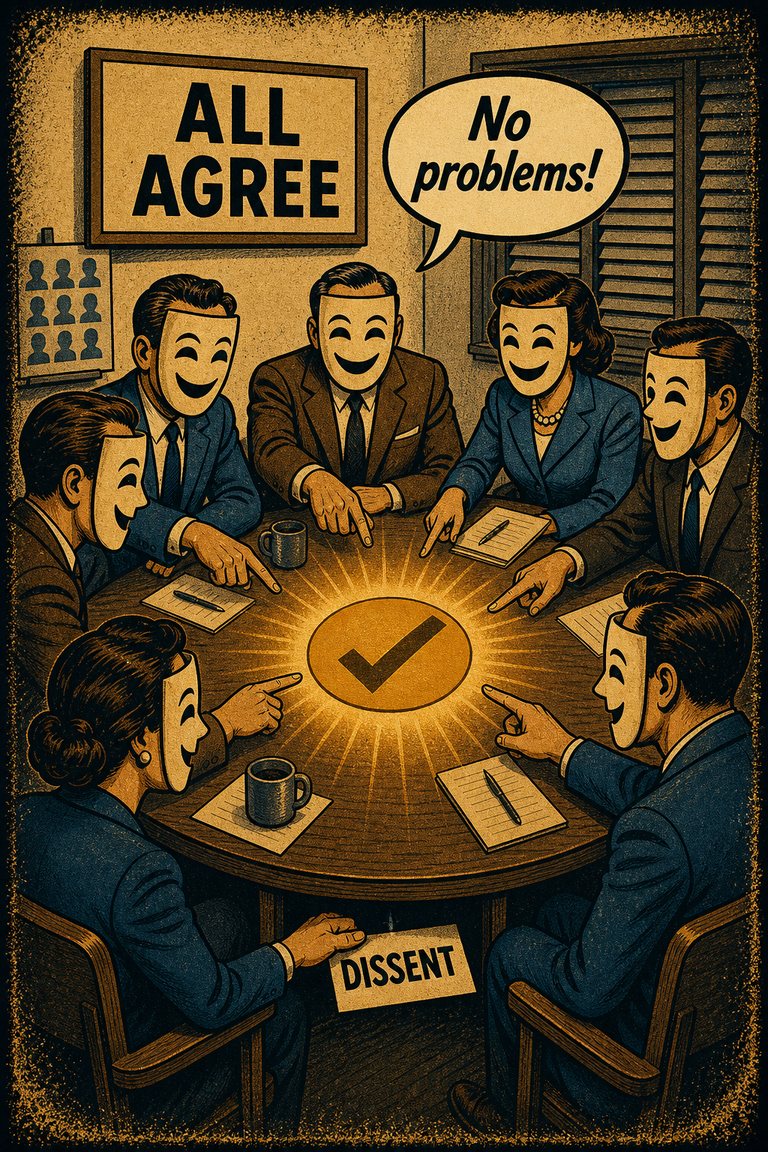
The tendency for groups to protect harmony or momentum at the cost of critical evaluation and dissent.
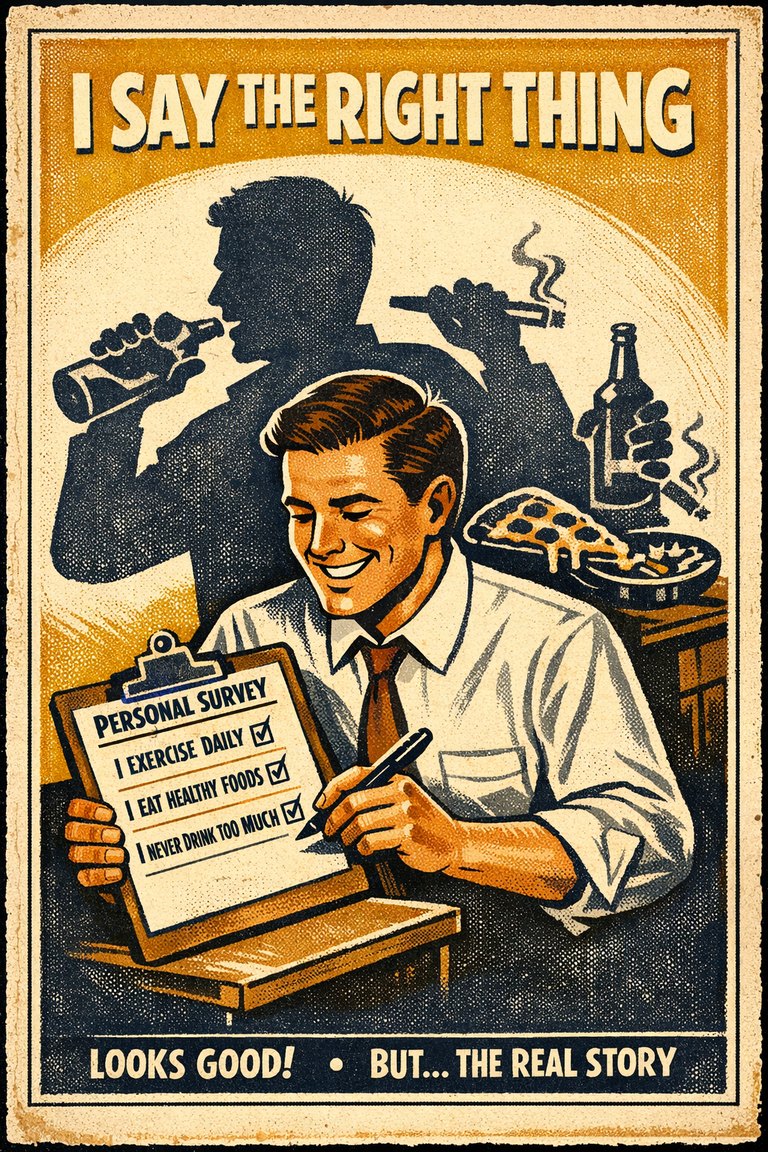
The tendency to over-report socially approved attitudes or behaviors and under-report the ones likely to invite embarrassment, judgment, or sanction.
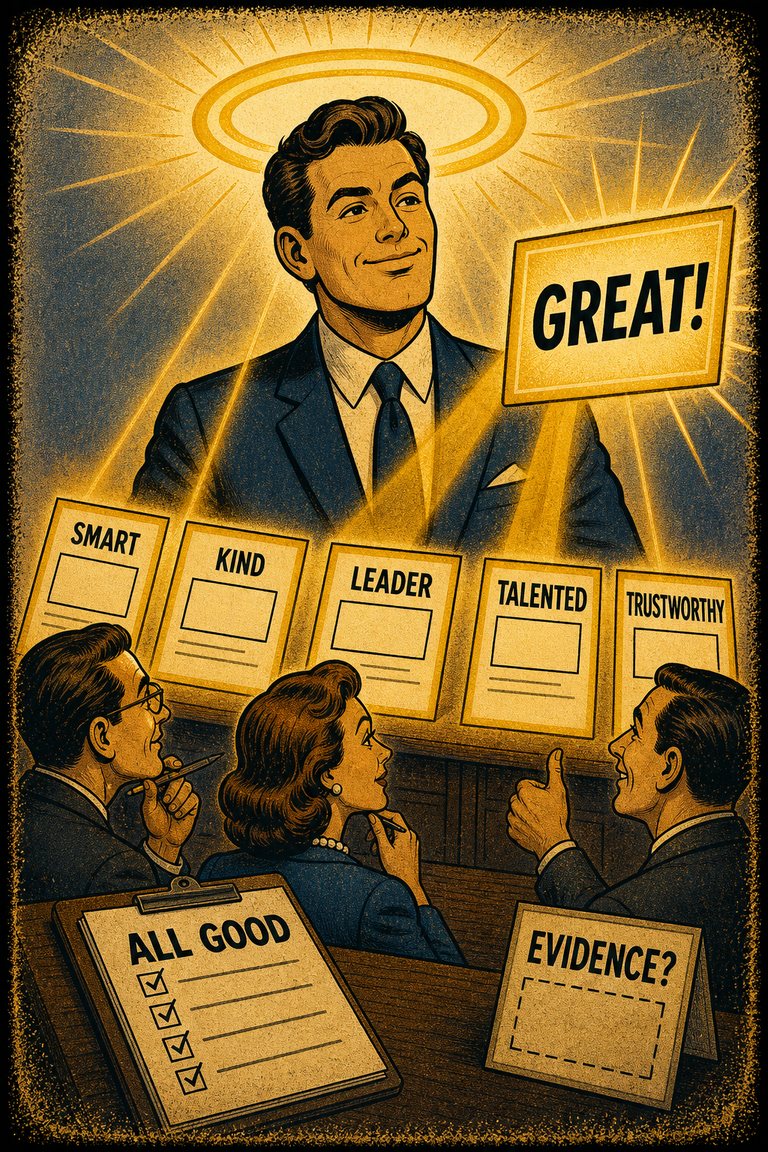
The tendency for one salient positive or negative impression to spill over into unrelated judgments about a person, product, or institution.
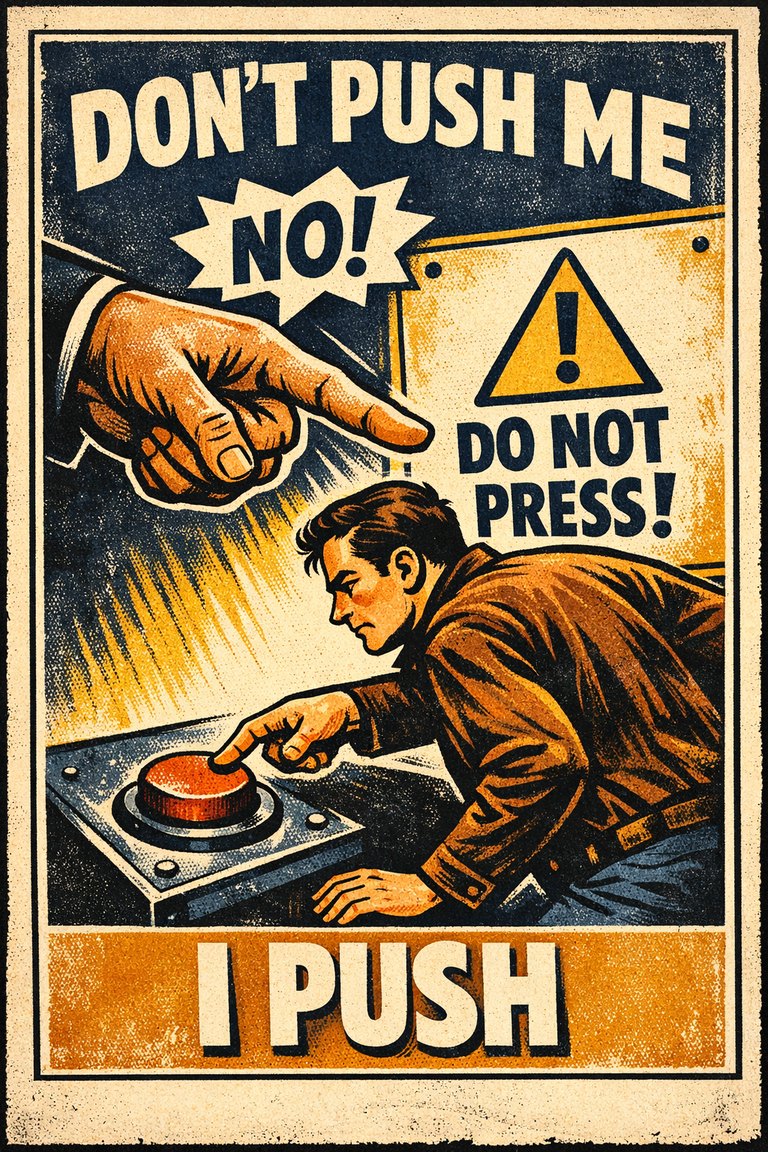
The tendency to push back against a perceived attempt to limit one's freedom of choice, sometimes by moving toward the very option one was being steered away from.

The tendency for low skill or shallow understanding to produce overestimation of one's own competence, while higher-skill people may underestimate how unusual their competence really is.
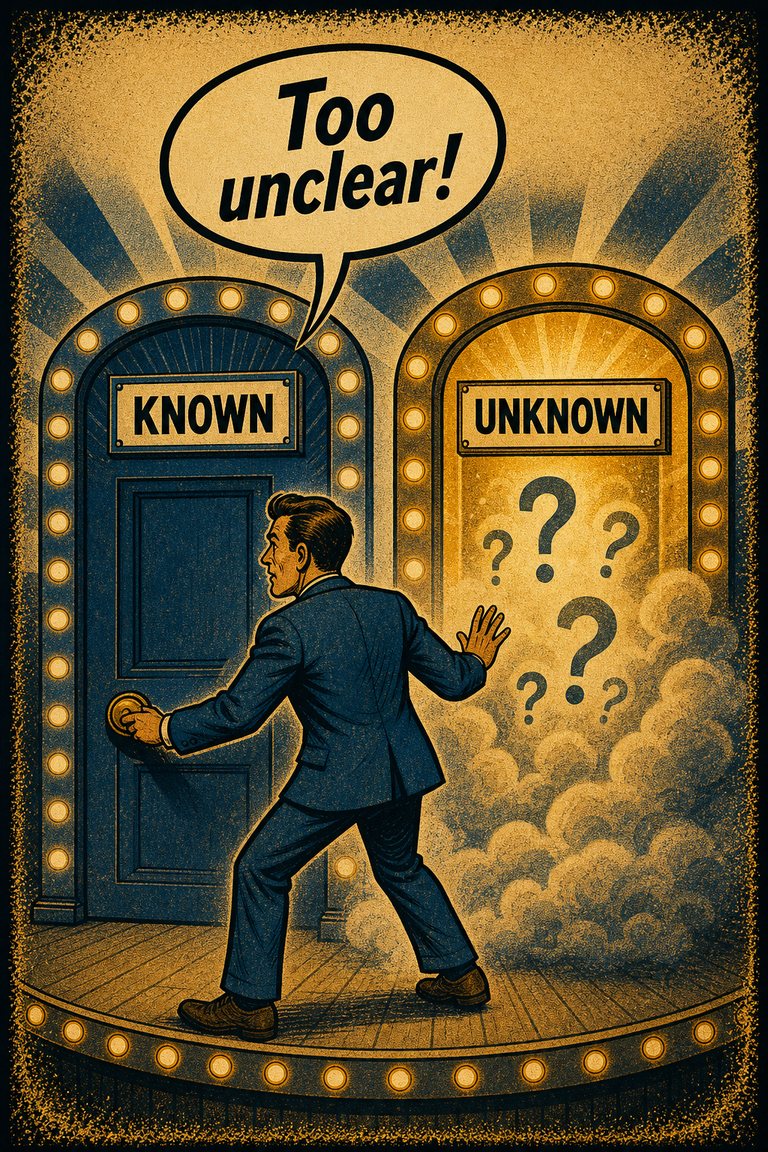
The tendency to avoid options when their probabilities are unclear, even if the unclear option may not actually be worse than the familiar one.