Common in forecasting
86
Especially common when pressure rewards decisiveness more than calibration.
Rare
Frequent

Cognitive Biases
A practical cognitive-bias site with clear definitions, learning paths, assessments, self-audits, and debiasing tools.
Cognitive Bias
The tendency to be more certain about judgments, forecasts, or abilities than the evidence warrants.
What it distorts
It produces narrow forecasts, premature closure, and risky commitments that look justified mainly because they feel fluent.
Typical trigger
Fast intuitive judgment, expertise in adjacent domains, and weak feedback loops.
First countermove
Translate confidence into a numeric range or probability and then compare it to real outcomes later.
Best use
Structured process
Have I recorded uncertainty honestly, or only rehearsed the story that makes the answer sound crisp?
Coherent stories feel informative, familiarity feels like mastery, and feedback is often too sparse or noisy to recalibrate confidence reliably.
These are classroom-facing editorial estimates for comparing how the bias behaves in use. They are teaching aids, not measured statistics.
Common in forecasting
86
Especially common when pressure rewards decisiveness more than calibration.
Easy to spot from outside
36
Can look admirable until the range is compared with the uncertainty actually present.
Easy to innocently commit
83
Clear stories and early success make narrowing the range feel responsible.
Teaching difficulty
48
Sticks best when learners have to write and later revisit their own forecasts.
This comparison makes the hidden pull easier to see before the technical label has to do all the work.
Biased move
This is like drawing a very narrow target around the part of the field you happen to feel most familiar with.
Clearer comparison
The shot can still miss badly even though your confidence in the chosen zone feels earned from the inside.
Do not use this label for every confident person or every wrong prediction. The issue is not tone alone. The issue is a mismatch between certainty and the amount of uncertainty the evidence still leaves open.
Use this label when confidence intervals, forecasts, or judgments are tighter and more certain than the evidence justifies.
Use the quick check, caveat, and nearby confusions together. The fastest diagnosis is often the noisiest one.
Each example changes the surface context while keeping the same hidden distortion in place.
Someone gives a tight arrival-time estimate for a complicated trip even though nearly every similar trip has produced surprises.
A founder treats a single launch date or revenue target as precise even though the underlying assumptions remain fragile and correlated.
Pundits deliver narrow confident predictions about elections or markets and later narrate the miss as a small timing error rather than as miscalibration.
The forecast feels clear, and that feeling of clarity gets mistaken for evidence of reliability.
Teaching note: This entry pairs naturally with hindsight bias because one inflates confidence before the event and the other edits memory after it.
The strongest debiasing moves change the process, not just the label.
Translate confidence into a probabilistic range and record it before the outcome is known.
Run a premortem that forces concrete downside scenarios into the conversation.
Track forecast scores over time so confidence claims meet accountability.
Practice And Repair
Overconfidence rarely feels reckless. It feels like the moment when enough uncertainty has been shaved away to justify decisiveness, even when too much uncertainty is still alive.
A person is asked for a clear call, a tight range, or a public level of certainty before the uncertainty has been fully mapped.
The story now sounds coherent enough that widening the range starts to feel like weakness rather than accuracy.
Forecasts, confidence claims, and commitment levels become too tight for the evidence base that produced them.
Name the outside view, widen the range once for uncertainty you have not modeled well, and preserve the forecast for later review.
What uncertainty am I currently compressing because a decisive answer feels socially cleaner?
Spot It
Slow It
Reframe It
These are nearby labels that can share the same outer appearance while differing in what actually drives the distortion. Use the overlap, the distinction, and the diagnostic question together before settling the call.
Why compare it: Anchoring distorts the starting point; overconfidence distorts the width of the final range and the felt certainty around it.
Why compare it: Hindsight bias makes past misses seem more predictable afterward; overconfidence is the overly narrow certainty before the outcome arrives.
Why compare it: Planning fallacy is a special forecasting pattern; overconfidence is the broader habit of overstating precision and accuracy.
These are useful when the label seems roughly right but the process change still feels underspecified.
What range would honestly capture the uncertainty here?
How often has this level of confidence been right in similar cases?
Which failure mode is easiest for me not to model because it is embarrassing?
These sourced cases do not prove what was in someone's head with perfect certainty. They are teaching cases for showing where the bias pressure becomes visible in practice.
Confidence intervals that miss far too often
People asked to give 90 percent confidence intervals routinely provide ranges that miss much more often than 10 percent of the time.
Why it fits: Their expressed certainty outruns their actual calibration.
Ongoing research line
Executive and project forecasting under uncertainty
Decision-makers often report narrower downside ranges than later outcomes support.
Why it fits: The desire for decisiveness keeps eating uncertainty faster than evidence warrants.
Modern examples
These linked tools turn the page into practice instead of leaving it at the level of definition.
2 related paths place this bias beside the distortions it most often travels with in practice.
Direct path
Use this path before a major project, strategy choice, or resource commitment.
Direct path
Use this path when someone sounds sure, fluent, or experienced and you need to know whether the underlying understanding is actually there.
These short audits help catch this bias before it hardens into a verdict, forecast, or decision.
Direct audit
Am I choosing the best forward-looking option, or the most comfortable inherited one?
Direct audit
What would the outside view say before the inside story takes over?
This bias is not yet the named center of its own kit, but it already appears in nearby workshop material that teaches the same pressure in context.
Nearby workshop
A facilitation kit for rooms where agreement, hierarchy, and speed may be replacing independent judgment.
Nearby workshop
Product Choice-Architecture Audit
A product and UX kit for testing whether defaults, decoys, metrics, and automation are helping users choose or quietly manufacturing preference.
These scenarios mix direct and nearby cases so you can practice the label itself and the broader judgment pattern around it.
Direct scenario
The range is too neat
A forecaster says she is 95 percent sure quarterly sales will land between two numbers that are only a few percentage points apart, even though the market is highly unstable and s…
Same scenario family · Decision under uncertainty
The first number in the room
A product team sees one early retention number from a tiny pilot and keeps comparing every later forecast to that first number, even after much larger cohorts come in.
These links widen the frame around the bias without interrupting the core lesson on this page.
An article on how recognition and smooth explanation often get mistaken for depth long before the underlying competence is there.
CogBias theory
A guide to building instruction around calibration, comparison, and challenge rather than around confidence displays alone.
CogBias theory
These neighbors were selected from shared categories, shared patterns, and explicit editorial links where available.
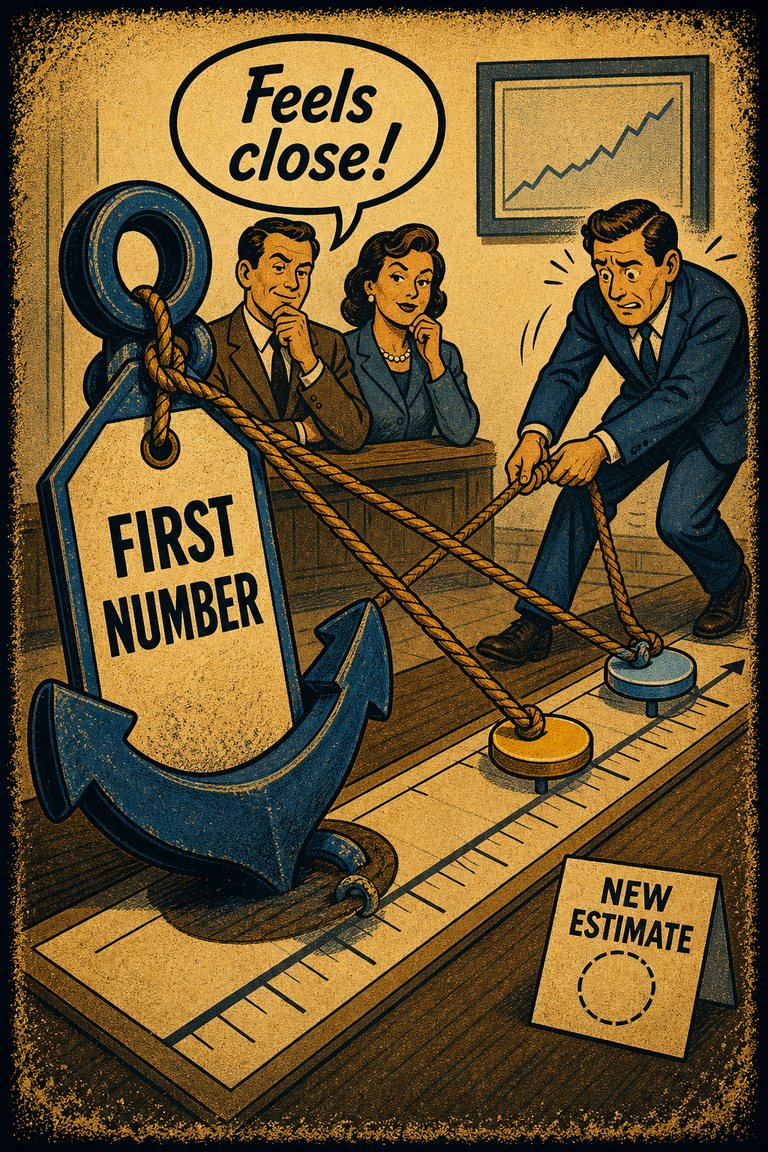
The tendency for the first salient number, frame, or option to pull later estimates toward itself even when it is arbitrary or weakly relevant.
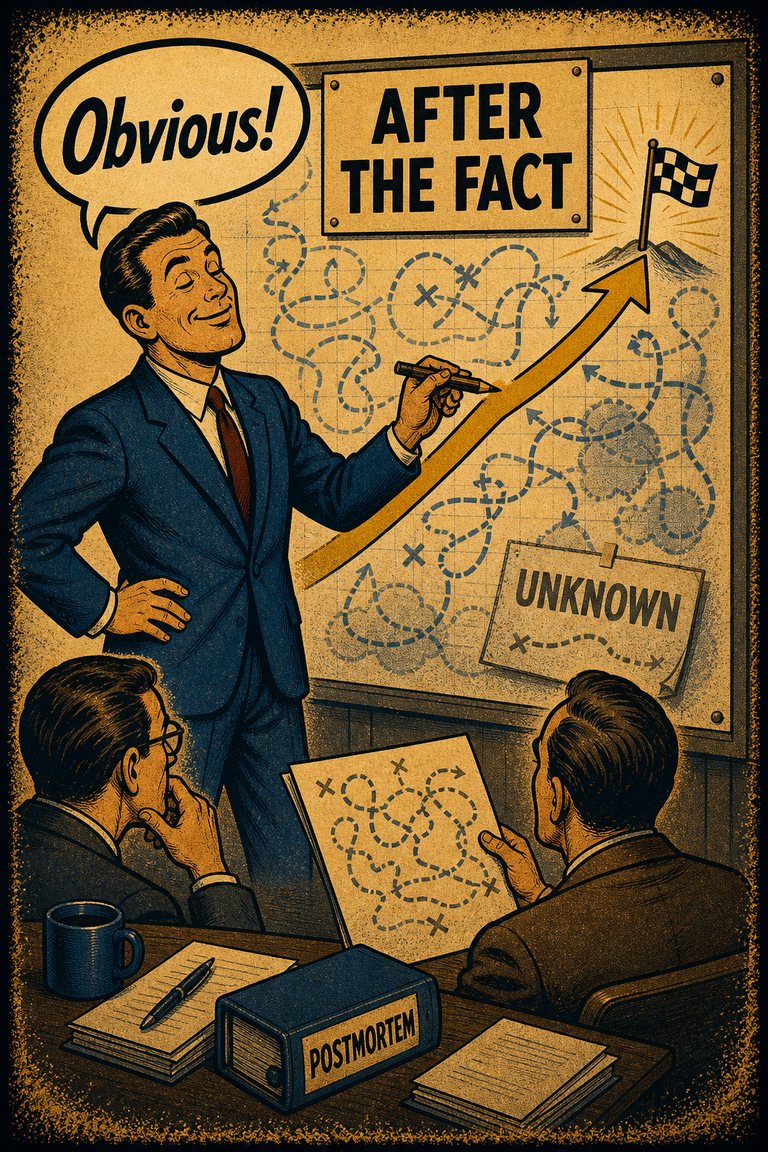
The tendency after an outcome is known, to see it as having been more obvious or predictable than it actually was beforehand.
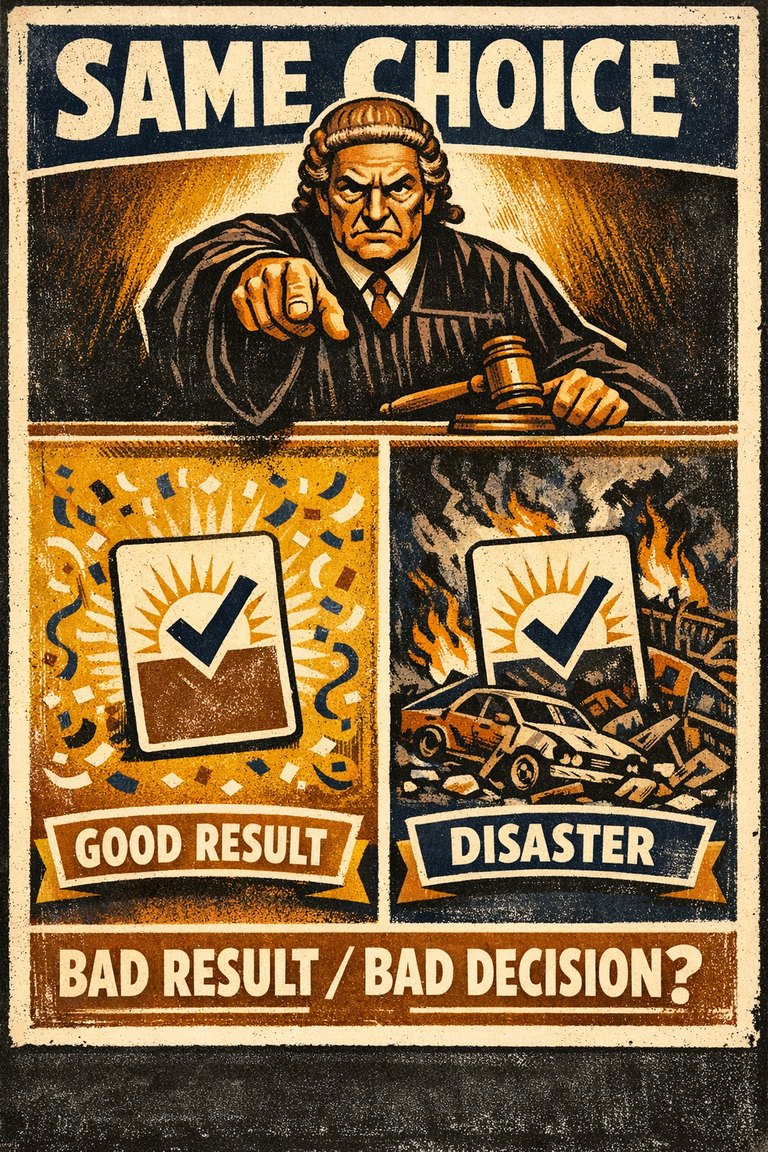
The tendency to judge a decision mainly by its result rather than by the quality of the reasoning behind it.
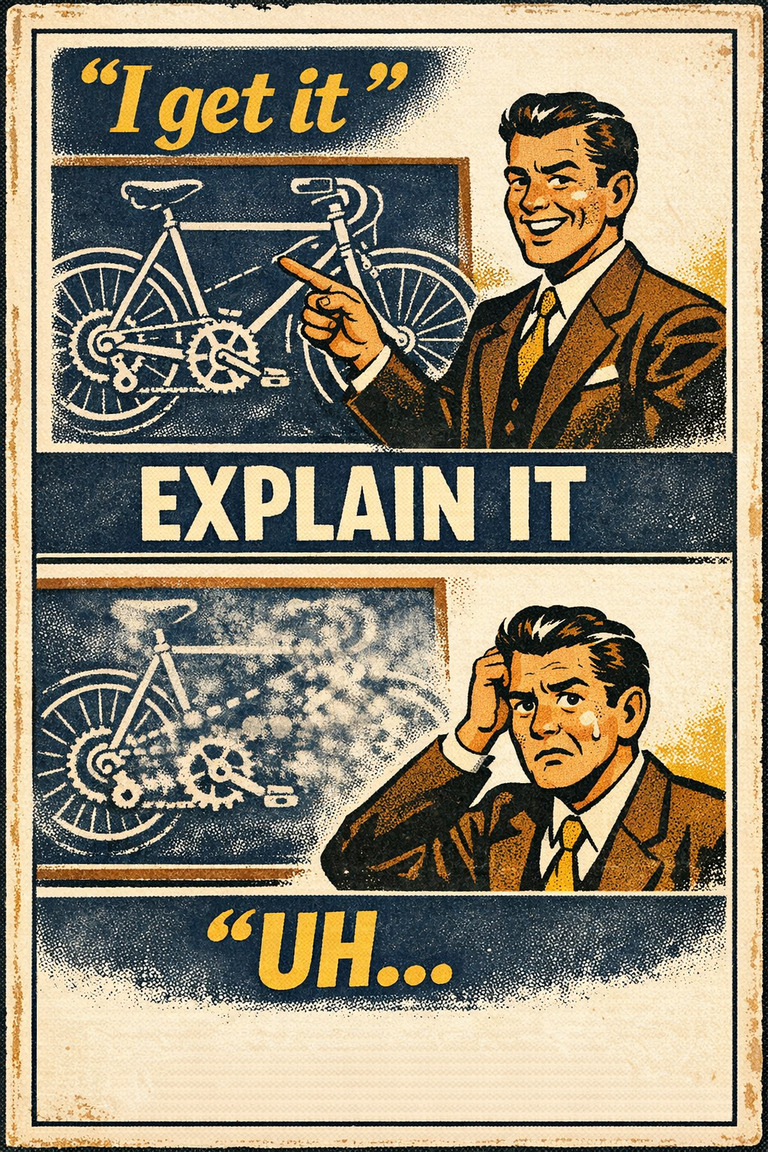
The tendency to believe you understand how something works more deeply than you actually do, especially until you are forced to explain the mechanism step by step.

The tendency for low skill or shallow understanding to produce overestimation of one's own competence, while higher-skill people may underestimate how unusual their competence really is.
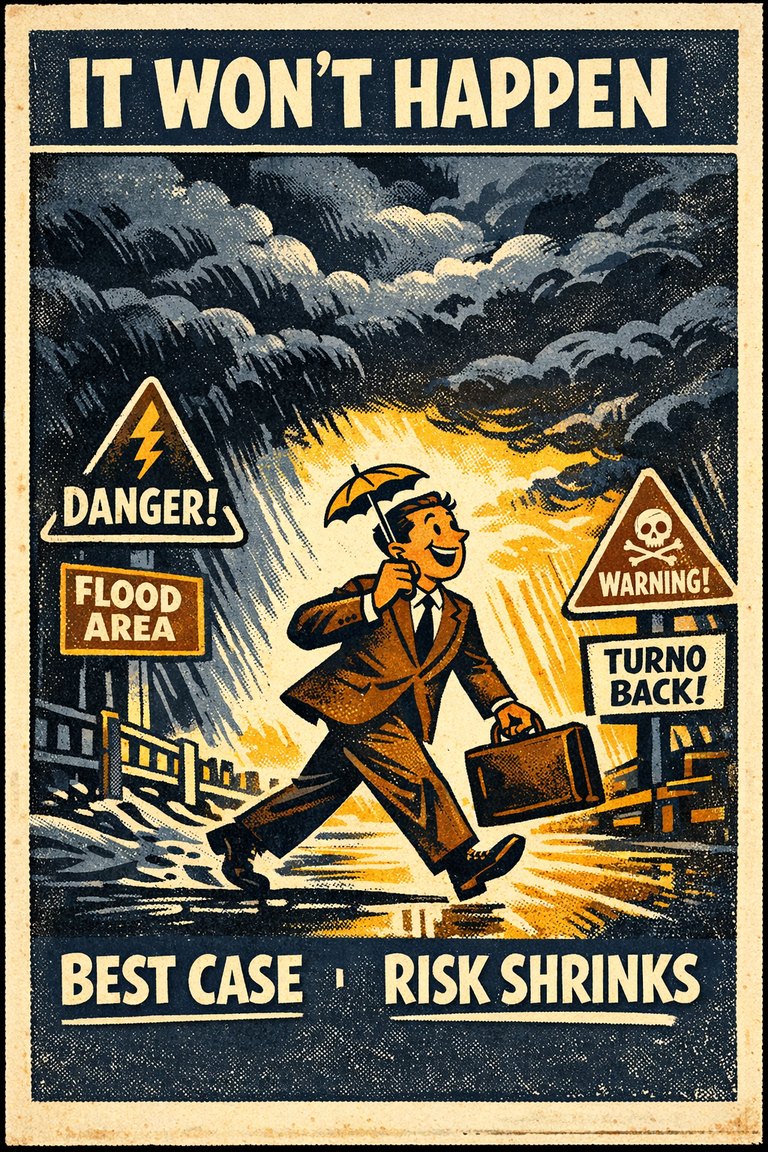
The tendency to overestimate favorable outcomes and underestimate the probability or impact of unfavorable ones, especially for oneself or one's own plans.