Groupthink
Core pattern
A group protects harmony, identity, or momentum at the expense of independent evaluation.
Ask: What dissent would be socially expensive to voice?

Cognitive Biases
A practical cognitive-bias site with clear definitions, learning paths, assessments, self-audits, and debiasing tools.
Compare Biases
Groupthink is a group decision dynamic that suppresses dissent; social desirability bias is distorted reporting caused by wanting to look acceptable.
Groupthink
A group protects harmony, identity, or momentum at the expense of independent evaluation.
Ask: What dissent would be socially expensive to voice?
Social desirability bias
People report what sounds acceptable, virtuous, loyal, or competent rather than what they actually think or do.
Ask: What answer is socially rewarded in this setting?
In meetings, people may privately disagree but publicly report agreement, so both can be active.
Ask whether the main distortion is convergence in group deliberation or self-presentational reporting.
Use these before deciding which label should carry the lesson.
Is the distortion happening during deliberation, measurement, or both?
Would anonymous responses differ from public comments?
Did the group protect agreement before reasons were tested?
The same surface area can point to different underlying mechanisms.
A team avoids raising objections after a founder endorses a plan.
Why: Harmony is replacing independent evaluation.
Employees rate a disliked training highly on a nonanonymous survey.
Why: The reported opinion is shaped by acceptable self-presentation.
Repair Move
Use anonymous first-pass judgments, then give dissent an explicit protected role in the discussion.
Use the comparison as a bridge into the fuller pages.
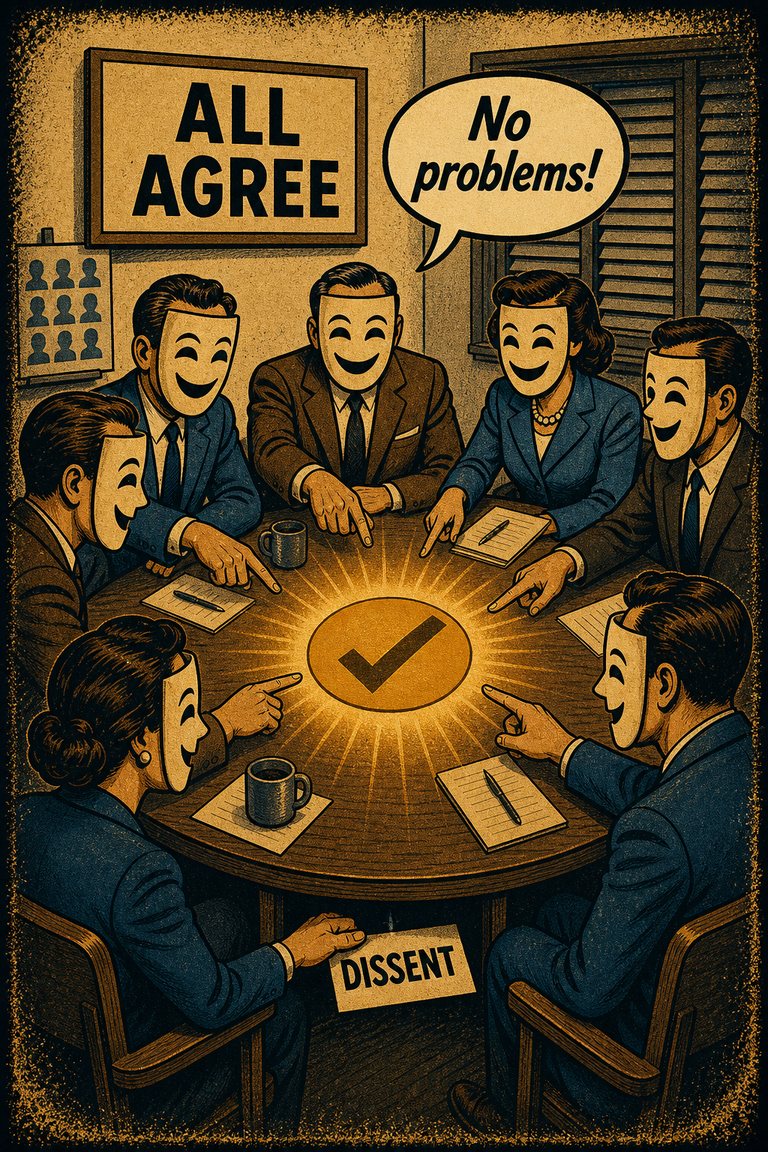
The tendency for groups to protect harmony or momentum at the cost of critical evaluation and dissent.
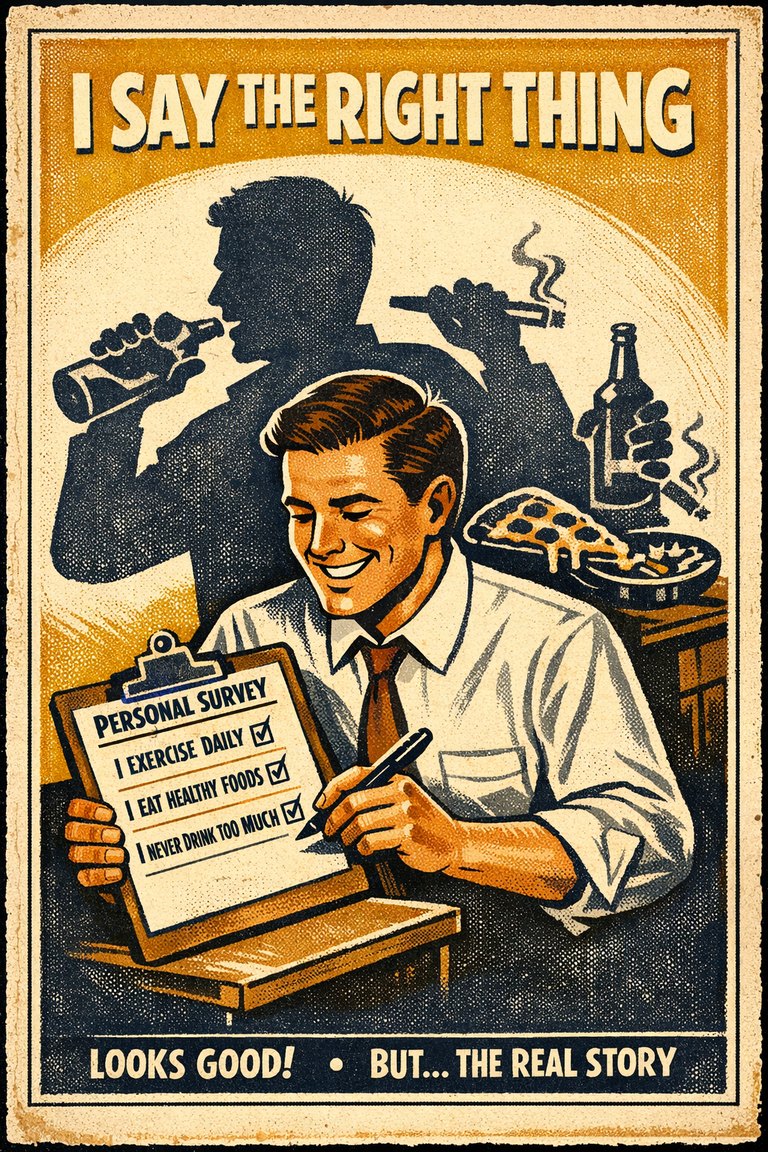
The tendency to over-report socially approved attitudes or behaviors and under-report the ones likely to invite embarrassment, judgment, or sanction.