Common in identity-charged topics
93
Especially common where the answer carries social, moral, or ego cost.
Rare
Frequent

Cognitive Biases
A practical cognitive-bias site with clear definitions, learning paths, assessments, self-audits, and debiasing tools.
Cognitive Bias
The tendency to use reasoning as a defense lawyer for desired conclusions rather than as an impartial search for what is most likely true.
What it distorts
It quietly changes the burden of proof depending on which conclusion you want.
Typical trigger
Topics tied to tribe, ego, moral identity, or prior public commitment.
First countermove
State the conclusion you do not want to be true and then spell out what evidence would nevertheless make it likeliest.
Best use
Structured process
If this conclusion pointed the other way, would I still be using the same standards?
Goals such as belonging, status, self-respect, or ideological loyalty steer which standards feel fair, which doubts feel urgent, and which explanations feel satisfying.
These are classroom-facing editorial estimates for comparing how the bias behaves in use. They are teaching aids, not measured statistics.
Common in identity-charged topics
93
Especially common where the answer carries social, moral, or ego cost.
Easy to spot from outside
39
Often clearer after you compare how standards moved across sides.
Easy to innocently commit
85
It usually feels like rigor, but only in one direction.
Teaching difficulty
58
Simple examples are easy; honest self-diagnosis is much harder.
This comparison makes the hidden pull easier to see before the technical label has to do all the work.
Biased move
This is like running the same court with two rulebooks: one for evidence that helps your side and one for evidence that hurts it.
Clearer comparison
The courtroom can still look orderly while the verdict was quietly loaded from the start. Fair reasoning has to keep the evidential rules stable across outcomes.
Do not use this label just because someone cares about the answer. Caring is normal. The key sign is asymmetric scrutiny: one conclusion is asked to jump higher evidential bars than the other.
Use this label when standards, doubt, or interpretation shift noticeably depending on which answer the person wants to preserve.
Use the quick check, caveat, and nearby confusions together. The fastest diagnosis is often the noisiest one.
Each example changes the surface context while keeping the same hidden distortion in place.
Someone demands exhaustive proof when a conclusion is threatening, then accepts much thinner evidence when the same style of claim points the preferred way.
A leader subjects a critic's forecast to line-by-line skepticism but waves through a loyal ally's optimistic plan with minimal scrutiny.
People dismiss hostile fact-checks as biased while circulating friendly factoids that would never survive the same scrutiny if the partisan direction were reversed.
It feels like rigor for the claims you dislike and common sense for the claims you want to be true.
Teaching note: This is the bridge between individual bias and tribal or institutional distortion.
The strongest debiasing moves change the process, not just the label.
State the least welcome conclusion in plain language, then list what evidence would nevertheless make it the most likely one.
Separate discussion of evidence quality from discussion of whose proposal it is.
Adopt precommitted evidence thresholds before the answer is politically or personally known.
Practice And Repair
Motivated reasoning rarely feels like cheating. It feels like being appropriately demanding about bad arguments while staying comfortably realistic about friendly ones.
A conclusion becomes socially useful, emotionally relieving, or identity-protective before the evidence review is complete.
Friendly evidence starts to feel sensible and sufficient, while hostile evidence suddenly seems dubious, overcomplicated, or suspiciously sourced.
The standards now move with the desired answer, so the process can sound disciplined while quietly defending a prior commitment.
Write the least welcome conclusion down in plain language and ask what evidence would still make it likelier than your preferred alternative.
Which standard am I using here, and would I still accept it if my out-group were using it?
Spot It
Slow It
Reframe It
These distinction guides slow down the most common nearby-label confusions before the diagnosis hardens.
Both protect a favored conclusion, but confirmation bias narrows the search and motivated reasoning bends the whole evaluation around what the person wants to be true.
Quick rule: Ask whether the main failure is selective evidence intake or desire-driven evaluation after evidence arrives.
These are nearby labels that can share the same outer appearance while differing in what actually drives the distortion. Use the overlap, the distinction, and the diagnostic question together before settling the call.
Why compare it: Motivated reasoning includes confirmation bias but extends to selective standards, selective doubt, and identity protection.
Why compare it: Status quo bias favors the current arrangement; motivated reasoning rationalizes whichever arrangement the person already wants to preserve.
Why compare it: Hindsight bias edits memory after the fact; motivated reasoning can shape the whole argument both before and after the fact.
These are useful when the label seems roughly right but the process change still feels underspecified.
What standard am I applying here, and would I still accept it if my out-group used it?
Which conclusion feels personally expensive for me to accept?
If I swapped the names and tribes involved, would my confidence move?
These sourced cases do not prove what was in someone's head with perfect certainty. They are teaching cases for showing where the bias pressure becomes visible in practice.
Biased assimilation and attitude polarization
People on opposing sides who read the same mixed evidence about capital punishment often came away more confident in the conclusion they already favored.
Why it fits: The asymmetry was not only in what was noticed but in how the same evidence was granted or denied force depending on the desired answer.
1979
Identity-protective cognition in risk judgment
Research summarized under motivated reasoning shows that high reasoning ability can intensify the defense of identity-consistent answers rather than neutralize the pull of identity.
Why it fits: The problem is not lack of intelligence. It is intelligence recruited into an uneven evidential fight.
Modern research
Deconstruction explained through hidden motive
In a discussion of Christian deconstruction, evidence claims are questioned as possibly driven by feelings, hurt, or emotional orientation rather than by reasons.
Why it fits: This is a candidate motivated-reasoning example because disagreement is explained by a desired or emotionally easier conclusion before the offered evidence is evaluated. The pastoral version is fairer when motive questions supplement, rather than replace, argument assessment.
Frank Turek, I Don't Have Enough FAITH to Be an ATHEIST · 2024-01-26
These linked tools turn the page into practice instead of leaving it at the level of definition.
2 related paths place this bias beside the distortions it most often travels with in practice.
Direct path
Use this path when you suspect that the apparent evidential picture is itself distorted.
Direct path
Self-Justification And Meta-Bias
Use this path when the real work is not spotting another person's bias, but seeing how your own story is defending itself.
These audits combine direct and nearby checks so you can test the label itself and the broader judgment pattern around it.
Direct audit
Before You Explain What Happened
What part of this explanation is genuinely shown, and what part merely feels satisfying now that the ending is known?
Nearby audit
Is this memorable because it is representative, or because it is dramatic and easy to circulate?
These scenarios mix direct and nearby cases so you can practice the label itself and the broader judgment pattern around it.
Direct scenario
The standards move with the answer
A board member demands airtight proof when a proposal threatens her preferred strategy, but accepts much thinner evidence when a similar proposal protects the strategy she already…
Nearby scenario
Research with a favorite answer
A manager asks for evidence about remote work, opens five articles supporting the policy she already prefers, and stops there because the picture now feels clear enough.
These links widen the frame around the bias without interrupting the core lesson on this page.
A theory essay on how people defend choices, identity, and coherence by editing memory, standards, and self-description rather than by simply declaring that they refuse to change.
CogBias theory
A theory article on how ego, ownership, and prior commitment change not just what people conclude, but how stubbornly they organize reasons around the conclusion.
CogBias theory
These neighbors were selected from shared categories, shared patterns, and explicit editorial links where available.
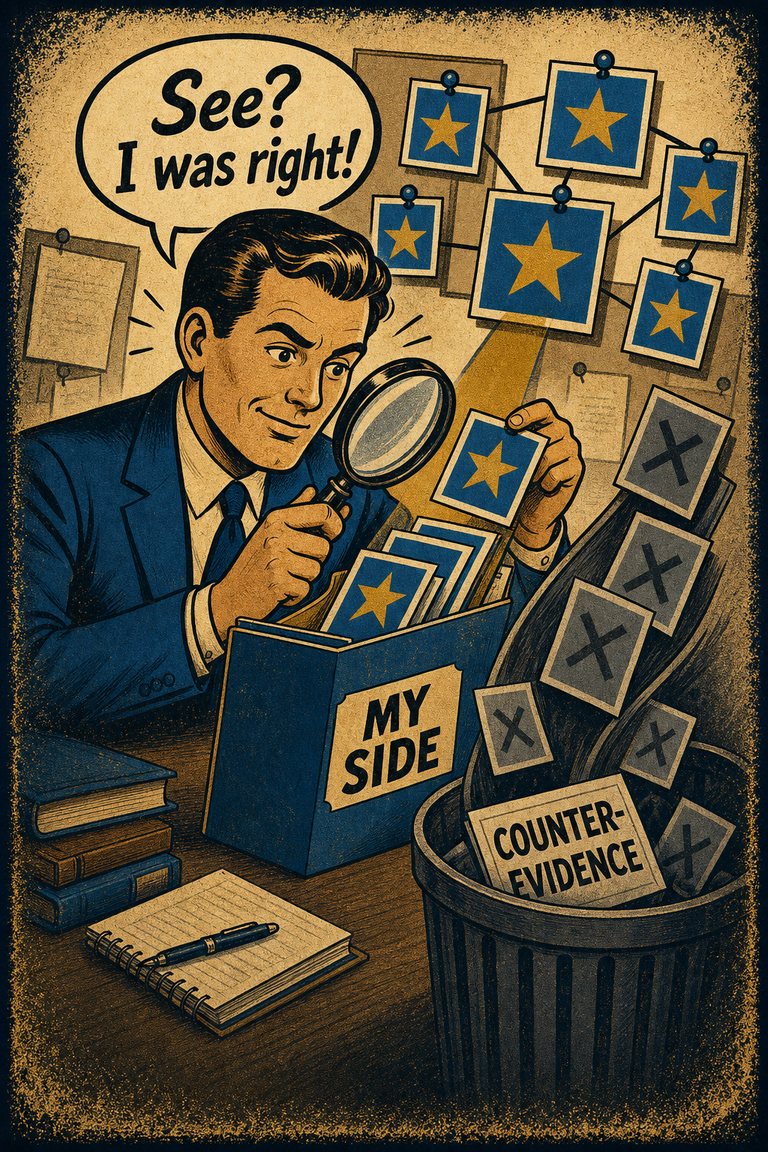
The tendency to notice, seek, and remember evidence that supports the story you already prefer more readily than evidence that threatens it.
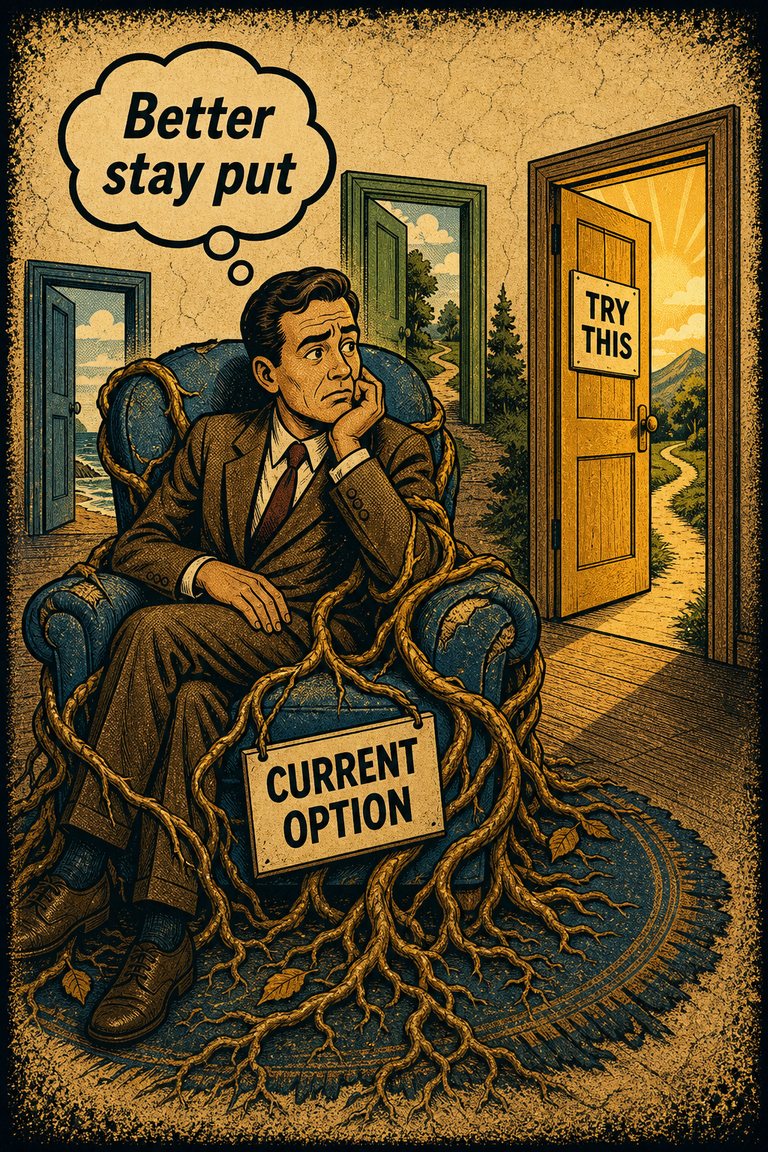
The tendency to prefer the current option, default, or inherited arrangement simply because it is the current option, default, or inherited arrangement.
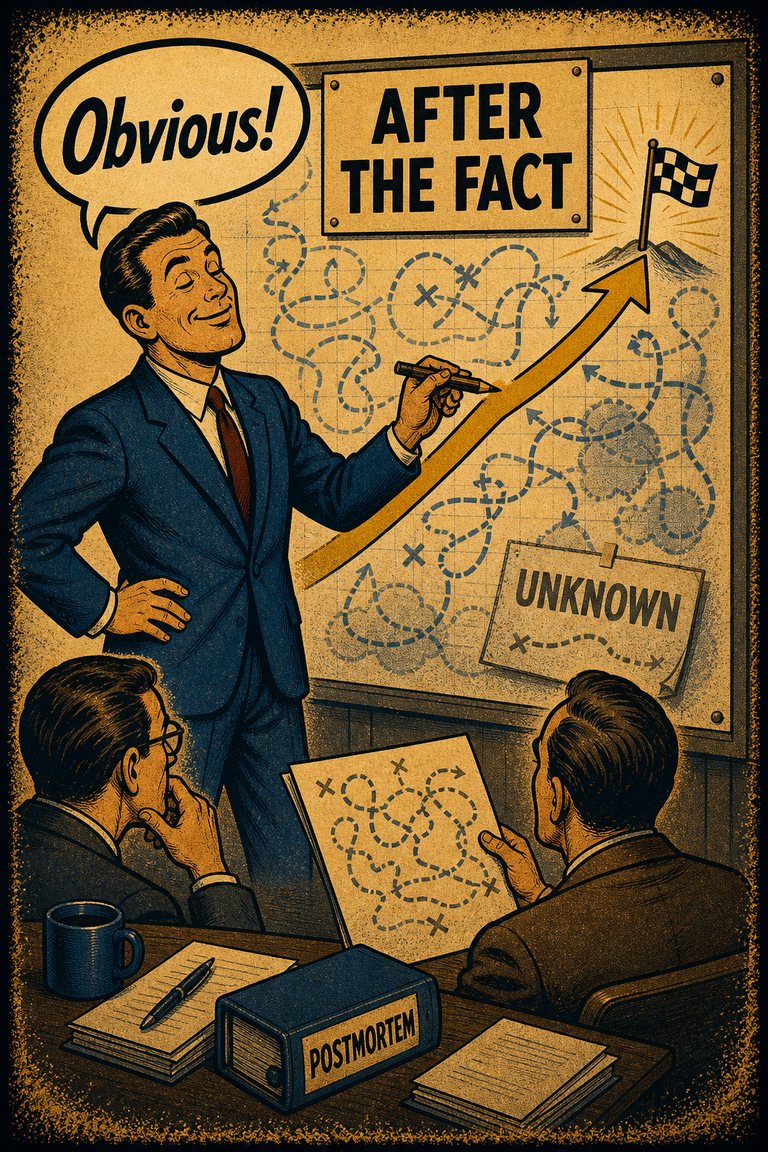
The tendency after an outcome is known, to see it as having been more obvious or predictable than it actually was beforehand.
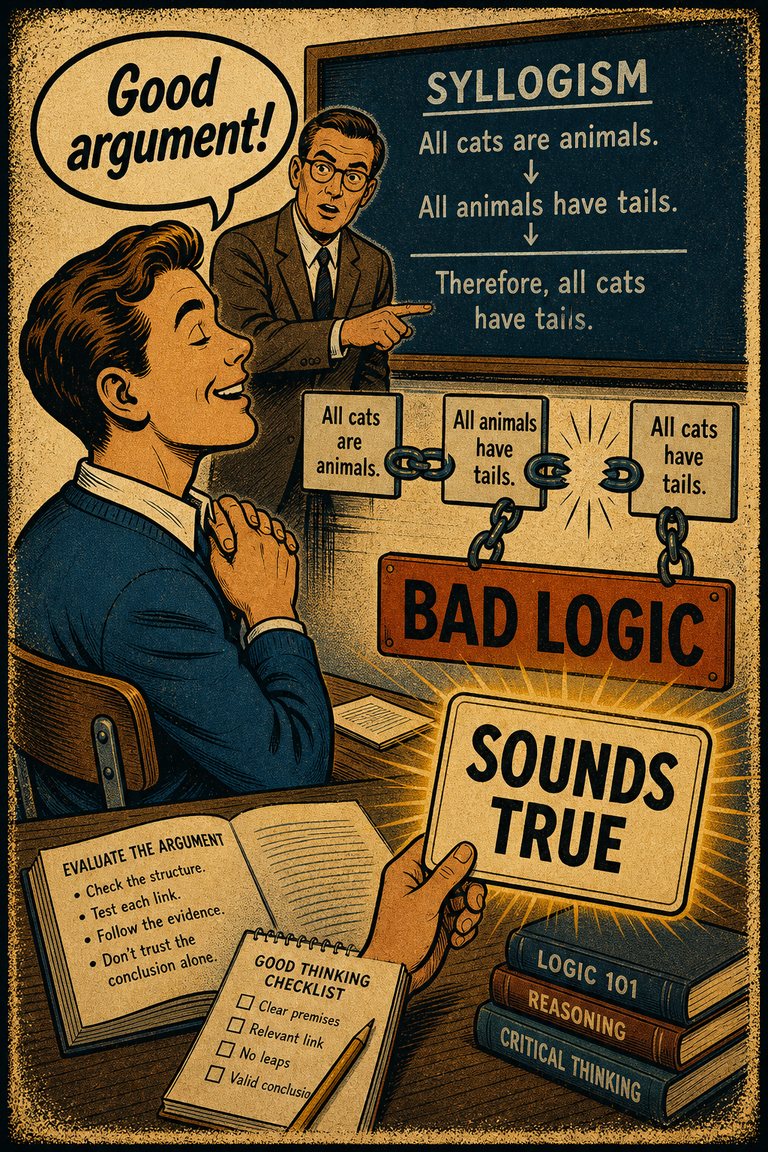
The tendency to judge an argument as stronger when its conclusion seems believable and weaker when its conclusion seems unbelievable, even if the reasoning structure is unchanged.
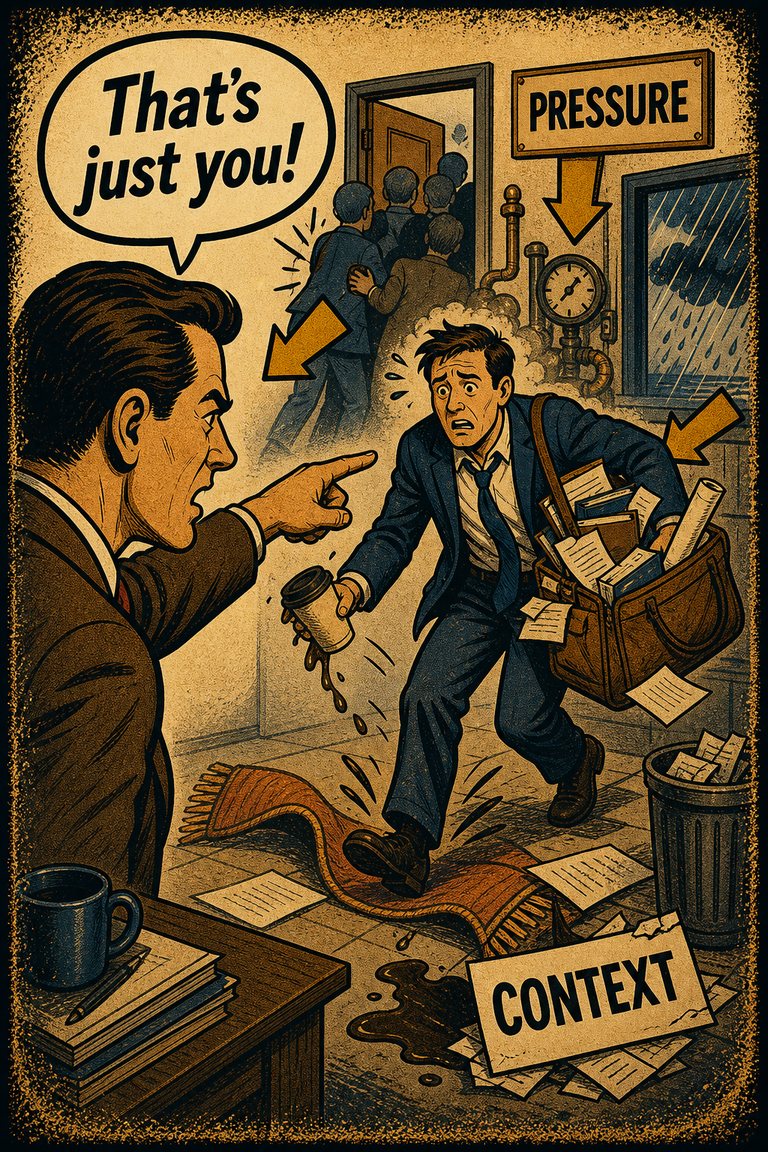
The tendency to explain other people's behavior too quickly in terms of character while underweighting situational pressures and constraints.

The tendency to see one's own view as plain reality and disagreement as ignorance, bias, or irrationality.