Common in live judgment
87
Very common in politics, teams, fandoms, and moral communities.
Rare
Frequent

Cognitive Biases
A practical cognitive-bias site with clear definitions, learning paths, assessments, self-audits, and debiasing tools.
Cognitive Bias
The tendency to favor, trust, defend, or positively interpret people and claims associated with one's own group more readily than comparable outsiders.
What it distorts
It bends judgment about persons, evidence, blame, loyalty, and risk by making group membership itself a hidden evidential factor.
Typical trigger
Political identity, teams, departments, nationality, religion, fandom, and any setting where belonging organizes status and trust.
First countermove
Ask what standard you are applying here and whether the same standard would survive a group-label swap.
Best use
Structured process
What extra trust or benefit am I giving here because this person or view feels like part of my side?
Group identity changes both emotional warmth and interpretive charity. Similar evidence gets processed through different standards depending on whether the person feels like one of us or one of them.
These are classroom-facing editorial estimates for comparing how the bias behaves in use. They are teaching aids, not measured statistics.
Common in live judgment
87
Very common in politics, teams, fandoms, and moral communities.
Easy to spot from outside
47
Usually clearest when cases are swapped across group boundaries.
Easy to innocently commit
88
The in-group simply feels more legible and trustworthy from inside.
Teaching difficulty
48
Easy to see abstractly, harder to self-detect under identity pressure.
This comparison makes the hidden pull easier to see before the technical label has to do all the work.
Biased move
This is like grading two essays with the name removed from one and your team logo on the other.
Clearer comparison
Belonging can make nuance easier to see on one side and flaws easier to excuse. Good judgment asks what the verdict would be if the group markers were hidden.
Do not use this label whenever loyalty exists. Loyalty can be legitimate. The distortion begins when group membership starts substituting for evidence or fairness in treatment.
Use this label when members of one's own group receive softer interpretation, quicker trust, or better treatment than comparable outsiders would have received.
Use the quick check, caveat, and nearby confusions together. The fastest diagnosis is often the noisiest one.
Each example changes the surface context while keeping the same hidden distortion in place.
A person forgives a mistake from their own group as understandable while reading a similar mistake from outsiders as revealing.
Departments judge familiar allies more charitably than unfamiliar teams even when the actual evidence is comparable.
Identical rhetoric, scandals, or policy failures are treated very differently depending on which side produced them.
Your own side feels more reasonable, more nuanced, and more basically trustworthy before the comparison has been earned.
Teaching note: This entry gives CogBias a direct route into tribal reasoning, loyalty, and double standards without collapsing everything into explicit animus.
The strongest debiasing moves change the process, not just the label.
Run the group-label swap and see whether your standard survives it.
Have mixed reviewers or cross-group evaluation when the stakes are high and the group boundary is salient.
Track whether similar conduct receives different treatment depending on the actor's affiliation.
Practice And Repair
Ingroup bias often feels like realism plus shared context. Your side seems more nuanced, more forgivable, and more basically trustworthy before the comparison has actually earned those upgrades.
A person, idea, or action is marked as belonging to your side, team, tribe, or moral community.
The in-group case feels more understandable and more worthy of benefit of the doubt than the comparable out-group case.
Evidence thresholds, trait readings, and fairness norms begin shifting with group membership.
Swap the group labels mentally or anonymize them where possible, then ask whether the same behavior would still get the same interpretation.
What standard would I apply if the same act came from the rival group rather than from mine?
Spot It
Slow It
Reframe It
These are nearby labels that can share the same outer appearance while differing in what actually drives the distortion. Use the overlap, the distinction, and the diagnostic question together before settling the call.
Why compare it: Implicit bias can shape impressions across many group categories; ingroup bias is the more explicit tilt toward those experienced as one's own side.
Why compare it: Groupthink suppresses internal dissent; ingroup bias changes how the group judges insiders and outsiders more broadly.
Why compare it: Naive realism makes your side's interpretation feel like plain reality; ingroup bias makes your side itself feel more trustworthy and fair.
These are useful when the label seems roughly right but the process change still feels underspecified.
What would I think if the exact same behavior came from the out-group?
Where am I extending charity to insiders that I refuse to extend elsewhere?
How much of my confidence here is really confidence in the tribe?
These sourced cases do not prove what was in someone's head with perfect certainty. They are teaching cases for showing where the bias pressure becomes visible in practice.
Minimal-group favoritism studies
Even trivial and arbitrary group assignments can produce preferential treatment toward one's own group and harsher distribution toward outsiders.
Why it fits: Group membership begins influencing fairness judgments before substantive merit has earned the difference.
Modern social psychology
Identical conduct judged more charitably from one's own side
People often evaluate identical behavior more generously when it comes from their own team, community, or coalition than when it comes from an outsider.
Why it fits: Membership is changing the judgment standard before the evidence changes.
Modern social psychology
These linked tools turn the page into practice instead of leaving it at the level of definition.
2 related paths place this bias beside the distortions it most often travels with in practice.
Direct path
Use this path when ambiguous behavior is being read through threat, bad faith, or us-versus-them interpretation.
Direct path
Use this path when a room feels aligned too quickly or when private judgment is likely being bent by social cost.
These audits combine direct and nearby checks so you can test the label itself and the broader judgment pattern around it.
Direct audit
Before You Read Hostility Into It
What else could explain this besides threat, contempt, or bad faith?
Same audit family · People judgment
Am I reacting to the person, to the situation, or to my own first-pass impression of the person?
This bias is not yet the named center of its own kit, but it already appears in nearby workshop material that teaches the same pressure in context.
Same workshop family · People judgment
Relationship Conflict Attribution Reset
A reflective kit for slowing motive-reading, character verdicts, and self-protective memory during conflict.
Same workshop family · Conflict and social threat
A facilitation kit for rooms where agreement, hierarchy, and speed may be replacing independent judgment.
There is no dedicated scenario for this bias yet, but these nearby cases test the same kind of pressure and repair move.
Same scenario family · People judgment
The other side is just biased
Two teams read the same incident report and each one experiences its own interpretation as simply the facts, while treating the other team's interpretation as evidence of bad fait…
Same scenario family · Conflict and social threat
A room that converges too quickly
A strategy meeting seems settled within ten minutes after the founder speaks. Several people privately have doubts, but no one wants to be the person who slows the room down.
These links widen the frame around the bias without interrupting the core lesson on this page.
An essay on how social cost changes what gets noticed, said, and challenged long before a formal group decision is written down.
CogBias theory
An article on how repeated exposure, possession, and group identity can all make an option feel more worthy before explicit reasons have earned the difference.
CogBias theory
These neighbors were selected from shared categories, shared patterns, and explicit editorial links where available.
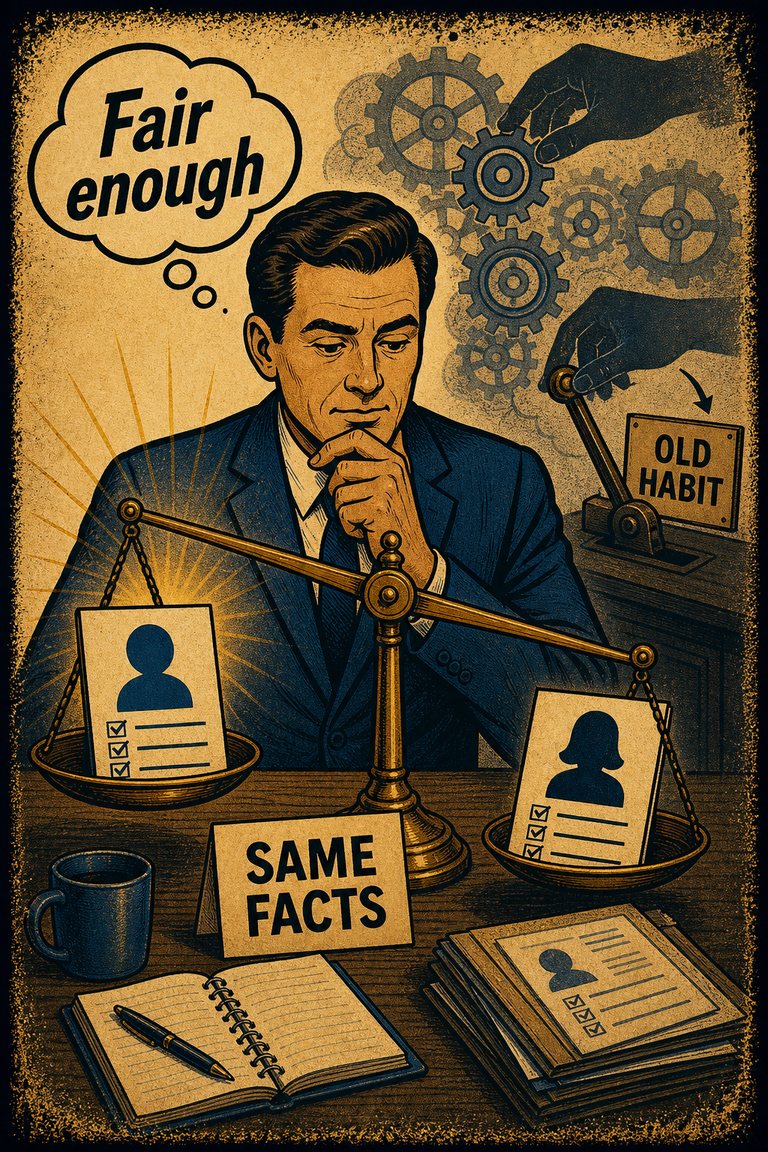
The underlying attitudes and stereotypes that people unconsciously attribute to another person or group of people that affect how they understand and engage with them.
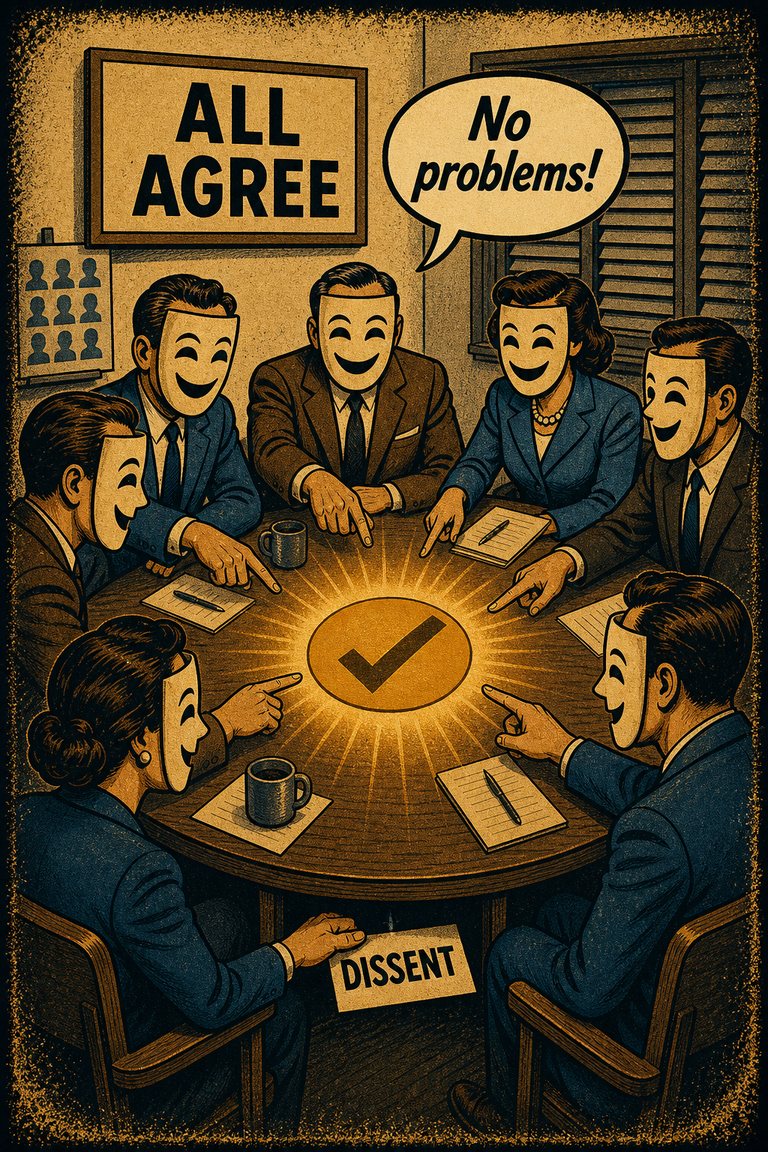
The tendency for groups to protect harmony or momentum at the cost of critical evaluation and dissent.
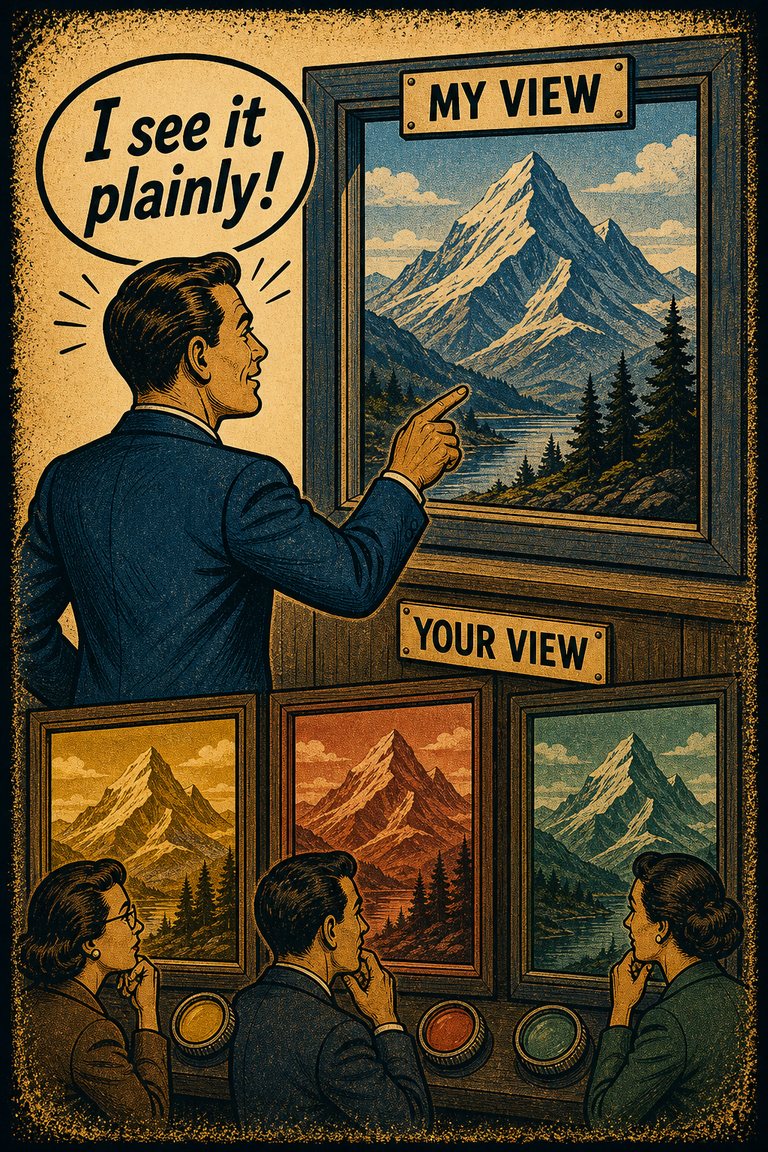
The tendency to see one's own view as plain reality and disagreement as ignorance, bias, or irrationality.
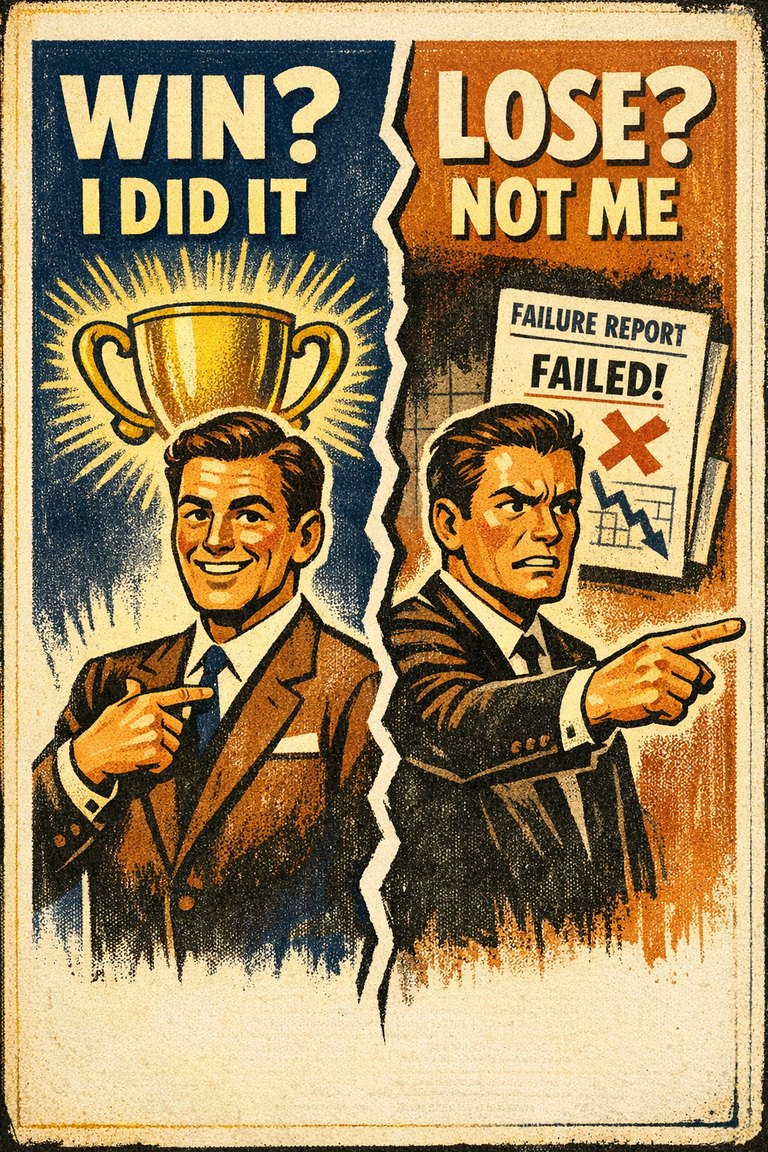
The tendency to take disproportionate credit for successes while locating failures in bad luck, unfair circumstances, or other people.
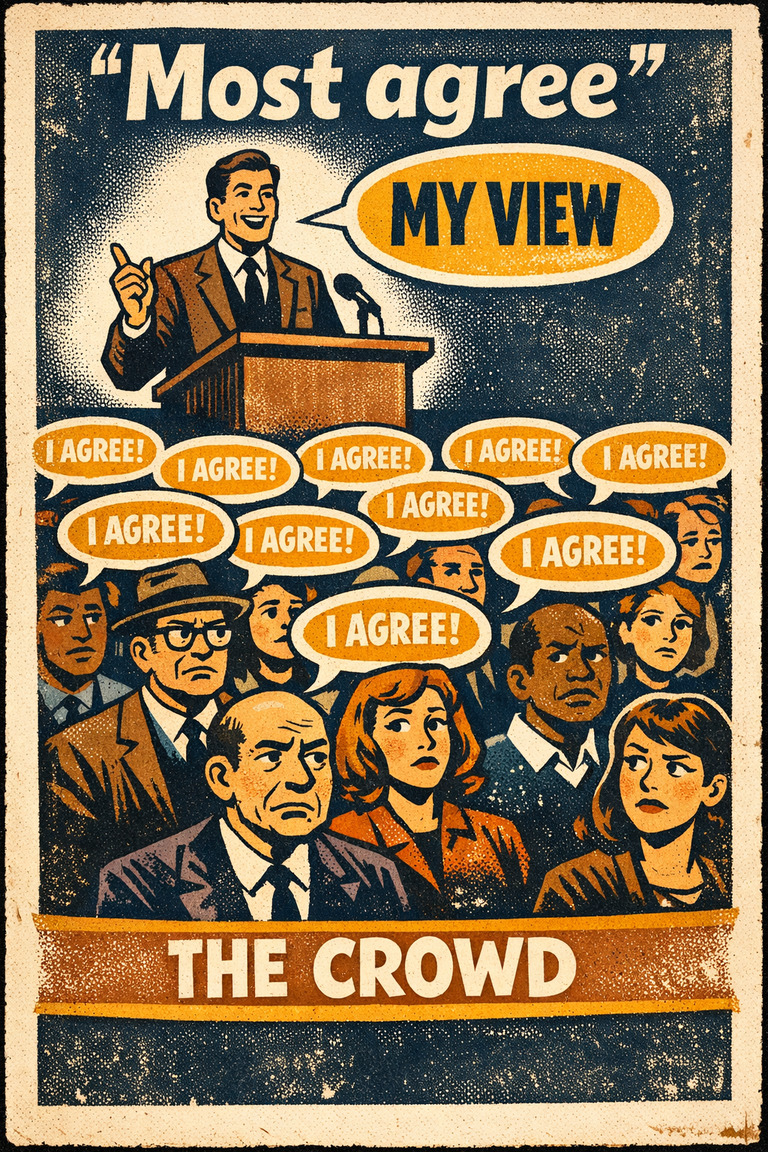
The tendency to overestimate how many other people share one's own beliefs, preferences, habits, or reactions.
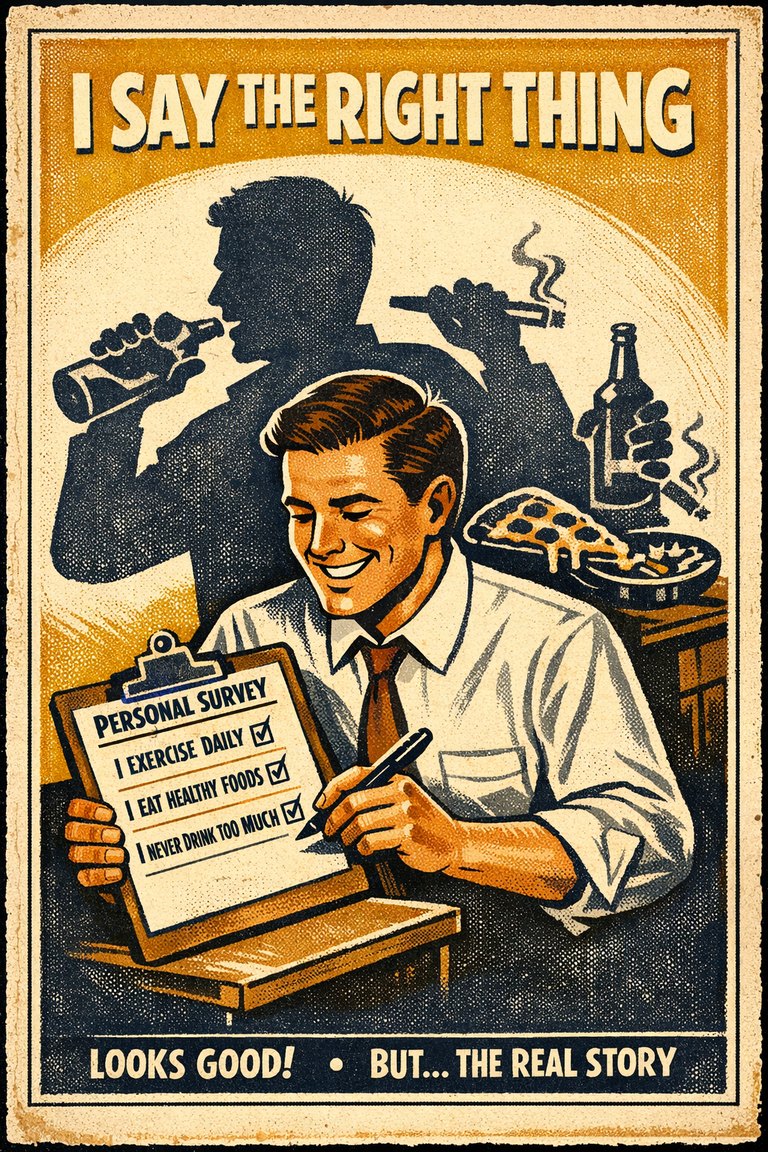
The tendency to over-report socially approved attitudes or behaviors and under-report the ones likely to invite embarrassment, judgment, or sanction.