Common in fast social judgment
86
Most visible where decisions are quick, high-volume, or lightly structured.
Rare
Frequent

Cognitive Biases
A practical cognitive-bias site with clear definitions, learning paths, assessments, self-audits, and debiasing tools.
Cognitive Bias
The underlying attitudes and stereotypes that people unconsciously attribute to another person or group of people that affect how they understand and engage with them. Many researchers suggest that unconscious bias occurs automatically as the brain makes quick judgments based on past experiences and background
What it distorts
Biases that skew how people interpret evidence, test explanations, and evaluate claims.
Typical trigger
Situations where hypothesis assessment is already difficult and the outcome cue feels easier to trust than a fuller review.
First countermove
Start with the hypothesis assessment question instead of the first intuitive answer, then check whether the outcome pattern is doing invisible work.
Best use
Quick reference
What social cue may be steering this judgment before anyone can give a clean explicit reason for it?
In hypothesis assessment problems, the result of an event bends how the process, evidence, memory, or explanation is interpreted afterward before a fuller check catches up.
These are classroom-facing editorial estimates for comparing how the bias behaves in use. They are teaching aids, not measured statistics.
Common in fast social judgment
86
Most visible where decisions are quick, high-volume, or lightly structured.
Easy to spot from outside
26
Hard to diagnose from a single case; easier through patterns and process tests.
Easy to innocently commit
84
People often experience the resulting judgment as ordinary intuition.
Teaching difficulty
67
Teaching has to balance caution, evidence, and process design carefully.
This comparison makes the hidden pull easier to see before the technical label has to do all the work.
Biased move
This is like a sorting machine that claims to read only quality while one hidden sensor keeps nudging similar items into different bins.
Clearer comparison
The machine can still produce confident labels while the hidden cue keeps biasing the path. Clean procedure matters because introspection alone is weak here.
Do not use this label as a total explanation for every unequal outcome. Some disparities have many causes. Use it when fast social cues appear to be exerting influence that direct evidence or explicit standards do not justify.
Use this label when judgment about a person seems to be quietly shifted by race, gender, age, accent, appearance, or group markers before explicit reasons have carried the weight of the call.
Use the quick check, caveat, and nearby confusions together. The fastest diagnosis is often the noisiest one.
Each example changes the surface context while keeping the same hidden distortion in place.
A person reacts differently to identical behavior depending on the social category of the person performing it, then later supplies a neutral-sounding explanation.
Equivalent resumes or meeting contributions get different warmth, interruption rates, or assumptions of competence because the evaluator's first-pass impression is already tilted.
Media audiences and institutions interpret the same tone, clothing, or emotional display differently depending on who is being seen.
Nothing in the moment feels like a deliberate prejudice. The skew shows up in who feels normal, risky, polished, or suspect without explanation.
Teaching note: This page needs care because the topic is emotionally charged; the tone should stay practical, diagnostic, and evidence-oriented.
The strongest debiasing moves change the process, not just the label.
Slow down the first-pass impression and ask what evidence actually supports it.
Use structured criteria and independent scoring before open discussion.
Audit outcomes for pattern-level disparities instead of relying on individual sincerity.
Practice And Repair
Implicit bias is difficult partly because the person making the judgment may sincerely experience it as fair. The strongest evidence often comes from patterned outcomes or from process changes that reduce cue leakage.
A judgment about a person is made under time pressure, ambiguity, weak structure, or high reliance on first impressions.
The reaction feels like direct reading of merit, fit, danger, or warmth rather than like interpretation shaped by social cues.
Identity-linked cues quietly influence who is advanced, trusted, interrupted, doubted, or remembered positively.
Remove unnecessary identity cues, slow the first pass down, and force evaluators to cite evidence against explicit criteria instead of free-floating impressions.
What would this decision look like if the identity cues were hidden for the first pass?
Spot It
Slow It
Reframe It
These are nearby labels that can share the same outer appearance while differing in what actually drives the distortion. Use the overlap, the distinction, and the diagnostic question together before settling the call.
Why compare it: Halo effect spreads one salient impression broadly; implicit bias helps determine which impressions form quickly and unevenly across people.
Why compare it: Fundamental attribution error overuses trait explanation in general; implicit bias can tilt which traits get imputed to which people.
Why compare it: Confirmation bias later protects the first impression; implicit bias can skew the first impression before conscious reasoning begins.
These are useful when the label seems roughly right but the process change still feels underspecified.
Would this same behavior strike me differently if a different person had done it?
What standard am I invoking, and how consistently do I apply it across groups?
Which impressions appeared before I had gathered much actual evidence?
These sourced cases do not prove what was in someone's head with perfect certainty. They are teaching cases for showing where the bias pressure becomes visible in practice.
Resume callback studies with racially marked names
Studies summarized in discussions of implicit stereotype found that equivalent resumes can receive different callback rates when names carry different social signals.
Why it fits: Visible identity cues change the treatment of the same apparent qualifications before evaluators can give a neutral-sounding explanation.
2004
Blind auditions in orchestras
When early-stage auditions hide non-musical identity cues, who advances can change, revealing how much visible social information had been steering judgment.
Why it fits: The procedural repair is informative because it reduces the influence of cues that should not have been doing the evaluative work.
Modern hiring practice
These linked tools turn the page into practice instead of leaving it at the level of definition.
This bias appears directly in one guided sequence and also in nearby paths that frame the same judgment problem from a slightly wider angle.
Direct path
Use this path when a discussion is drifting from behavior into identity, motive, or character verdict.
Same path family · People judgment
Use this path when ambiguous behavior is being read through threat, bad faith, or us-versus-them interpretation.
These audits combine direct and nearby checks so you can test the label itself and the broader judgment pattern around it.
Direct audit
Am I reacting to the person, to the situation, or to my own first-pass impression of the person?
Same audit family · People judgment
Before You Read Hostility Into It
What else could explain this besides threat, contempt, or bad faith?
These scenarios mix direct and nearby cases so you can practice the label itself and the broader judgment pattern around it.
Direct scenario
The first-pass screen with visible identity cues
Managers insist they are evaluating only professionalism, but the first-pass review still includes names, photos, and school signals even though those cues are not needed to judge…
Nearby scenario
Research with a favorite answer
A manager asks for evidence about remote work, opens five articles supporting the policy she already prefers, and stops there because the picture now feels clear enough.
These links widen the frame around the bias without interrupting the core lesson on this page.
An article on how self-report shifts under observation, embarrassment, and audience cost long before anyone intentionally decides to lie.
CogBias theory
An article on why halo effect, attribution errors, implicit bias, and related distortions tend to compound rather than appear in isolation.
CogBias theory
These neighbors were selected from shared categories, shared patterns, and explicit editorial links where available.
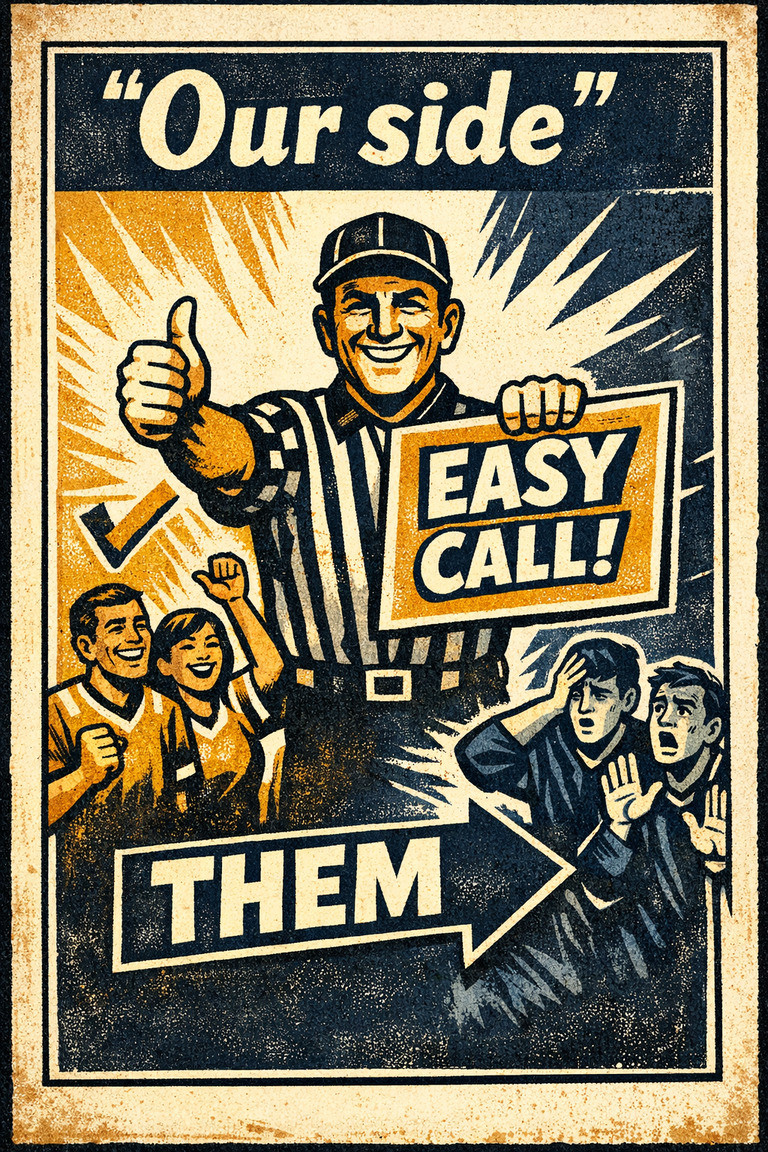
The tendency to favor, trust, defend, or positively interpret people and claims associated with one's own group more readily than comparable outsiders.
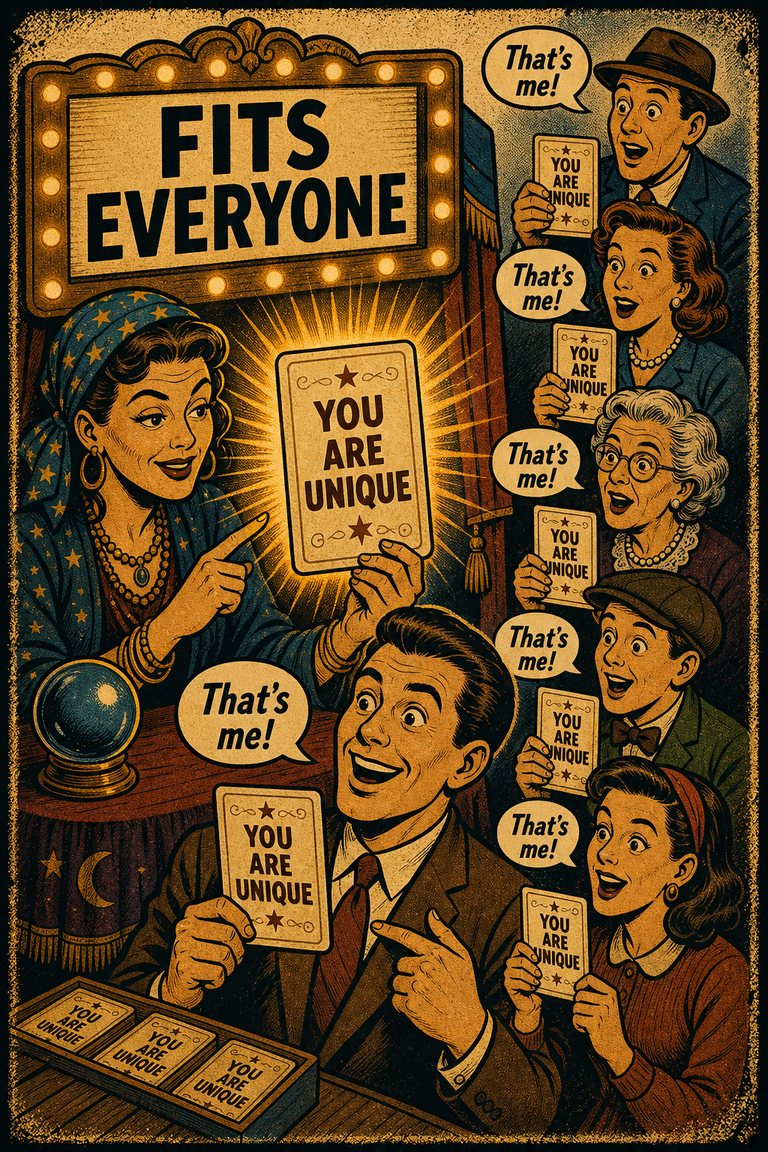
The tendency to accept vague, flattering, or generic descriptions as uniquely accurate of oneself.
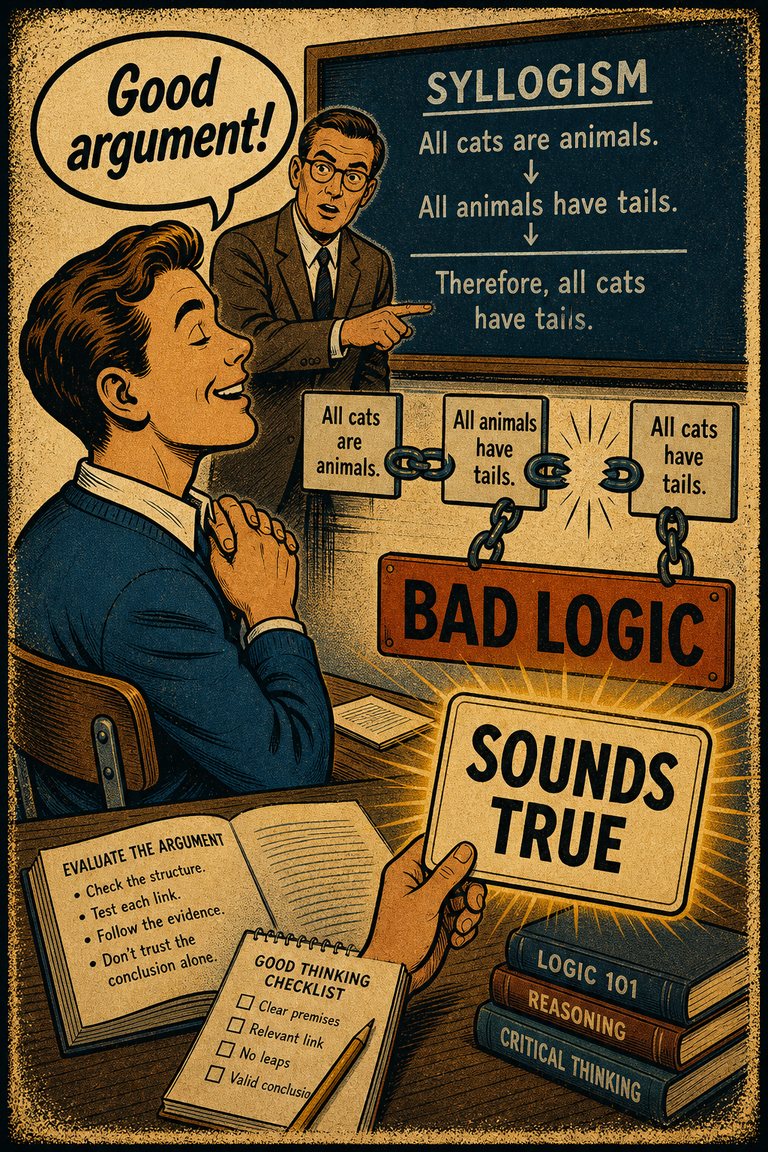
The tendency to judge an argument as stronger when its conclusion seems believable and weaker when its conclusion seems unbelievable, even if the reasoning structure is unchanged.
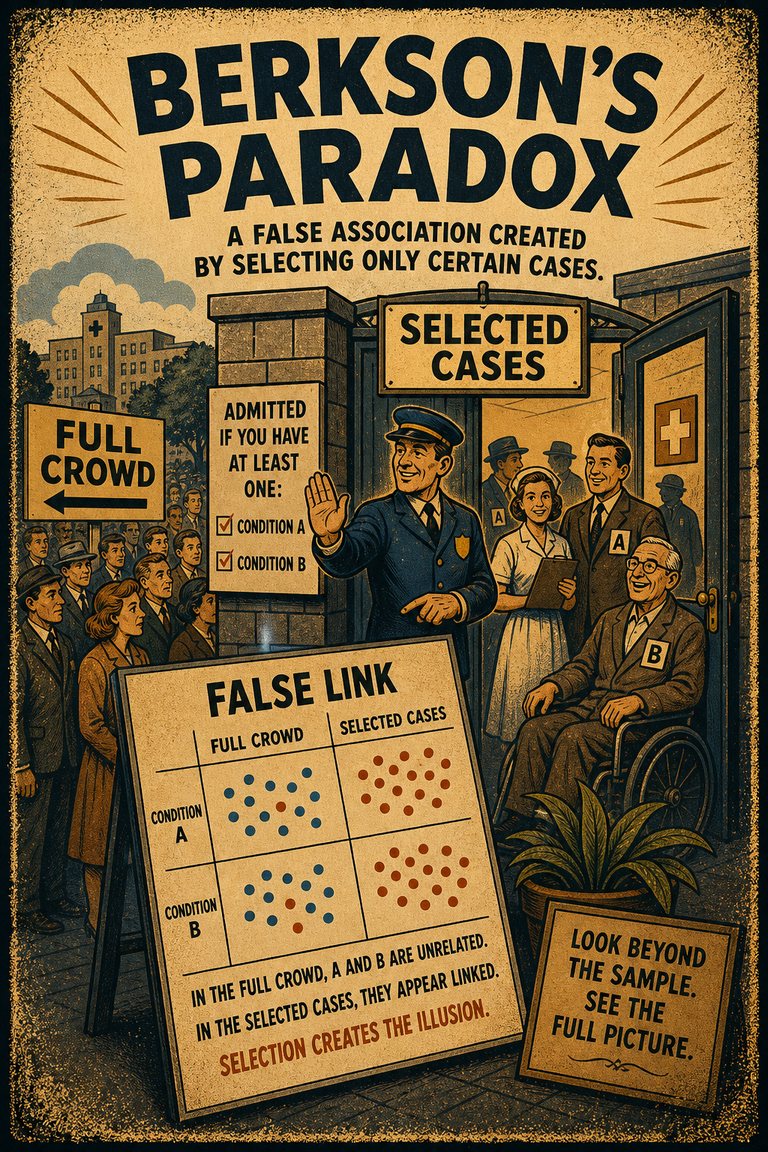
The tendency to draw misleading statistical conclusions from conditionally selected samples.
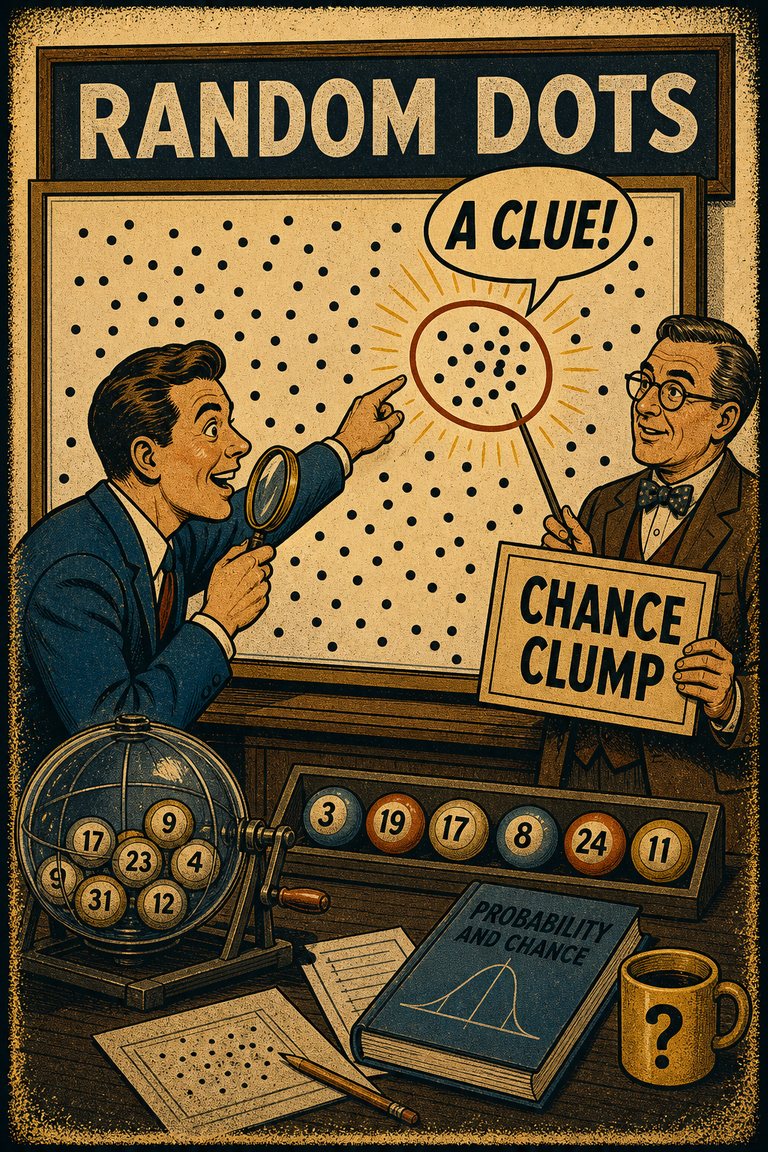
The tendency to overestimate the importance of small runs, streaks, or clusters in large samples of random data.
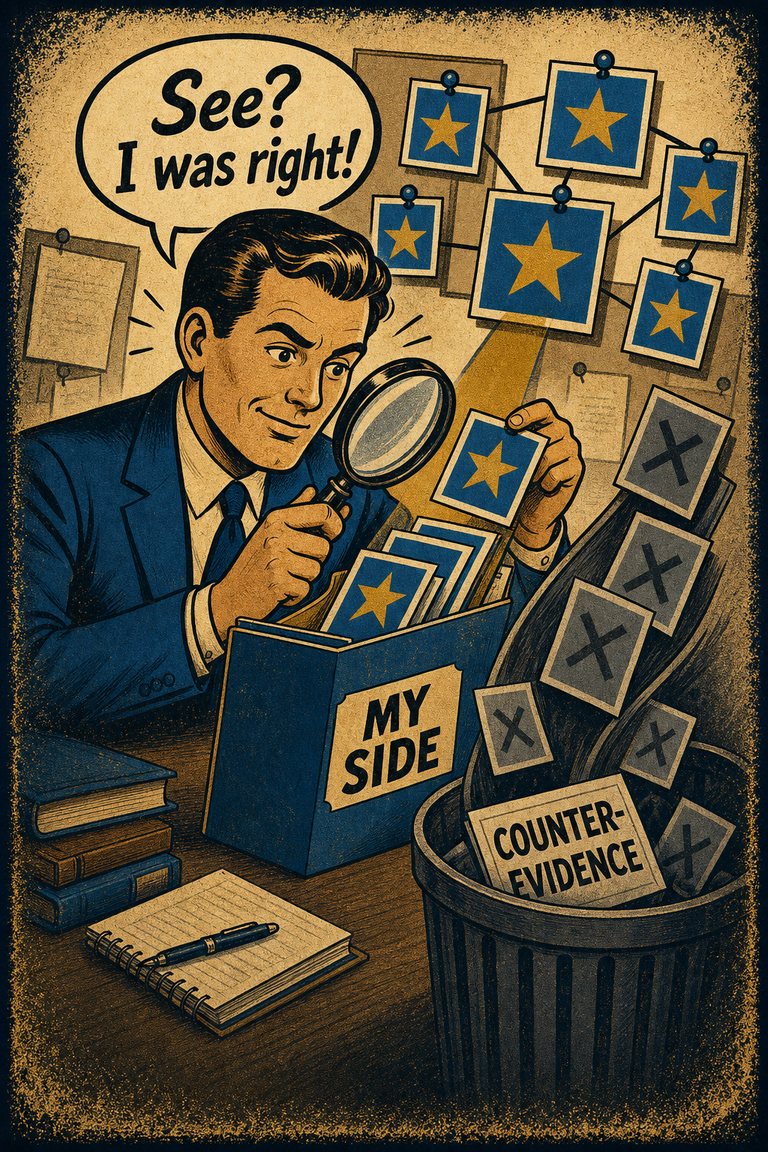
The tendency to notice, seek, and remember evidence that supports the story you already prefer more readily than evidence that threatens it.