Common in live judgment
81
Common in adolescence, performance, social anxiety, and public speaking.
Rare
Frequent

Cognitive Biases
A practical cognitive-bias site with clear definitions, learning paths, assessments, self-audits, and debiasing tools.
Cognitive Bias
The tendency to overestimate how much other people notice, remember, or care about one's appearance, mistakes, or behavior.
What it distorts
It bends self-consciousness, social prediction, and embarrassment by making your own visible moments feel more publicly central than they are.
Typical trigger
Embarrassment, public speaking, social anxiety, novelty in appearance, and moments when personal salience is especially high.
First countermove
Estimate what else the other people in the scene were probably focused on besides you.
Best use
Quick reset
How much of this feels publicly glaring only because I am experiencing it from the center?
Your own experience is centered on you, so the event feels disproportionately salient. It is hard to discount the fact that what is vivid in your mind is usually peripheral in everyone else's.
These are classroom-facing editorial estimates for comparing how the bias behaves in use. They are teaching aids, not measured statistics.
Common in live judgment
81
Common in adolescence, performance, social anxiety, and public speaking.
Easy to spot from outside
64
Often clear to observers who are barely tracking the focal person's worry.
Easy to innocently commit
90
Your own event is necessarily huge from your own point of view.
Teaching difficulty
22
Very teachable because the intuition lands quickly.
This comparison makes the hidden pull easier to see before the technical label has to do all the work.
Biased move
This is like assuming the whole room is staring at the coffee stain because it fills your own visual field every time you look down.
Clearer comparison
Your own angle magnifies the event. Other people often have weaker attention, weaker memory, and many competing concerns of their own.
Do not use this label whenever social embarrassment exists. Sometimes people really are watching. The issue is systematic overestimation of how much others notice or retain about one's appearance or behavior.
Use this label when a personal misstep, appearance detail, or awkward moment feels far more publicly central than the surrounding audience actually experiences it.
Use the quick check, caveat, and nearby confusions together. The fastest diagnosis is often the noisiest one.
Each example changes the surface context while keeping the same hidden distortion in place.
Someone replays a small social mistake for hours because it feels like everyone must have noticed it and kept tracking it.
A person avoids speaking up after one clumsy moment because they assume the room is far more focused on that slip than it really is.
People overestimate how much observers are noticing their awkwardness, appearance, or small deviations in visible behavior.
The moment seems glaringly public because it is huge from your angle, even though it may barely register from everyone else's.
Teaching note: This entry gives the site a useful bridge into self-consciousness, performance anxiety, and the distortions created by egocentric salience.
The strongest debiasing moves change the process, not just the label.
Run the perspective swap: ask how long you would realistically remember the same moment if it happened to someone else.
Normalize small mistakes openly so individuals stop treating ordinary slips as identity-defining public events.
Design feedback cultures where evaluation is specific and bounded rather than leaving people to imagine constant diffuse scrutiny.
Practice And Repair
Spotlight effect is a perspective problem. Because the moment is unusually large in your own field of awareness, it becomes easy to imagine it occupying the same central place in everyone else's awareness too.
A person notices an appearance issue, mistake, awkward comment, or small social failure.
The event feels glaringly visible and memorable because it is so salient from the actor's own position.
Other people's attention and memory are overestimated, which amplifies shame, self-consciousness, and avoidance.
Estimate how many details from other people's embarrassing moments you actually noticed and retained, then use that number as a corrective perspective check.
If someone else had done this instead of me, how much attention would I realistically still be giving it an hour from now?
Spot It
Slow It
Reframe It
These are nearby labels that can share the same outer appearance while differing in what actually drives the distortion. Use the overlap, the distinction, and the diagnostic question together before settling the call.
Why compare it: Social desirability bias changes what people report under social evaluation; spotlight effect exaggerates how much that evaluation is happening in the first place.
Why compare it: False-consensus effect overestimates how widely others share your view; spotlight effect overestimates how much others are noticing you at all.
Why compare it: Negativity bias makes adverse moments feel weightier; spotlight effect makes those moments feel more publicly observed than they really are.
These are useful when the label seems roughly right but the process change still feels underspecified.
What else were the other people probably attending to besides me?
If someone else had done this, how long would I actually have dwelled on it?
Am I measuring public attention, or just private salience?
These sourced cases do not prove what was in someone's head with perfect certainty. They are teaching cases for showing where the bias pressure becomes visible in practice.
The Barry Manilow T-shirt experiment
People wearing an embarrassing T-shirt often greatly overestimate how many others noticed it, illustrating how personal salience gets mistaken for public salience.
Why it fits: The focal person's own awareness of the cue becomes a bad estimate of the audience's attention.
2000
Speakers overestimate how visible their nerves are
People giving speeches or presentations often assume their anxiety and mistakes are much more visible to the audience than they actually are.
Why it fits: Internal salience is being misread as public salience.
Modern social cognition
These linked tools turn the page into practice instead of leaving it at the level of definition.
This bias appears directly in one guided sequence and also in nearby paths that frame the same judgment problem from a slightly wider angle.
Direct path
Use this path when someone sounds sure, fluent, or experienced and you need to know whether the underlying understanding is actually there.
Nearby path
Use this path when a room feels aligned too quickly or when private judgment is likely being bent by social cost.
This bias does not yet have its own dedicated self-check, but these nearby audits usually catch the same kind of drift before it hardens.
Nearby audit
Would I still hold this view if I had to write it down alone before hearing the room?
Nearby audit
Am I reacting to the person, to the situation, or to my own first-pass impression of the person?
This bias is not yet the named center of its own kit, but it already appears in nearby workshop material that teaches the same pressure in context.
Nearby workshop
Relationship Conflict Attribution Reset
A reflective kit for slowing motive-reading, character verdicts, and self-protective memory during conflict.
Nearby workshop
A facilitation kit for rooms where agreement, hierarchy, and speed may be replacing independent judgment.
There is no dedicated scenario for this bias yet, but these nearby cases test the same kind of pressure and repair move.
Nearby scenario
Everyone probably agrees with me
A manager assumes most of the team privately supports a new policy because the people he talks to most often support it and because open disagreement in meetings has been sparse.
Nearby scenario
Everyone probably wants the same holiday
One family member assumes everyone else wants a quiet holiday because that is what sounds obviously restorative to him. Later he learns others wanted a larger gathering but did no…
These links widen the frame around the bias without interrupting the core lesson on this page.
An article on how self-report shifts under observation, embarrassment, and audience cost long before anyone intentionally decides to lie.
CogBias theory
These neighbors were selected from shared categories, shared patterns, and explicit editorial links where available.
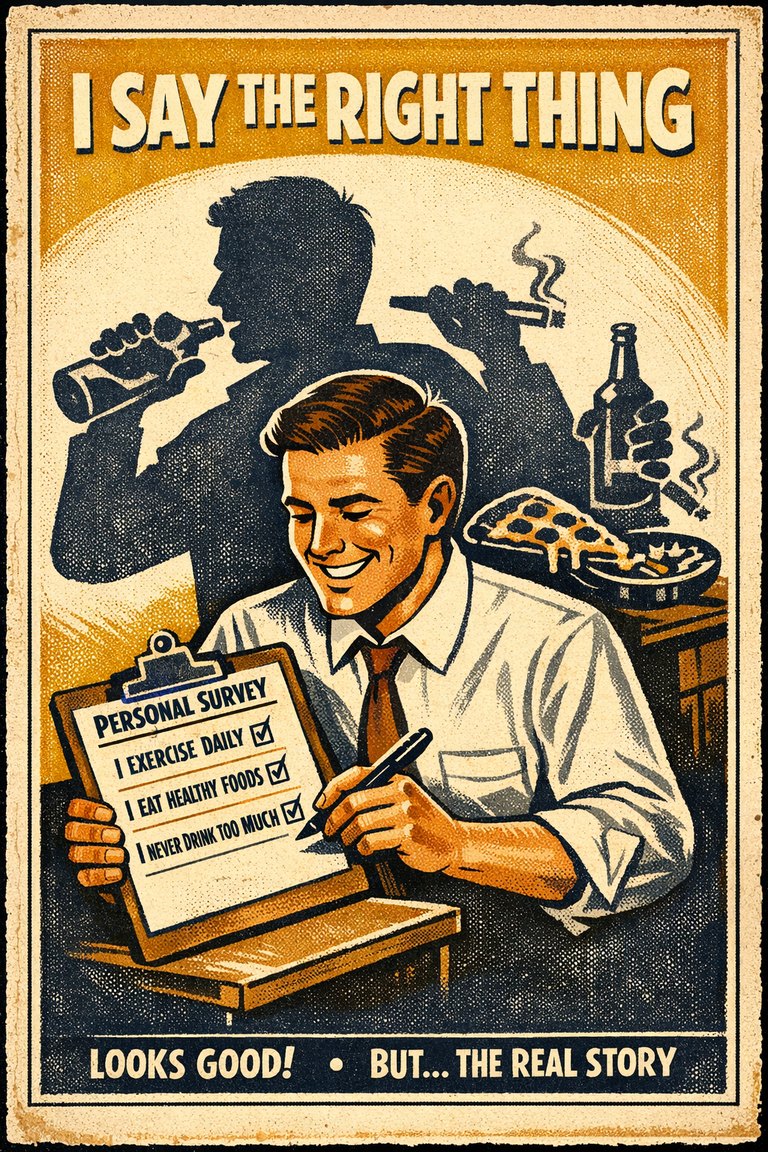
The tendency to over-report socially approved attitudes or behaviors and under-report the ones likely to invite embarrassment, judgment, or sanction.
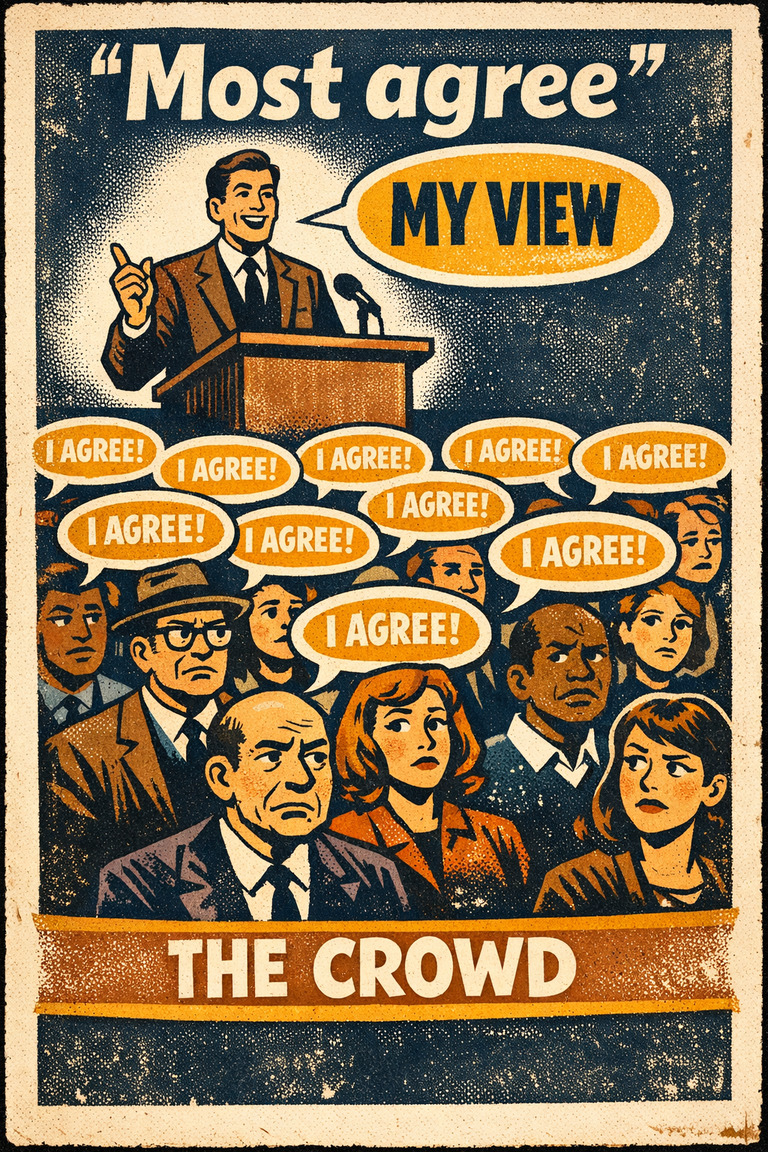
The tendency to overestimate how many other people share one's own beliefs, preferences, habits, or reactions.
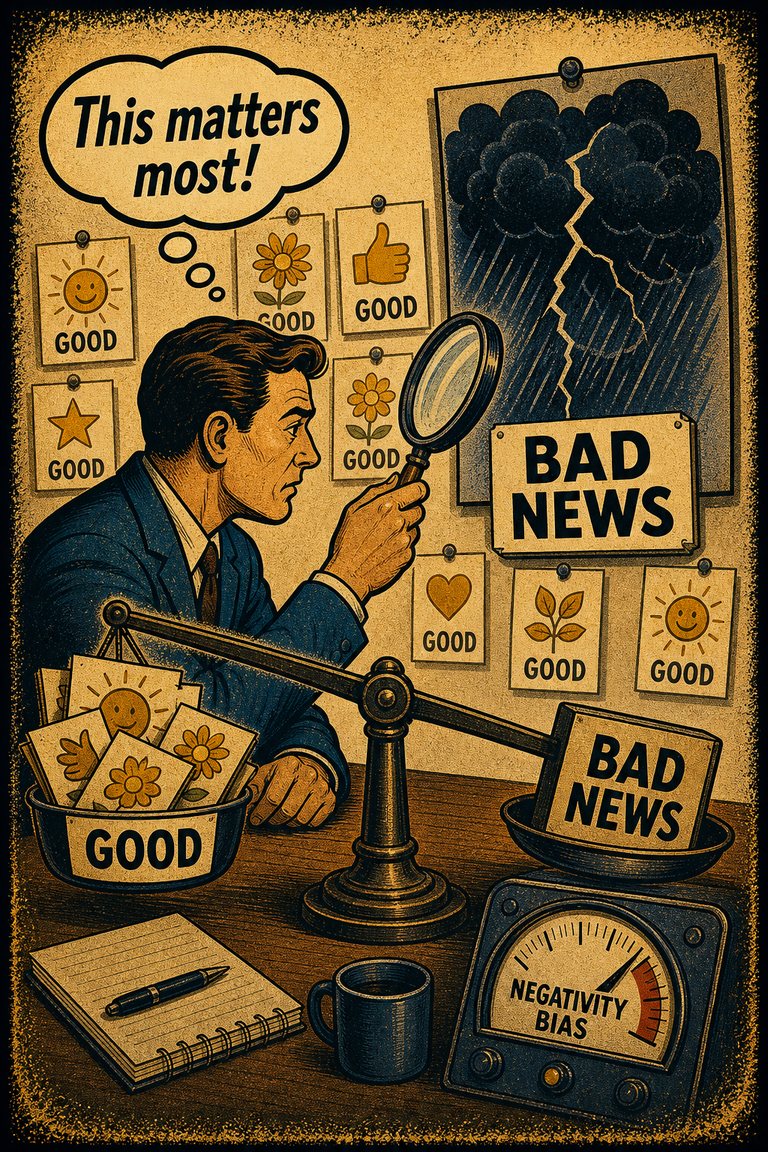
The tendency to give bad news, threats, criticism, and losses more psychological weight than equally sized positives.
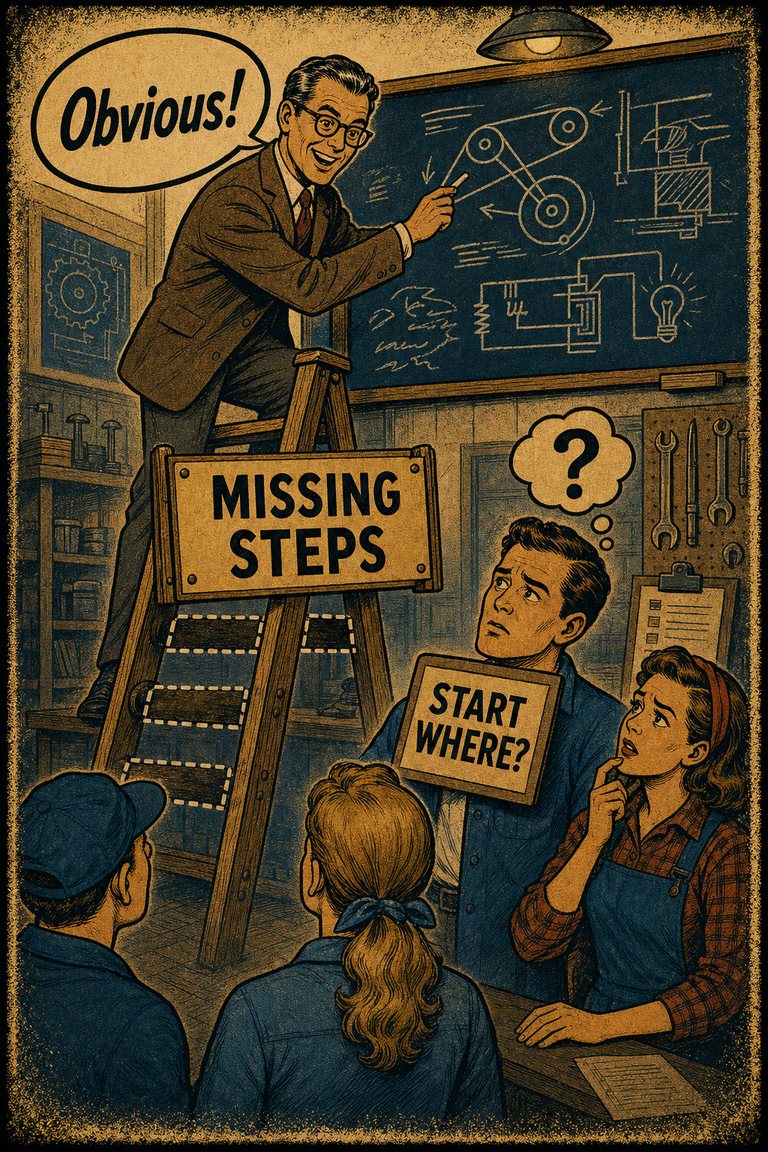
The tendency for better-informed people to underestimate how hard the issue looks to less-informed people.

An exception to the fundamental attribution error, where people view others as having extrinsic motivations, while viewing themselves as having intrinsic motivations.
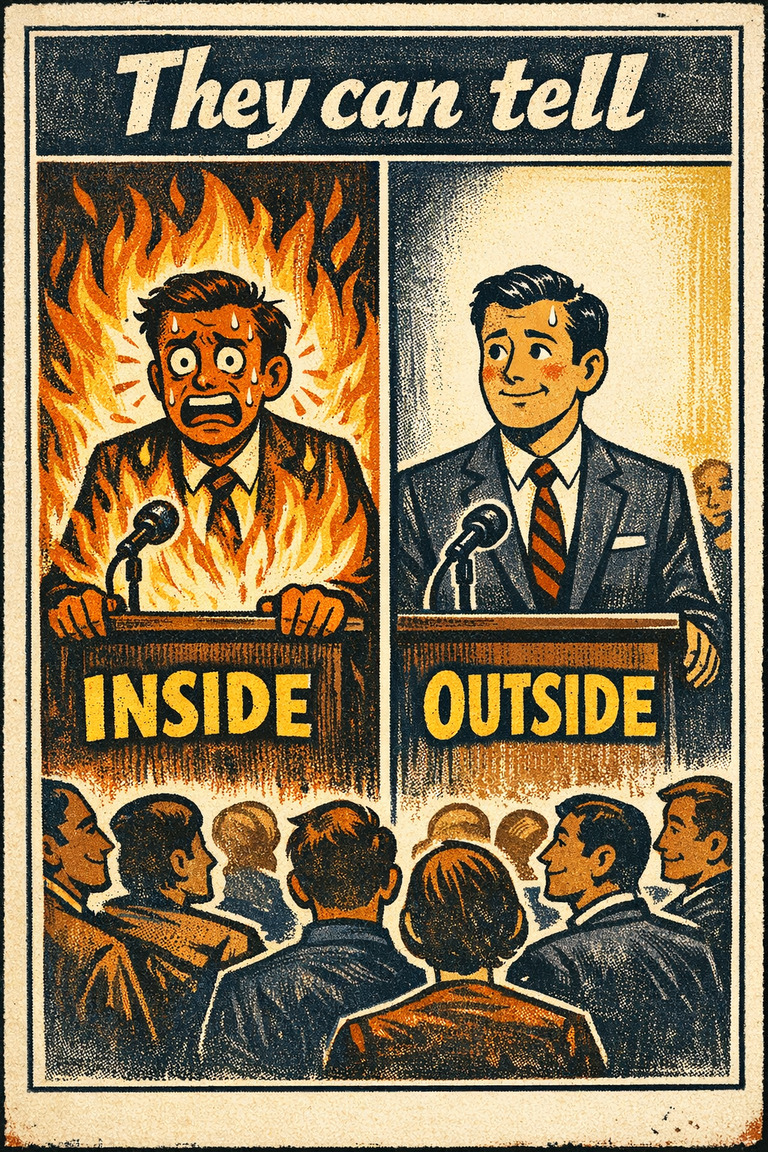
The tendency to overestimate how visible one's thoughts, feelings, or intentions are to others.