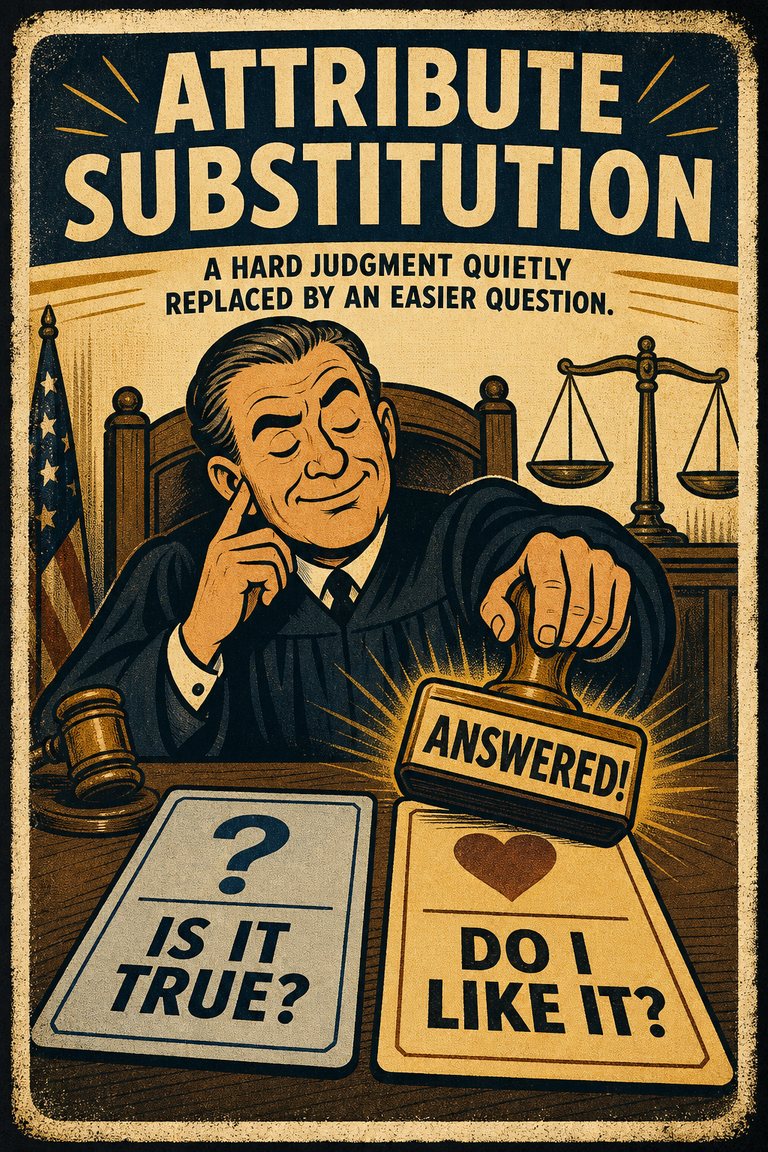
Attribute substitution
The tendency to answer a hard judgment question by unconsciously substituting an easier one.
EstimationAssociation

Cognitive Biases
A practical cognitive-bias site with clear definitions, learning paths, assessments, self-audits, and debiasing tools.
Theory Article
An article on how menus, proxies, defaults, system outputs, and urgency cues can manufacture what later feels like a straightforward preference.
People often talk as though preferences pre-exist in clean form and decisions merely reveal them. Real choices are usually noisier. The frame, the proxy, the third option, the automated recommendation, and the pressure to move can all help build the preference being reported.
Attribute substitution answers the easier question. Decoy effect changes how options compare. Automation bias gives machine output disproportionate authority. Action bias makes visible movement feel better than deliberate restraint. These are different distortions, but they all show that the context of choosing helps create what later feels like an independent choice.
This is not a small footnote to decision theory. It changes how we should design interfaces, meetings, menus, and recommendation systems.
The experience is not usually 'I am being manipulated.' It is 'this option now looks more reasonable.' The context has already done its work before the chooser names what moved.
That is why the strongest repair is comparative redesign. Remove the decoy. Hide the recommendation for a first pass. State the target attribute explicitly. Let waiting compete against acting.
A bias site should help readers see that clean preference often arrives after the architecture has already been tilted. The more this is understood, the less mysterious many consumer, political, and organizational choices become.
Choice architecture is not merely cosmetic. It is cognitive environment design.
Use these entry pages after the article if you want the same theory translated into more concrete diagnostic and repair tools.
The tendency to answer a hard judgment question by unconsciously substituting an easier one.
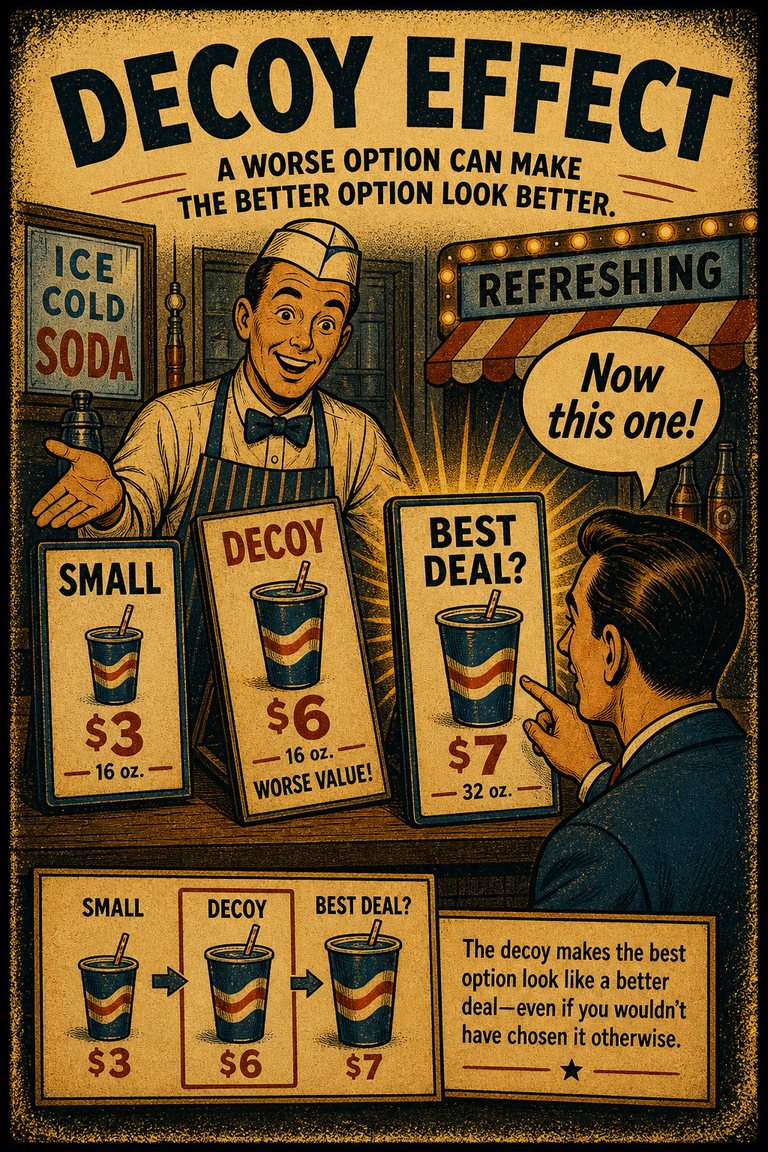
The tendency for a dominated third option to shift preference toward a nearby target option.

The tendency to depend excessively on automated systems which can lead to erroneous automated information overriding correct decisions.

The tendency for someone to act when faced with a problem even when inaction would be more effective, or to act when no evident problem exists.
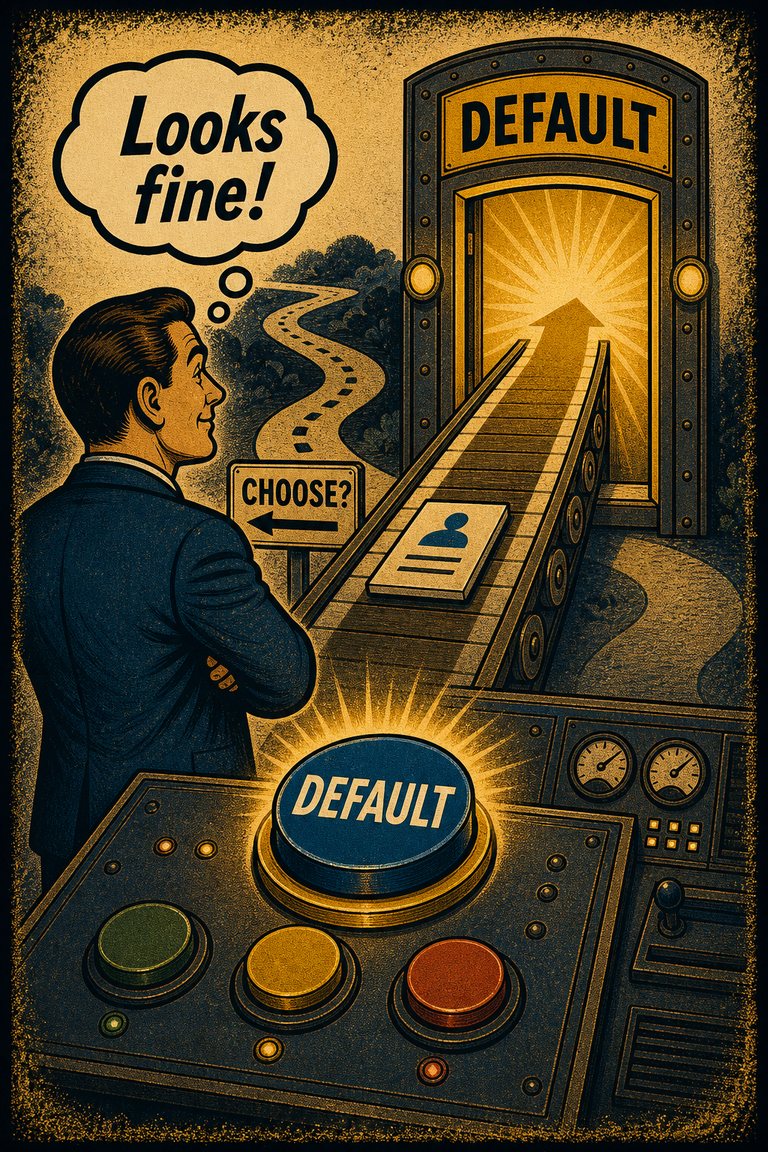
The tendency to favor the preselected or default option simply because it is already positioned as the path of least resistance.
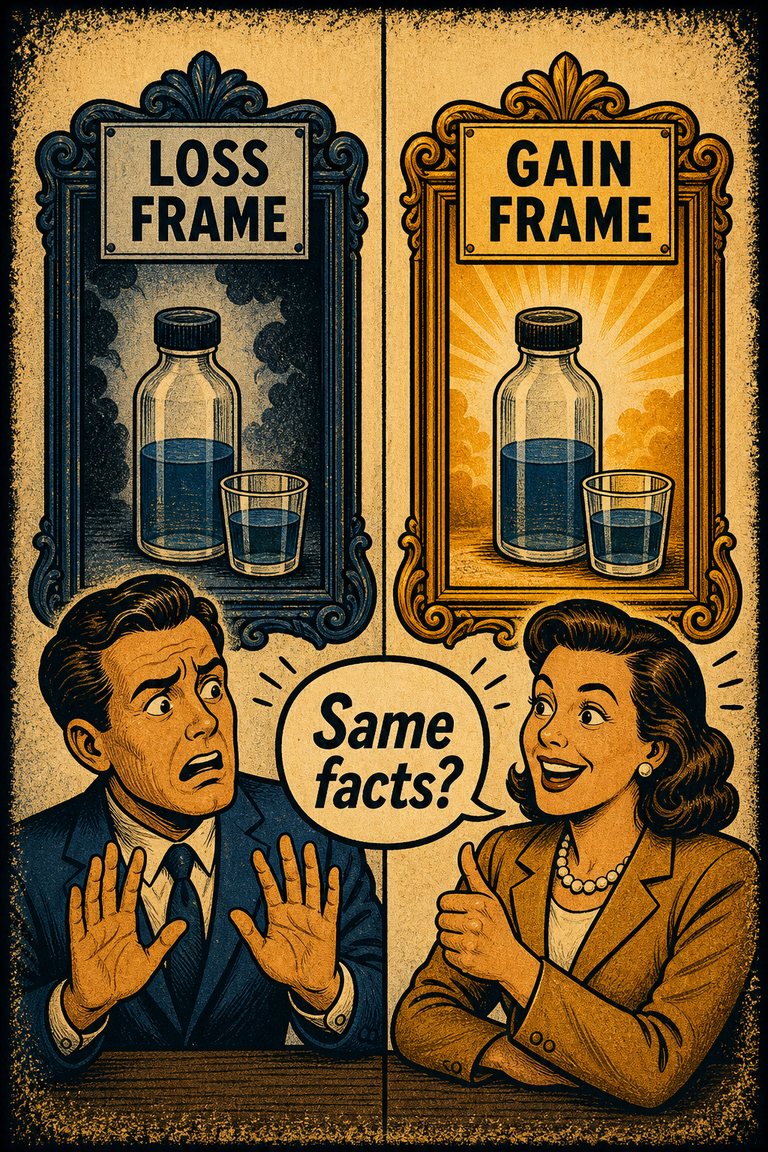
The tendency for the same underlying information to produce different judgments depending on how the options or outcomes are described.