Common in live judgment
68
Strong in finance, medicine, and planning under incomplete information.
Rare
Frequent

Cognitive Biases
A practical cognitive-bias site with clear definitions, learning paths, assessments, self-audits, and debiasing tools.
Cognitive Bias
The tendency to avoid options when their probabilities are unclear, even if the unclear option may not actually be worse than the familiar one.
What it distorts
It bends choice under uncertainty by making uncertainty about the probabilities feel like evidence against the option.
Typical trigger
Investing, policy tradeoffs, innovation, career moves, new products, and decisions where probability ambiguity is more vivid than expected value.
First countermove
Separate uncertainty about the odds from evidence that the option is actually worse.
Best use
Structured process
Am I rejecting this option because it is truly worse, or because the uncertainty around it is harder to name neatly?
Unknown probabilities feel like uncontrolled risk. The discomfort of not knowing the odds becomes a hidden negative attribute attached to the option itself.
These are classroom-facing editorial estimates for comparing how the bias behaves in use. They are teaching aids, not measured statistics.
Common in live judgment
68
Strong in finance, medicine, and planning under incomplete information.
Easy to spot from outside
46
Usually visible once the known and unknown risks are listed side by side.
Easy to innocently commit
79
The neat option often feels more responsible even when it is not.
Teaching difficulty
41
Best taught with paired choices rather than abstract definition alone.
This comparison makes the hidden pull easier to see before the technical label has to do all the work.
Biased move
This is like refusing to enter a dim room while ignoring the loose floorboards in the bright room next door.
Clearer comparison
Unknowns deserve inspection, but visibility alone is not safety. A named risk can still be larger than an unnamed one.
Do not use this label whenever someone dislikes uncertainty. Sometimes the ambiguous option really is worse. The issue is that ambiguity itself is being treated like enough reason to avoid the option without comparing expected value carefully.
Use this label when the absence of clean probability numbers becomes more decisive than the underlying stakes or plausible payoffs should justify.
Use the quick check, caveat, and nearby confusions together. The fastest diagnosis is often the noisiest one.
Each example changes the surface context while keeping the same hidden distortion in place.
A person rejects a potentially good opportunity mainly because the odds are hard to pin down, while giving the familiar option a pass because its risks feel easier to name.
A team favors a mediocre but legible strategy over a possibly stronger one because the uncertainty around the new path feels harder to defend.
Institutions prefer legacy approaches with known limitations to less familiar approaches whose payoff distributions are harder to quantify cleanly.
The unknown option seems irresponsible almost by definition, even when the known option's weaknesses are just as real.
Teaching note: This entry helps the site speak more clearly about innovation aversion, policy caution, and the hidden psychology of preferring the merely legible.
The strongest debiasing moves change the process, not just the label.
Write what is unknown, what is knowable, and what evidence actually bears on value instead of bundling all uncertainty into one aversive feeling.
Discuss the downside of the familiar option with the same rigor used to criticize the ambiguous one.
Use scenario ranges and explicit uncertainty categories so unknown odds do not automatically become vetoes.
Practice And Repair
Ambiguity effect turns the discomfort of not knowing into a decision rule. The unknown starts feeling disqualifying before expected value has been compared honestly.
A decision includes one option with unclear probabilities and another with cleaner-looking numbers.
The better-specified option feels safer and more rational simply because its uncertainty is easier to describe.
Ambiguity itself starts doing the work that risk comparison should have done.
List the known risks, unknown risks, and plausible payoffs for each option before letting the cleaner presentation decide the verdict.
What would this choice look like if both options had their uncertainties described with equal honesty?
Spot It
Slow It
Reframe It
These are nearby labels that can share the same outer appearance while differing in what actually drives the distortion. Use the overlap, the distinction, and the diagnostic question together before settling the call.
Why compare it: Loss aversion overweights downside; ambiguity effect specifically penalizes the option whose probabilities are murkier.
Why compare it: Omission bias morally prefers inaction; ambiguity effect analytically prefers the option with clearer odds even when action and omission are not the central contrast.
Why compare it: Neglect of probability ignores numerical likelihood; ambiguity effect is hypersensitive to whether the likelihood can be specified at all.
These are useful when the label seems roughly right but the process change still feels underspecified.
What is actually worse about this option besides the fact that its odds are harder to estimate?
Am I comparing expected value, or just comparing comfort levels about uncertainty?
How much uncertainty is attached to the familiar option that I am quietly overlooking?
These sourced cases do not prove what was in someone's head with perfect certainty. They are teaching cases for showing where the bias pressure becomes visible in practice.
Ellsberg's urn-choice experiments
People often preferred gambles with known probabilities over comparable gambles with unknown probabilities even when the expected structure gave no clean reason for the strong preference.
Why it fits: The missing probability detail becomes aversive in its own right and starts overpowering the underlying comparison.
1961
Unknown-odds choices penalized beyond the payoff gap
In finance, medicine, and policy examples, people often avoid options with unclear probability distributions even when the ambiguity itself does not justify such a steep discount relative to the known-odds alternative.
Why it fits: Uncertainty about the distribution becomes a disqualifier beyond the underlying payoff comparison.
Modern decision research
These linked tools turn the page into practice instead of leaving it at the level of definition.
This bias appears directly in one guided sequence and also in nearby paths that frame the same judgment problem from a slightly wider angle.
Direct path
Use this path when the real pull seems to be preserving what is already in hand rather than comparing options cleanly.
Nearby path
Comparison Traps And Choice Architecture
Use this path when you suspect the choice set itself is manufacturing preference rather than merely revealing it.
This bias does not yet have its own dedicated self-check, but these nearby audits usually catch the same kind of drift before it hardens.
Nearby audit
Before You Treat The Default As Neutral
Is the default genuinely best, or just easiest to leave in place?
Nearby audit
Before You Let The Menu Decide
Am I choosing the best option, or the option the current frame is making easiest to endorse?
These scenarios mix direct and nearby cases so you can practice the label itself and the broader judgment pattern around it.
Direct scenario
The tidy spreadsheet versus the unknown vendor
A committee quickly rejects a new vendor mainly because its performance range is less well specified, even though the incumbent vendor's documented failure rate is high and the co…
Nearby scenario
The option that sounds like surrender
A team rejects a strong software migration because the discussion keeps circling around what the team would lose by giving up the old workflow, while barely discussing the gains f…
This bias is also featured on Slugfester, a companion site with its own reference format and teaching angle.
Slugfester carries a parallel reference entry for this bias, giving readers another angle on how uncertainty and unclear options distort judgment.
These links widen the frame around the bias without interrupting the core lesson on this page.
A theory article on how ambiguity, vivid possibility, and normal baselines can distort risk judgment before explicit calculation ever gets a fair chance.
CogBias theory
These neighbors were selected from shared categories, shared patterns, and explicit editorial links where available.
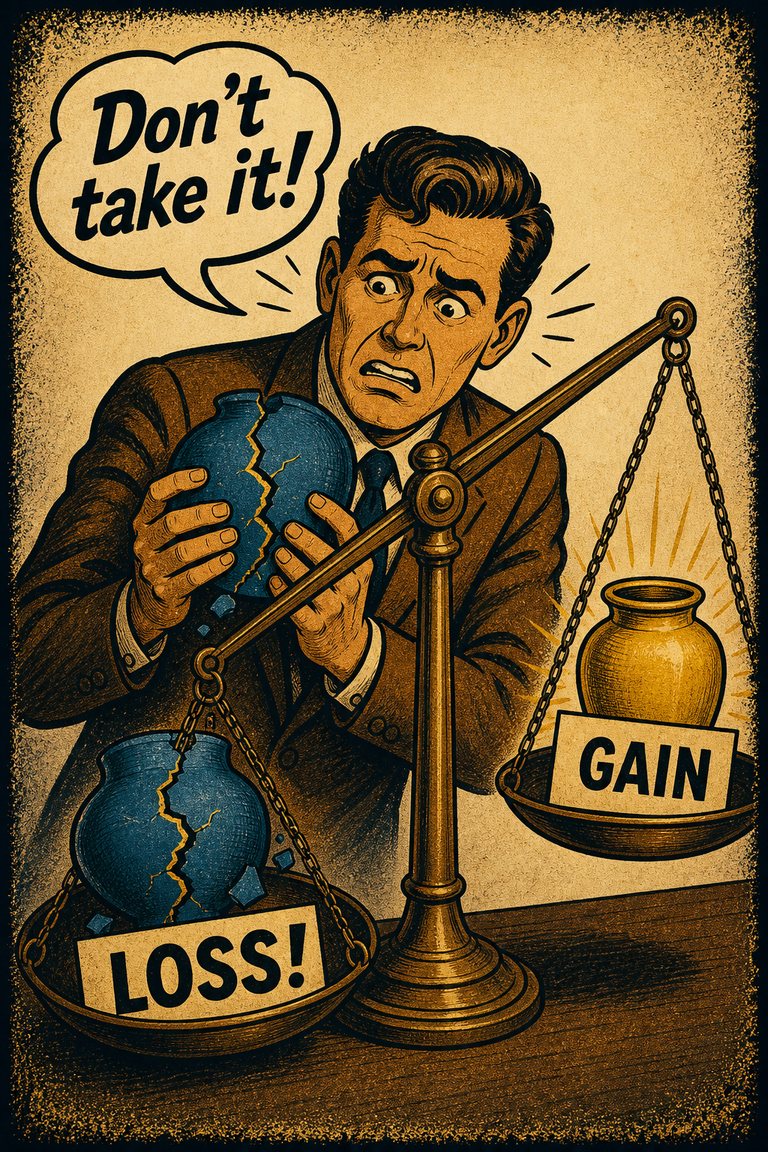
The tendency for losses or giving something up to feel worse than equivalent gains feel good.
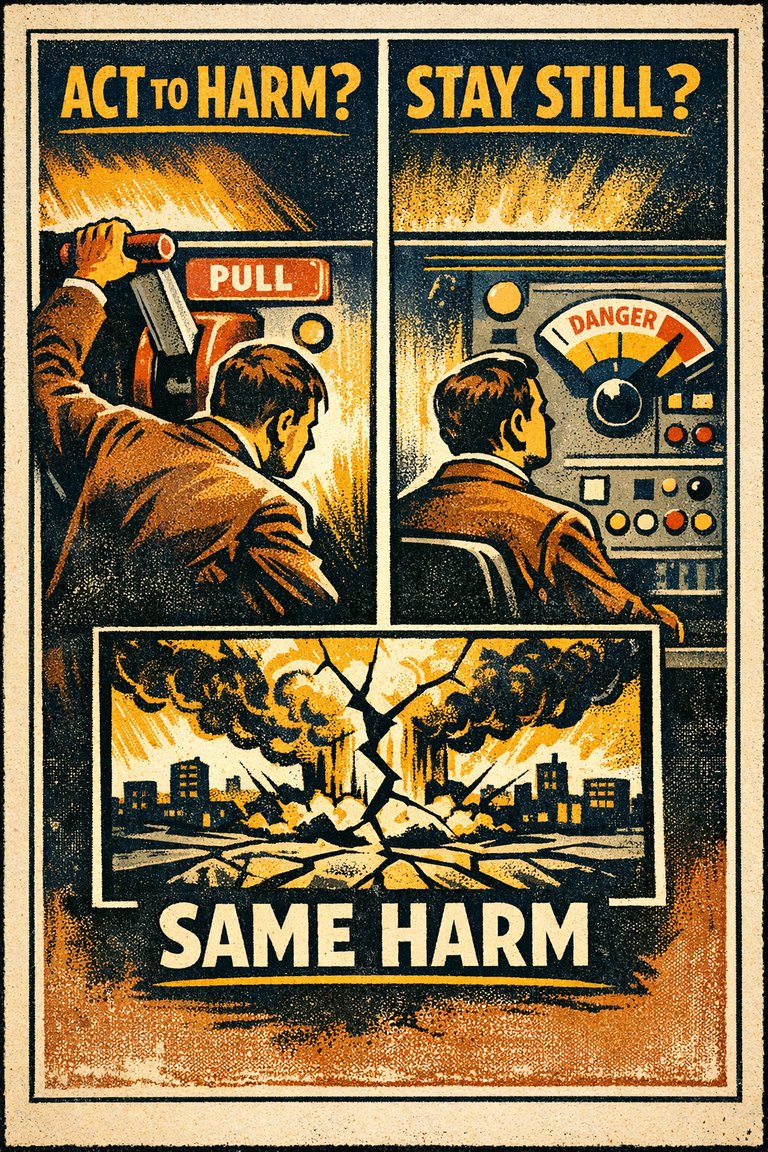
The tendency to judge harmful inaction as more acceptable, or less blameworthy, than equally harmful action.
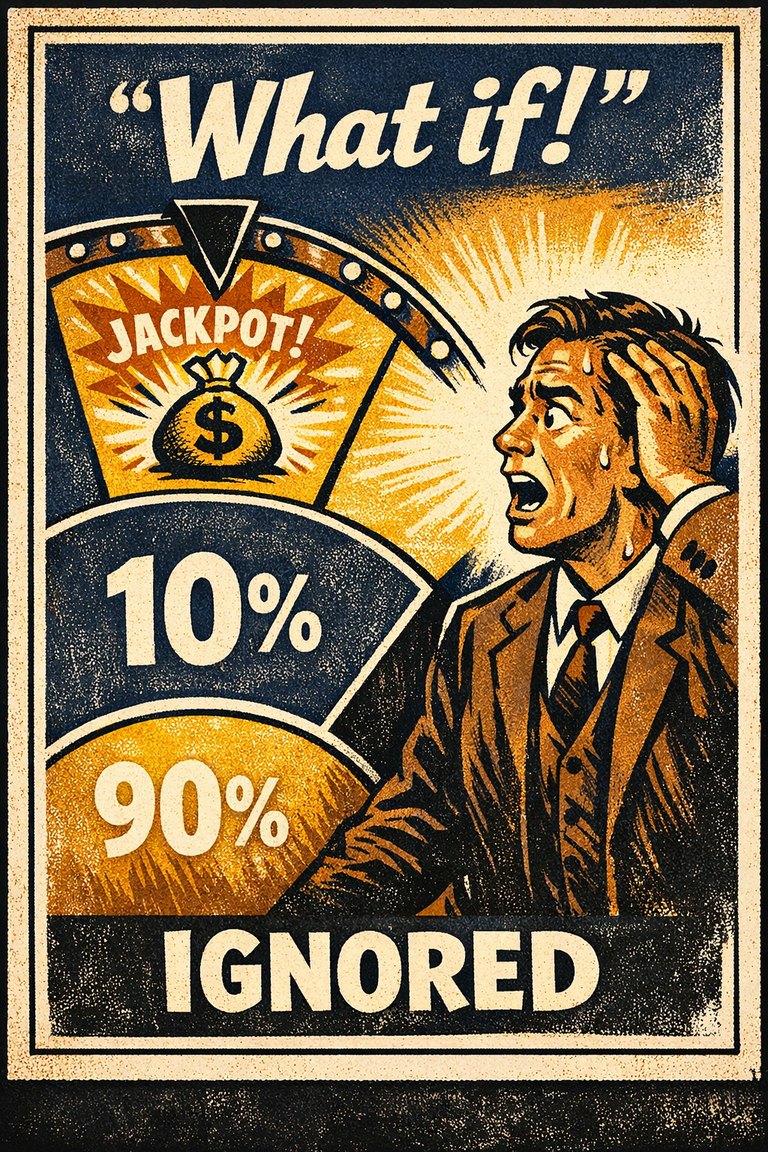
The tendency to ignore or drastically underuse probability information when making decisions under uncertainty.
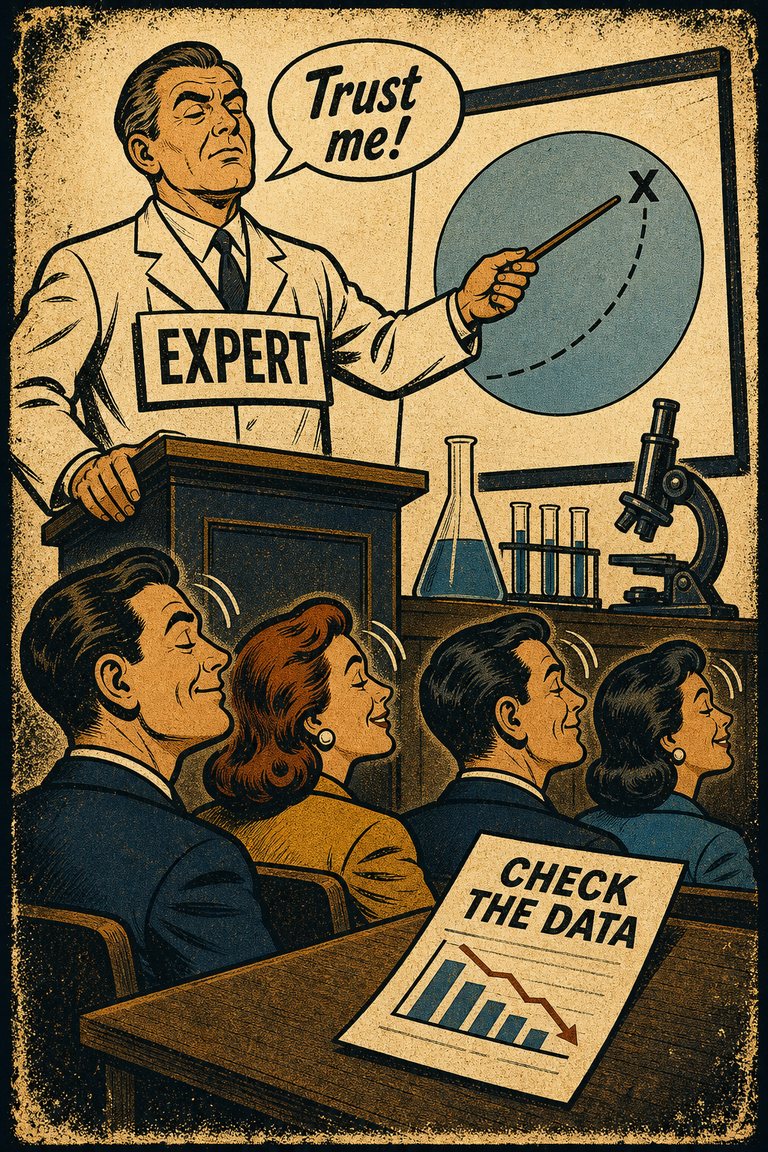
The tendency to give excess weight to the opinion of a high-status or authoritative source independent of whether the source has earned that weight on the specific issue.
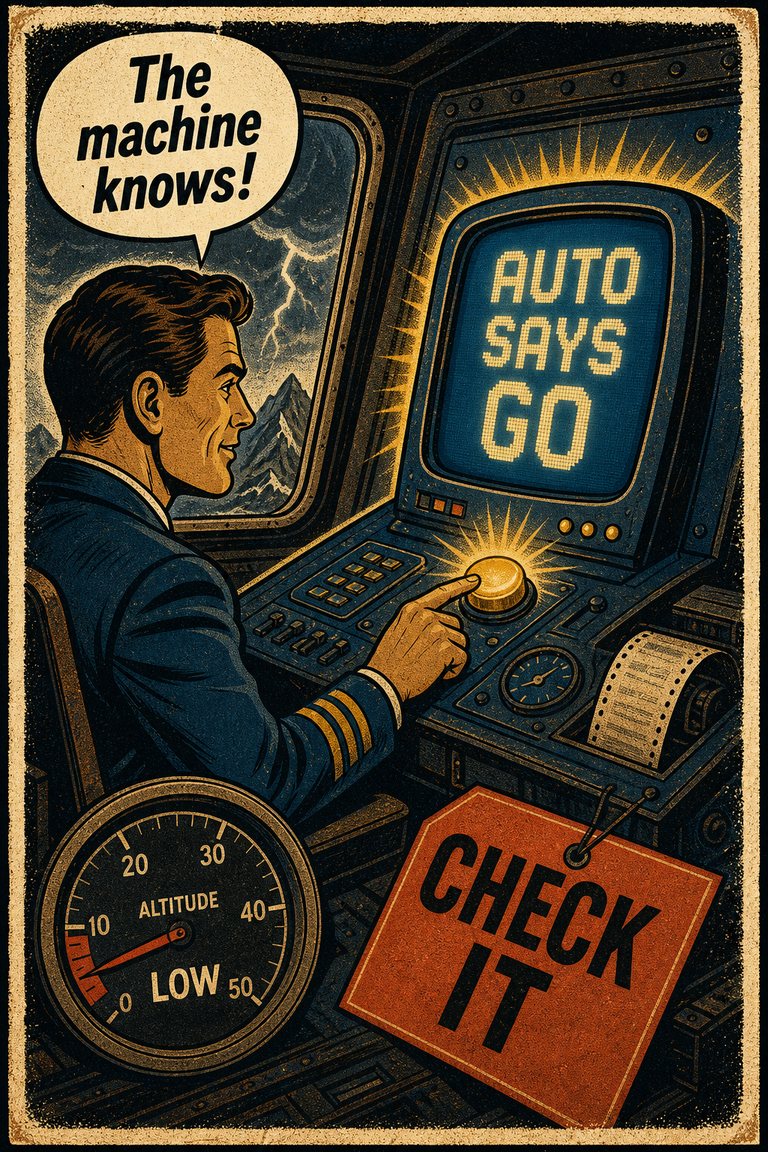
The tendency to depend excessively on automated systems which can lead to erroneous automated information overriding correct decisions.
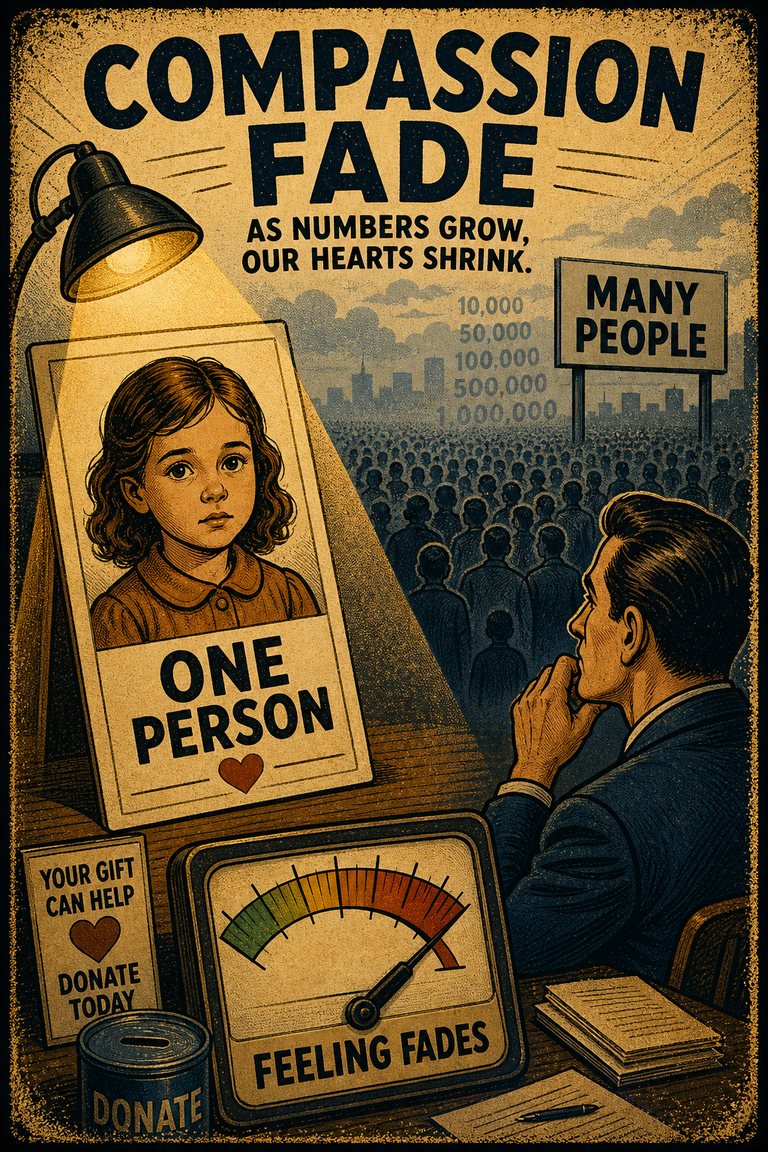
The tendency to behave more compassionately towards a small number of identifiable victims than to a large number of anonymous ones.