Common in success narratives
86
Strong wherever examples arrive through visibility, popularity, or persistence filters.
Rare
Frequent

Cognitive Biases
A practical cognitive-bias site with clear definitions, learning paths, assessments, self-audits, and debiasing tools.
Cognitive Bias
The tendency to learn from the visible winners while overlooking the invisible failures that dropped out of view.
What it distorts
It makes risky paths look safer and strategies look stronger than they are.
Typical trigger
Entrepreneurship stories, hiring narratives, investing, and institutional mythmaking.
First countermove
Ask what relevant failures are absent from the observed sample and why they are absent.
Best use
Team protocol
Which failures, dropouts, or invisible cases are missing from the sample that feels persuasive right now?
Success stories are easier to observe, celebrate, and circulate. Failed cases disappear, leaving the remaining sample badly distorted.
These are classroom-facing editorial estimates for comparing how the bias behaves in use. They are teaching aids, not measured statistics.
Common in success narratives
86
Strong wherever examples arrive through visibility, popularity, or persistence filters.
Easy to spot from outside
60
Becomes much clearer once the missing denominator is named explicitly.
Easy to innocently commit
80
The visible winners are exactly the cases people have easiest access to.
Teaching difficulty
29
The aircraft example makes the pattern memorable very quickly.
This comparison makes the hidden pull easier to see before the technical label has to do all the work.
Biased move
This is like studying only the ships that made it back to port and then writing a theory of what the whole ocean is like.
Clearer comparison
The visible sample may be real and still be systematically incomplete. Good judgment asks who vanished before the data became visible.
Do not use this label just because a sample is small. The issue is not merely limited data. The issue is that the visible cases are selected by survival, persistence, or publicity in a way that hides the failures that would change the lesson.
Use this label when success stories, visible winners, or remaining cases are being treated as representative while the missing failures would likely bend the conclusion sharply.
Use the quick check, caveat, and nearby confusions together. The fastest diagnosis is often the noisiest one.
Each example changes the surface context while keeping the same hidden distortion in place.
Someone notices only the friends whose risky decisions paid off and forgets the many comparable attempts that quietly disappeared.
A company copies the habits of successful firms without examining the larger pile of firms that behaved similarly and still failed.
Entrepreneurship, investing, and self-help culture celebrate the visible success cases while hiding the graveyard that made the sample look impressive.
The visible winners look like the whole story because the missing failures never stand in front of you asking to be counted.
Teaching note: This page is especially effective when paired with startup culture, investing, and war-story institutional memory.
The strongest debiasing moves change the process, not just the label.
Ask what invisible failures would have to be counted to interpret the visible winners honestly.
Include the missing-case question in every success-story review.
Track attrition, dropout, and dead-end cases as first-class data rather than as footnotes.
Practice And Repair
Survivorship bias flatters the visible sample. The stories on hand can be vivid, detailed, and real while still hiding the data that would most weaken the easy lesson.
A lesson is drawn from visible successes, remaining cases, or published examples without first asking what kinds of cases disappeared from view.
Because the survivors are concrete and observable, they start to feel like the natural sample from which to generalize.
The conclusion inherits the selection filter and mistakes visibility for representativeness.
Reconstruct the missing denominator: who failed, dropped out, was never published, or never made it into the dataset you are treating as normal?
What would I learn differently if the missing failures were visible beside the visible successes?
Spot It
Slow It
Reframe It
These distinction guides slow down the most common nearby-label confusions before the diagnosis hardens.
Survivorship bias samples only visible winners; base-rate neglect ignores the background frequency needed to interpret a case.
Quick rule: Ask whether the missing information is failed cases from the sample or background rates for the whole inference.
These are nearby labels that can share the same outer appearance while differing in what actually drives the distortion. Use the overlap, the distinction, and the diagnostic question together before settling the call.
Why compare it: Survivorship bias distorts the sample you are looking at; base-rate neglect underuses the broader prevalence information even if it is available.
Why compare it: Availability explains why the visible winners feel diagnostic; survivorship bias explains why those winners were overrepresented in the first place.
Why compare it: Confirmation bias protects the winner story once you prefer it; survivorship bias makes the sample itself too flattering before that protection starts.
These are useful when the label seems roughly right but the process change still feels underspecified.
Who is absent from this sample, and why are they absent?
What would the full denominator look like, not just the winners?
Am I learning from outcomes or from the filters that determined which outcomes stayed visible?
These sourced cases do not prove what was in someone's head with perfect certainty. They are teaching cases for showing where the bias pressure becomes visible in practice.
Abraham Wald and bullet holes on returning aircraft
Analysts first considered reinforcing the parts of planes that showed the most bullet holes, until Wald pointed out that the missing planes were the crucial unseen data.
Why it fits: The visible survivors looked like the full sample until the invisible failures were restored conceptually.
World War II
Performance lessons drawn only from surviving funds and firms
Mutual funds, startups, and careers can look more successful than they are when the failures disappear from the visible sample and the lesson is drawn only from who remains.
Why it fits: Selection by survival makes the visible sample look stronger, cleaner, and more repeatable than reality.
Modern finance and business
These linked tools turn the page into practice instead of leaving it at the level of definition.
2 related paths place this bias beside the distortions it most often travels with in practice.
Direct path
Use this path when you suspect that the apparent evidential picture is itself distorted.
Direct path
Use this path after a win, loss, surprise, or failure when the group needs to learn rather than merely narrate.
These audits combine direct and nearby checks so you can test the label itself and the broader judgment pattern around it.
Direct audit
Is this memorable because it is representative, or because it is dramatic and easy to circulate?
Same audit family · Public claims and repetition
What part of this claim's plausibility is coming from repetition, correction failure, or visible uptake rather than from direct support?
This bias is featured in a printable lesson or workshop packet.
Direct workshop
A 45-minute lesson for separating vivid stories, repeated claims, and missing denominators before a news item becomes belief.
2 mixed scenarios let you diagnose this bias from the case rather than the heading.
Direct scenario
The founders who made the method look safe
An article profiles five founders who succeeded after quitting college and implies the path is broadly smart, while ignoring the much larger group who quit and disappeared from vi…
Direct scenario
Learning only from the winners on stage
A founder draws strategic lessons from ten celebrated startup stories without asking how many similar startups followed the same playbook and disappeared before anyone invited the…
These links widen the frame around the bias without interrupting the core lesson on this page.
A theory essay on why memorable winners create seductive but incomplete lessons when the failures disappear from view.
CogBias theory
These neighbors were selected from shared categories, shared patterns, and explicit editorial links where available.
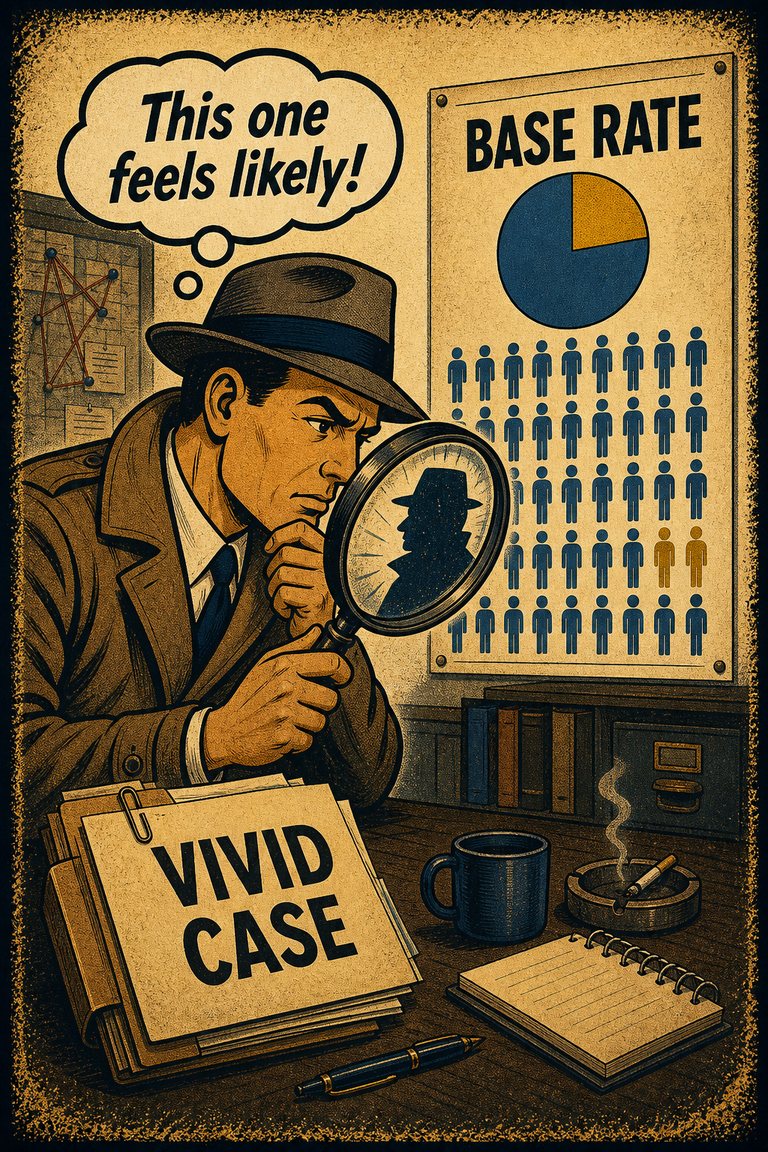
The tendency to underweight general prevalence information when vivid case-specific details are available.
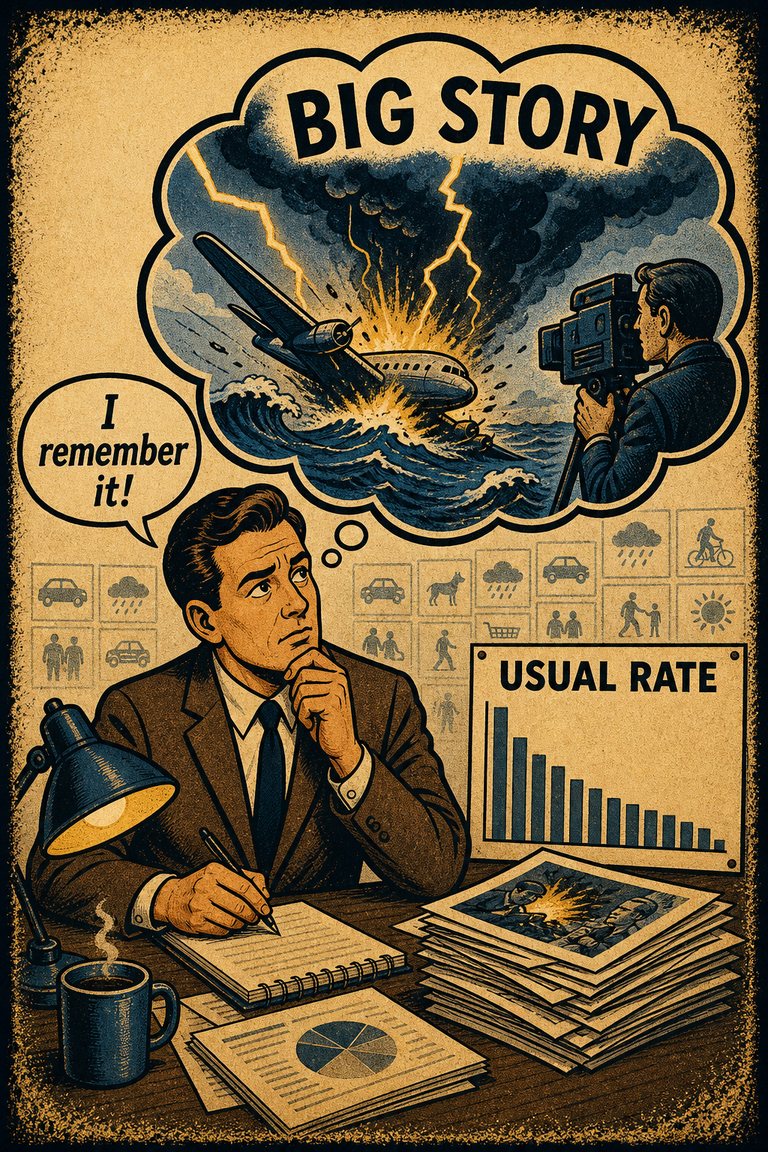
The tendency to judge frequency, risk, or importance by how easily examples come to mind.
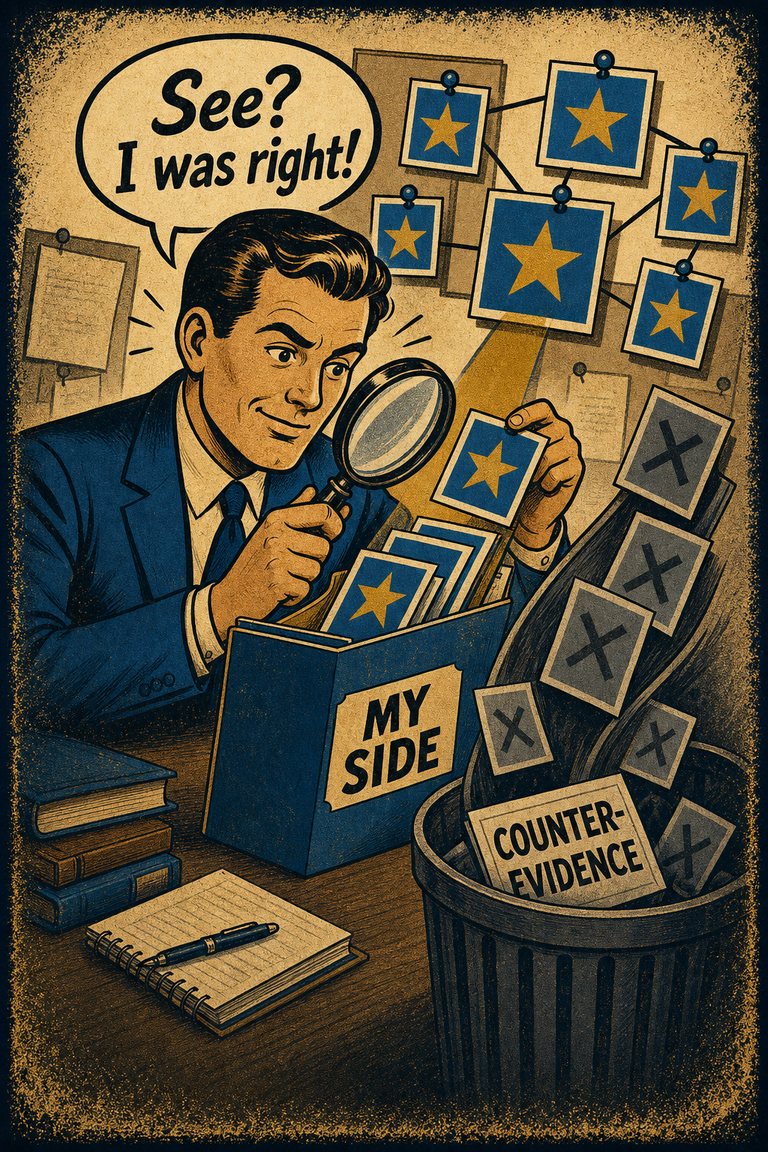
The tendency to notice, seek, and remember evidence that supports the story you already prefer more readily than evidence that threatens it.

The tendency to accept vague, flattering, or generic descriptions as uniquely accurate of oneself.
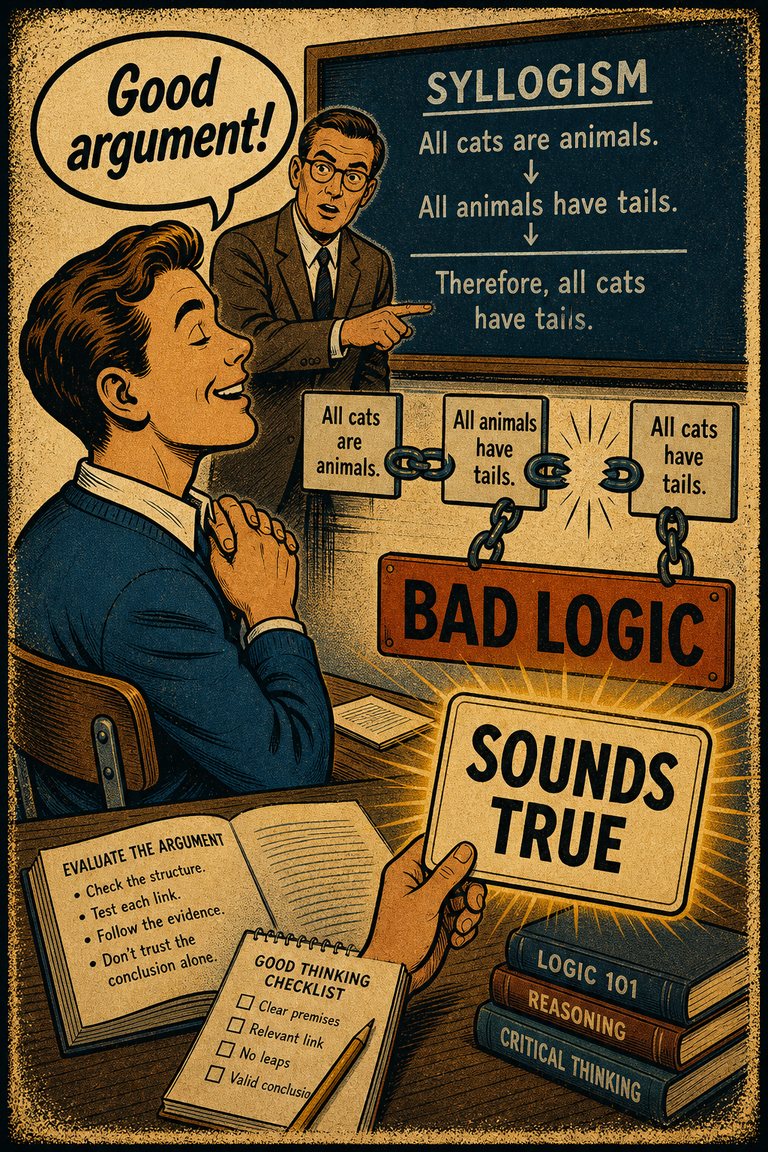
The tendency to judge an argument as stronger when its conclusion seems believable and weaker when its conclusion seems unbelievable, even if the reasoning structure is unchanged.
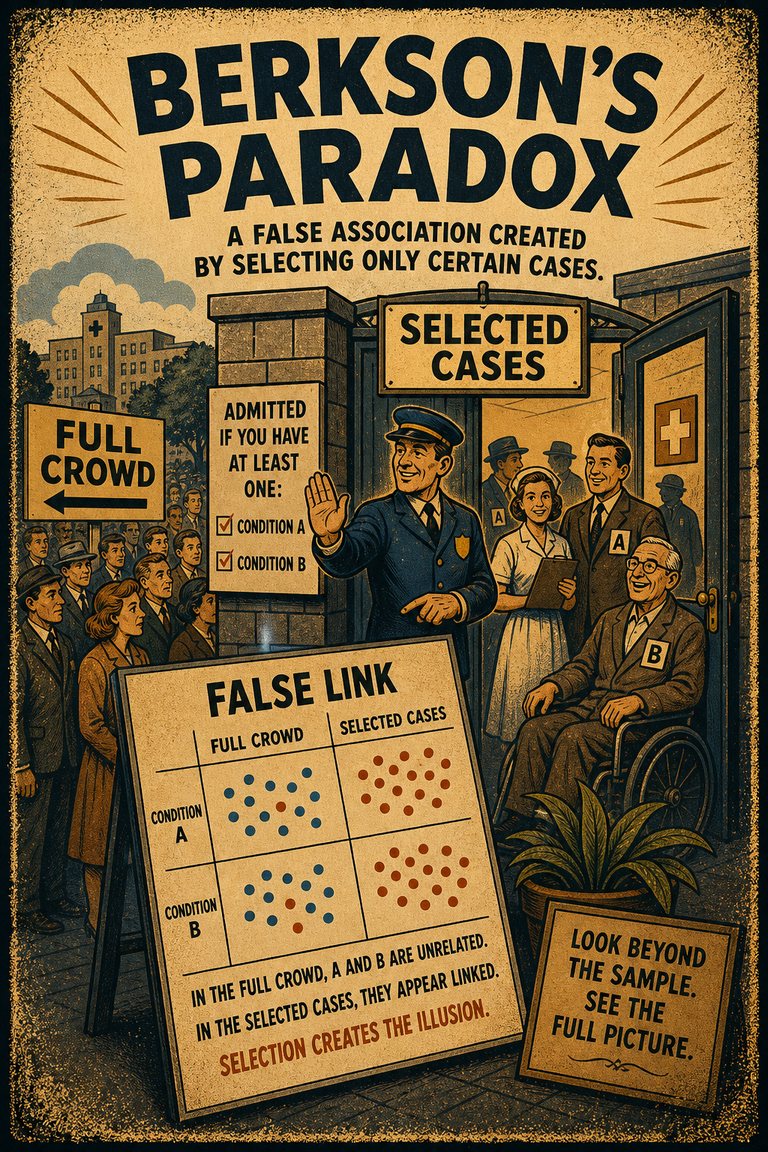
The tendency to draw misleading statistical conclusions from conditionally selected samples.