Survivorship bias
Core pattern
Visible successes dominate because failures are absent from the evidence set.
Ask: Who tried the same path and vanished from view?

Cognitive Biases
A practical cognitive-bias site with clear definitions, learning paths, assessments, self-audits, and debiasing tools.
Compare Biases
Survivorship bias samples only visible winners; base-rate neglect ignores the background frequency needed to interpret a case.
Survivorship bias
Visible successes dominate because failures are absent from the evidence set.
Ask: Who tried the same path and vanished from view?
Base rate neglect
A vivid case description overwhelms the prior probability or population rate.
Ask: What is the rate before this specific evidence updates it?
Both lose the denominator, but they lose it differently.
Ask whether the missing information is failed cases from the sample or background rates for the whole inference.
Use these before deciding which label should carry the lesson.
Are we studying only the winners?
Do we have the full starting cohort?
What prior probability should frame the case-specific evidence?
The same surface area can point to different underlying mechanisms.
Business advice is drawn only from companies that survived.
Why: Failed companies are missing from the sample.
A personality sketch overwhelms the fact that one role is far more common in the applicant pool.
Why: The background frequency is ignored during inference.
Repair Move
Recover the full cohort first, then apply the relevant base rate before updating on case details.
Use the comparison as a bridge into the fuller pages.

The tendency to learn from the visible winners while overlooking the invisible failures that dropped out of view.
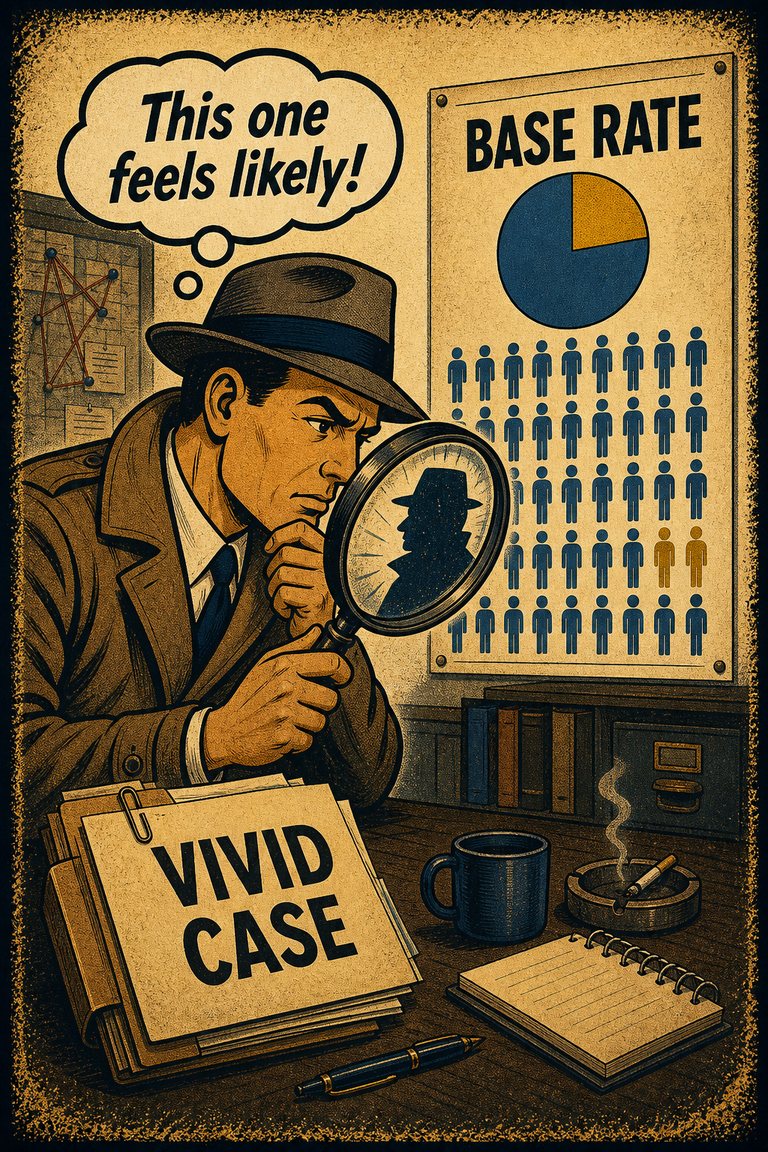
The tendency to underweight general prevalence information when vivid case-specific details are available.