Common in live judgment
84
Strong in branding, aesthetics, social trust, and repeated messaging.
Rare
Frequent

Cognitive Biases
A practical cognitive-bias site with clear definitions, learning paths, assessments, self-audits, and debiasing tools.
Cognitive Bias
The tendency to like, trust, or feel more comfortable with something simply because it has become familiar.
What it distorts
It bends preference, trust, branding, and repetition effects by letting familiarity masquerade as evidence of quality.
Typical trigger
Repeated messaging, recurring brands, inherited tools, familiar faces, and situations where comfort is easier to notice than quality.
First countermove
Ask what exactly improved besides your familiarity with the thing.
Best use
Quick reset
Does this option feel better because it is better, or because it is already familiar?
Repeated exposure lowers friction. What is easier to process starts to feel safer, smoother, and more acceptable, even when the underlying merits have not changed.
These are classroom-facing editorial estimates for comparing how the bias behaves in use. They are teaching aids, not measured statistics.
Common in live judgment
84
Strong in branding, aesthetics, social trust, and repeated messaging.
Easy to spot from outside
42
Easier to see after repetition schedules are compared.
Easy to innocently commit
90
The familiar option simply feels smoother and less risky.
Teaching difficulty
28
Very teachable because the underlying pattern is intuitive once named.
This comparison makes the hidden pull easier to see before the technical label has to do all the work.
Biased move
This is like trusting the song on the radio more after the fifth play, even before you could say what is actually strong about it.
Clearer comparison
Familiarity can reduce friction without improving merit. Good evaluation asks what changed besides repetition itself.
Do not use this label whenever familiarity matters. Sometimes repeated contact really does reveal quality. The issue is when repetition alone starts creating liking or trust disproportionate to the underlying merits.
Use this label when repeated exposure makes an option feel more attractive, safer, or more reasonable even though the evaluative evidence has barely changed.
Use the quick check, caveat, and nearby confusions together. The fastest diagnosis is often the noisiest one.
Each example changes the surface context while keeping the same hidden distortion in place.
A song, product, or phrase grows on someone mainly because repeated exposure makes it feel more natural.
A team keeps preferring a familiar vendor or workflow even when alternatives might perform better, because the known option feels less cognitively costly.
A slogan or public figure gains warmth through repeated presence alone, long before the underlying claims have been evaluated carefully.
The familiar option does not feel biased. It simply feels more reasonable, less abrasive, and easier to trust.
Teaching note: This page helps readers see how repetition can persuade without argument, especially in branding, politics, and institutional drift.
The strongest debiasing moves change the process, not just the label.
Compare the familiar option against a blind description of the alternatives before treating comfort as evidence.
Ask whether the preferred option won because it performed best or because it has been in front of the group the longest.
Design reviews that periodically reset inherited choices so repetition alone does not become a hidden selection criterion.
Practice And Repair
Mere exposure effect quietly turns repetition into liking. What has become easy to process starts to feel better, safer, or more trustworthy even before explicit reasons have carried the weight.
An idea, face, design, slogan, or option is encountered repeatedly.
The repeated item feels smoother and therefore more acceptable or more naturally preferable.
Processing fluency begins impersonating merit, fit, or trustworthiness.
Ask what reasons would remain for preferring the option if it were no more familiar than its nearest alternatives.
Which part of my preference here is coming from repeated contact rather than from comparative merit?
Spot It
Slow It
Reframe It
These are nearby labels that can share the same outer appearance while differing in what actually drives the distortion. Use the overlap, the distinction, and the diagnostic question together before settling the call.
Why compare it: Status quo bias favors the current arrangement broadly; mere exposure effect explains why repeated contact itself can make that arrangement feel more appealing.
Why compare it: Default effect privileges the preselected option; mere exposure effect privileges the repeatedly encountered option even without formal preselection.
Why compare it: Halo effect spreads one admired trait across judgment; mere exposure effect generates warmth through familiarity even when no admired trait is doing the work.
These are useful when the label seems roughly right but the process change still feels underspecified.
What would I think of this if it were new to me today?
Am I reacting to quality, or to the ease of processing something familiar?
Which unfamiliar option is being penalized simply for not having had repeated exposure?
These sourced cases do not prove what was in someone's head with perfect certainty. They are teaching cases for showing where the bias pressure becomes visible in practice.
Zajonc's repeated-exposure studies
Repeated exposure to words, symbols, and other stimuli can increase liking even when people have little substantive reason for the stronger preference.
Why it fits: Familiarity itself is doing evaluative work before the reasons catch up.
1968 onward
Nonsense words grow on people through repetition alone
Simply encountering neutral words or symbols repeatedly can increase liking for them, even when nothing substantive about them changes.
Why it fits: Familiarity itself is raising the evaluation.
Modern cognition research
These linked tools turn the page into practice instead of leaving it at the level of definition.
This bias does not yet have a dedicated path, but these nearby paths are usually the clearest place to see the same family of distortion in motion.
Nearby path
Use this path when the real pull seems to be preserving what is already in hand rather than comparing options cleanly.
Nearby path
Use this path when you want the minimum set of pages that gives the rest of the site immediate traction.
This bias does not yet have its own dedicated self-check, but these nearby audits usually catch the same kind of drift before it hardens.
Nearby audit
Before You Treat The Default As Neutral
Is the default genuinely best, or just easiest to leave in place?
Nearby audit
Am I choosing the best forward-looking option, or the most comfortable inherited one?
This bias is not yet the named center of its own kit, but it already appears in nearby workshop material that teaches the same pressure in context.
Nearby workshop
Product Choice-Architecture Audit
A product and UX kit for testing whether defaults, decoys, metrics, and automation are helping users choose or quietly manufacturing preference.
These scenarios mix direct and nearby cases so you can practice the label itself and the broader judgment pattern around it.
Direct scenario
It just feels more trustworthy now
A proposal begins winning support after people have seen the slogan and design treatment repeatedly for weeks, even though the substantive arguments have not improved much.
Nearby scenario
Keep the policy unless the replacement is perfect
A team treats the current policy as automatically acceptable, while demanding that any proposed replacement clear a much higher evidential bar before it can even be piloted.
These links widen the frame around the bias without interrupting the core lesson on this page.
An article on how repeated exposure, possession, and group identity can all make an option feel more worthy before explicit reasons have earned the difference.
CogBias theory
These neighbors were selected from shared categories, shared patterns, and explicit editorial links where available.
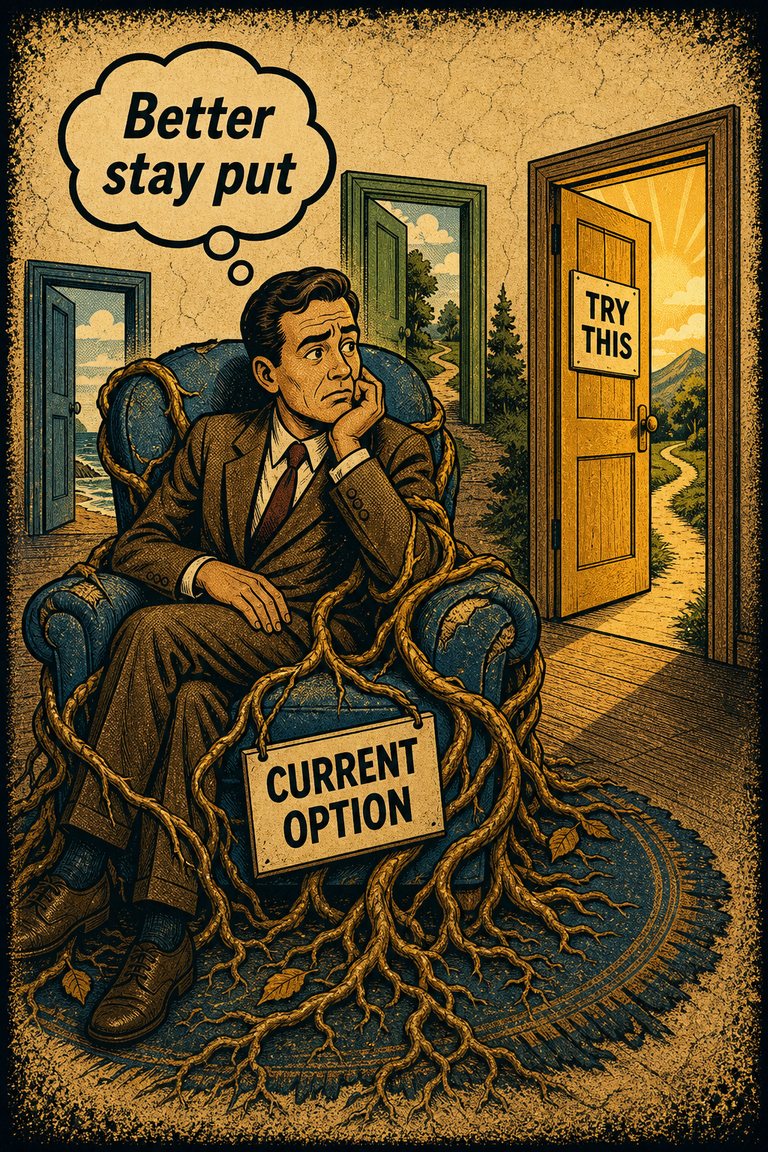
The tendency to prefer the current option, default, or inherited arrangement simply because it is the current option, default, or inherited arrangement.
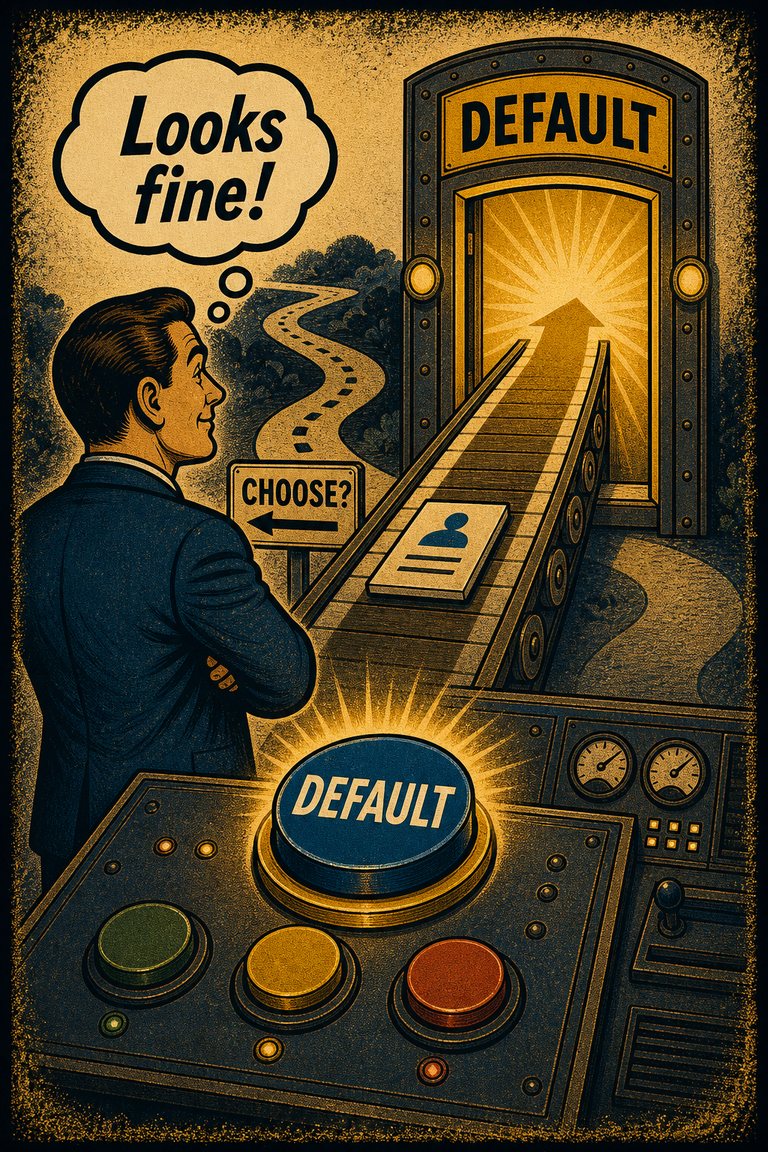
The tendency to favor the preselected or default option simply because it is already positioned as the path of least resistance.

The tendency for one salient positive or negative impression to spill over into unrelated judgments about a person, product, or institution.
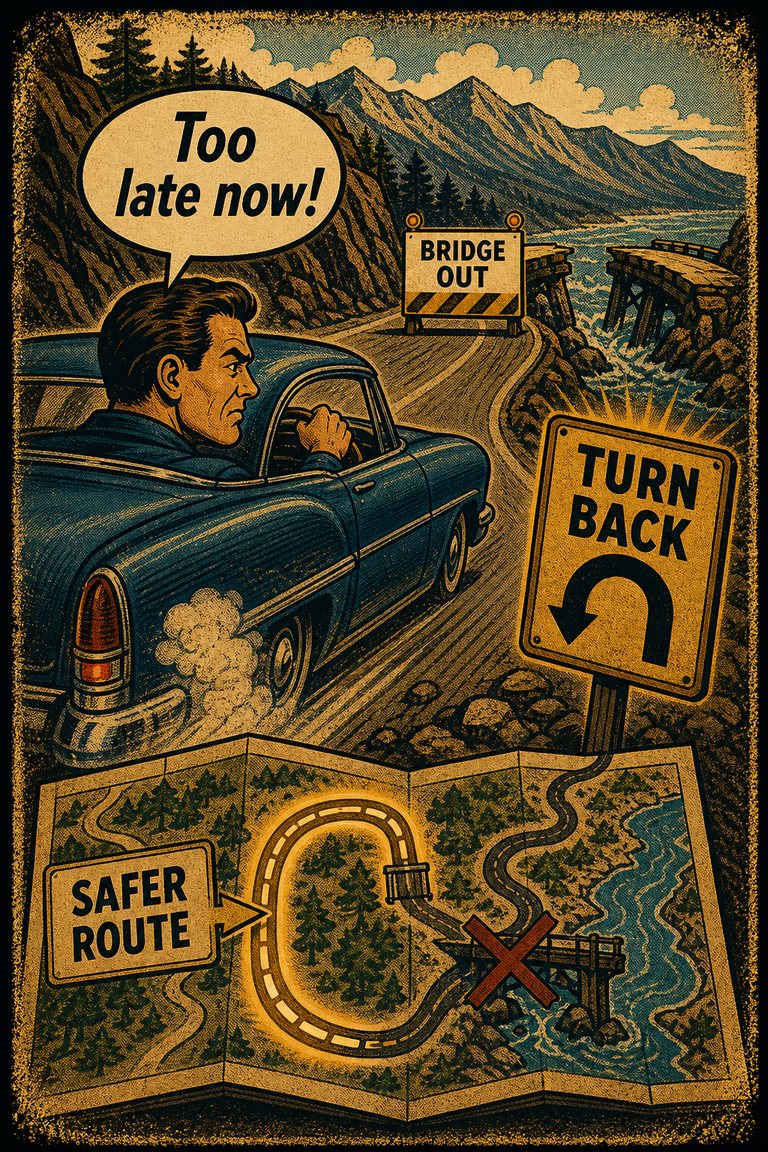
The tendency to resist restarting or retracing steps even when doing so would save time or effort.
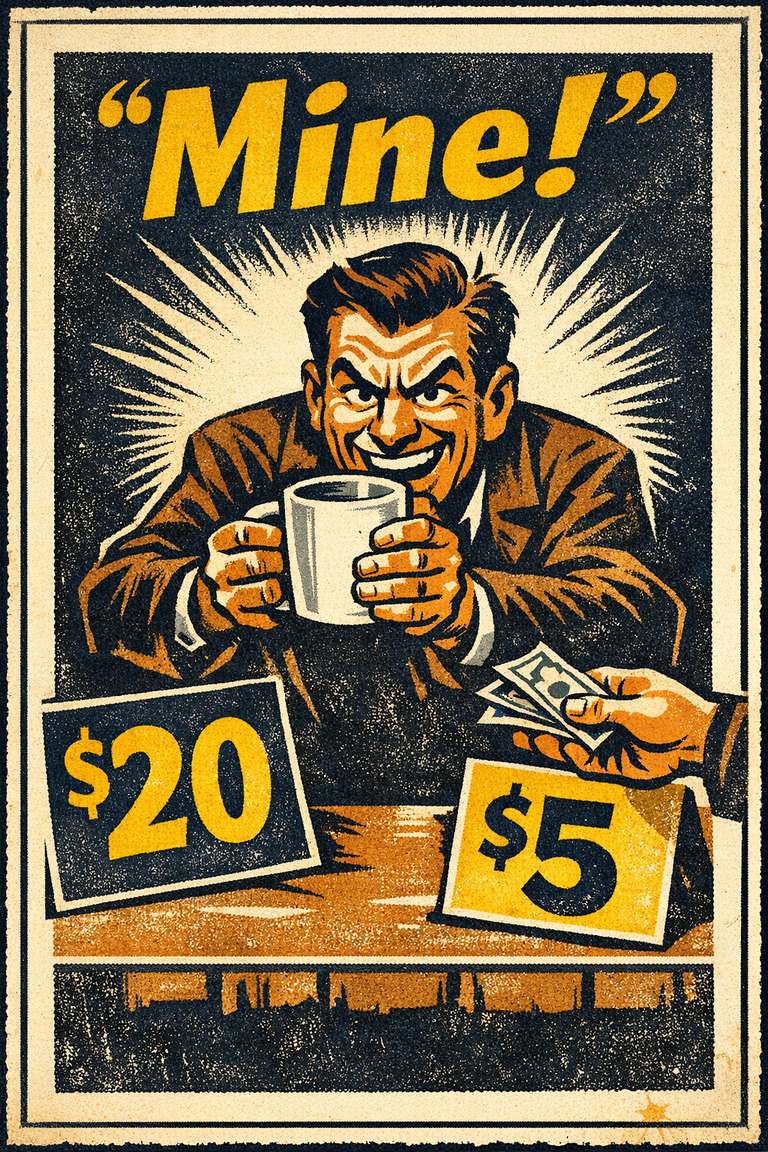
The tendency to value something more highly once it is already owned, possessed, or treated as part of the current arrangement.
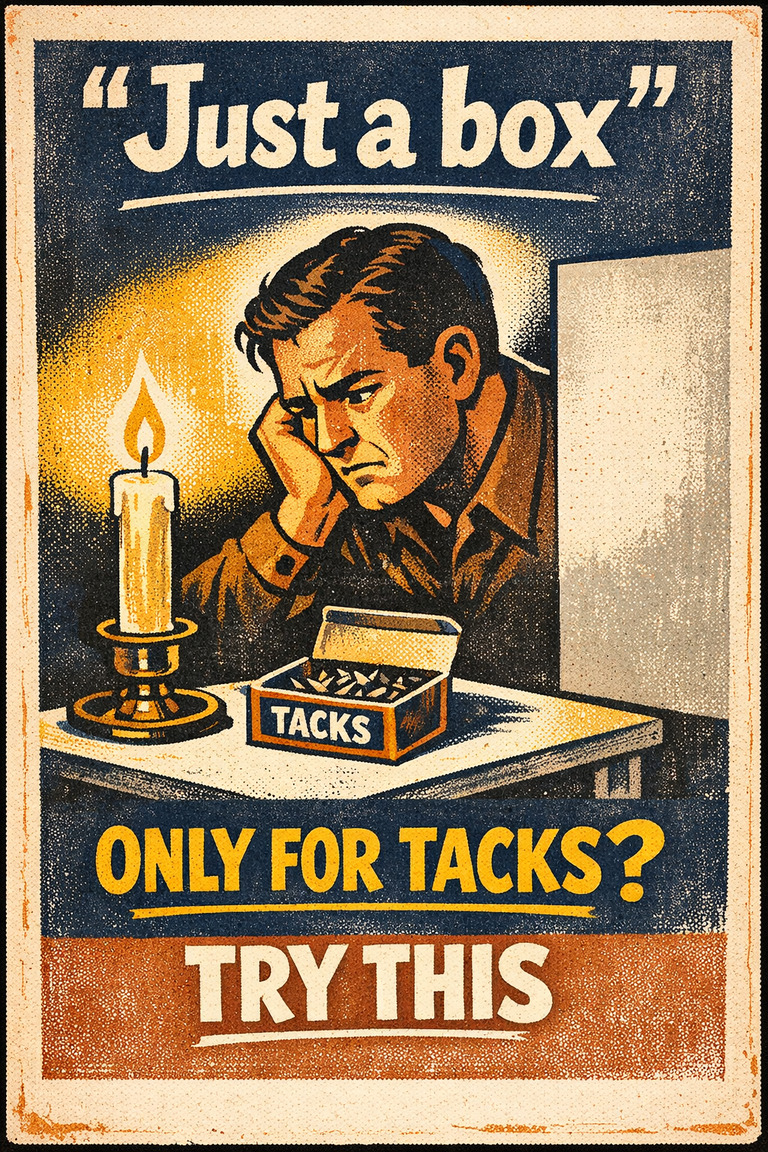
A tendency limiting a person to using an object only in the way it is traditionally used.