Common after commitment
76
Shows up wherever choices become tied to identity or public commitment.
Rare
Frequent

Cognitive Biases
A practical cognitive-bias site with clear definitions, learning paths, assessments, self-audits, and debiasing tools.
Cognitive Bias
The tendency to remember one's choices as better than they actually were
What it distorts
Biases that selectively reshape memory, retrieval, and retrospective interpretation.
Typical trigger
Situations where recall is already difficult and the outcome cue feels easier to trust than a fuller review.
First countermove
Start with the recall question instead of the first intuitive answer, then check whether the outcome pattern is doing invisible work.
Best use
Quick reference
How much of my memory of this choice is now defending the fact that it was my choice?
In recall problems, the result of an event bends how the process, evidence, memory, or explanation is interpreted afterward before a fuller check catches up.
These are classroom-facing editorial estimates for comparing how the bias behaves in use. They are teaching aids, not measured statistics.
Common after commitment
76
Shows up wherever choices become tied to identity or public commitment.
Easy to spot from outside
43
Often visible when old notes are compared to later retellings.
Easy to innocently commit
88
Memory naturally wants coherence after commitment.
Teaching difficulty
36
Very teachable through pre-commitment note-taking and later comparison.
This comparison makes the hidden pull easier to see before the technical label has to do all the work.
Biased move
This is like editing the travel brochure after you already bought the ticket.
Clearer comparison
The destination may still be worthwhile, but post-choice memory often starts making the purchase look cleaner than the original tradeoff really was.
Do not use this label whenever someone remains satisfied with a decision. The issue is memory drift and post-choice revaluation, not mere commitment.
Use this label when chosen options are remembered as having been stronger and unchosen ones as weaker than the original comparison justified.
Use the quick check, caveat, and nearby confusions together. The fastest diagnosis is often the noisiest one.
Each example changes the surface context while keeping the same hidden distortion in place.
After choosing one apartment, a renter begins remembering the chosen place's flaws as smaller and the rejected places' flaws as larger.
A team that picked a vendor later retells the selection process as more decisive and one-sided than the original discussion really was.
Voters start remembering their own chosen candidate as having always been the clearly better option, even where the original tradeoffs were obvious.
Once the choice is yours, memory and evaluation start rearranging themselves so the selected option looks cleaner and the rejected alternatives look weaker than they originally did.
Teaching note: This entry pairs well with postmortem work because it shows how memory starts defending the chosen path almost immediately.
The strongest debiasing moves change the process, not just the label.
Save a short pre-decision note on what each option genuinely offered and cost before the memory edits begin.
Record the real tradeoffs in the decision memo, not only the final rationale for the winning choice.
Use decision journals that preserve what the rejected alternatives looked like at the moment of choice.
Practice And Repair
Choice-supportive bias is one way the mind turns a messy decision into a cleaner autobiographical story.
A choice has been made and alternatives are now closed or socially costly to revisit.
The chosen option begins to feel more obviously right than it did at decision time.
Memory edits reduce ambivalence and flatter the chosen path.
Compare the live memory to a preserved record of the original tradeoffs before letting the later story become history.
What did the rejected option genuinely have going for it at the time I chose against it?
Spot It
Slow It
Reframe It
These are nearby labels that can share the same outer appearance while differing in what actually drives the distortion. Use the overlap, the distinction, and the diagnostic question together before settling the call.
Why compare it: Outcome bias flatters decisions because of the result; choice-supportive bias flatters them because they were your choices even before the outcome is fully known.
Why compare it: Confirmation bias protects current beliefs; choice-supportive bias specifically edits memory around already selected options.
Why compare it: Cognitive dissonance describes tension among inconsistent commitments; choice-supportive bias is one memory-and-evaluation strategy for reducing that tension after choosing.
These are useful when the label seems roughly right but the process change still feels underspecified.
What did I actually dislike about the option I chose at the time?
Am I remembering the rivals fairly, or only as foils for my final decision?
What record from the original comparison would stop memory from flattering the chosen option?
These sourced cases do not prove what was in someone's head with perfect certainty. They are teaching cases for showing where the bias pressure becomes visible in practice.
Post-choice reevaluation studies
People often remember selected options as better than they originally judged them and rejected options as worse after the fact.
Why it fits: Commitment invites memory repair in favor of the chosen path.
Modern memory research
Chosen products remembered as having clearer advantages
After picking a school, product, or candidate, people often recall the chosen option as having been more clearly superior than their original notes or tradeoffs actually showed.
Why it fits: Post-choice memory gets reorganized to defend commitment.
Modern memory research
These linked tools turn the page into practice instead of leaving it at the level of definition.
This bias appears directly in one guided sequence and also in nearby paths that frame the same judgment problem from a slightly wider angle.
Direct path
Self-Justification And Meta-Bias
Use this path when the real work is not spotting another person's bias, but seeing how your own story is defending itself.
Same path family · Retrospection and postmortems
Use this path after a win, loss, surprise, or failure when the group needs to learn rather than merely narrate.
These audits combine direct and nearby checks so you can test the label itself and the broader judgment pattern around it.
Direct audit
What tension, tradeoff, or contradiction am I trying to make disappear too cheaply?
Same audit family · Retrospection and postmortems
Before You Explain What Happened
What part of this explanation is genuinely shown, and what part merely feels satisfying now that the ending is known?
These scenarios mix direct and nearby cases so you can practice the label itself and the broader judgment pattern around it.
Direct scenario
The chosen option keeps looking better in memory
Months after choosing a software stack, a team remembers the winning option as having been clearly superior and the rejected options as much weaker than their original notes actua…
Same scenario family · Memory and recall
It was obvious all along
After a vendor fails badly, people in the postmortem begin talking as if the warning signs made the collapse easy to foresee, even though no one had written those concerns down be…
These links widen the frame around the bias without interrupting the core lesson on this page.
A theory essay on how people defend choices, identity, and coherence by editing memory, standards, and self-description rather than by simply declaring that they refuse to change.
CogBias theory
These neighbors were selected from shared categories, shared patterns, and explicit editorial links where available.
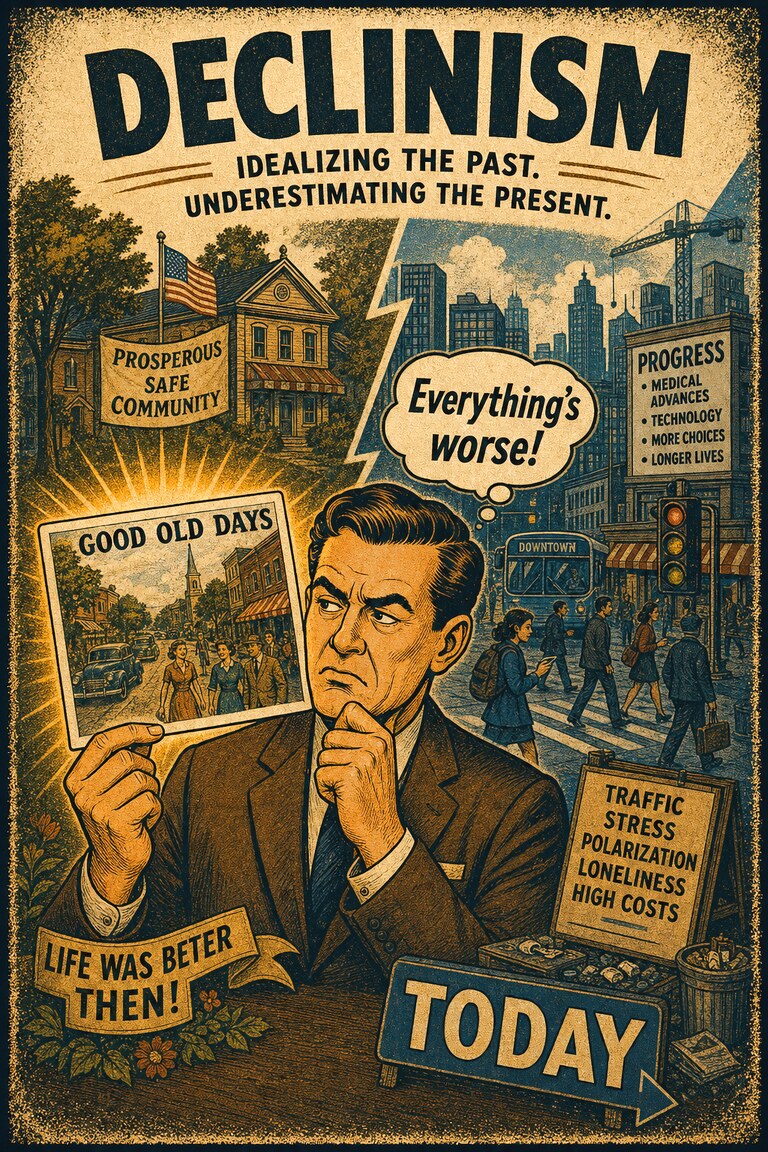
The predisposition to view the past favorably and the future unfavorably.

The tendency of people to remember past experiences favorably while overlooking bad experiences associated with them.
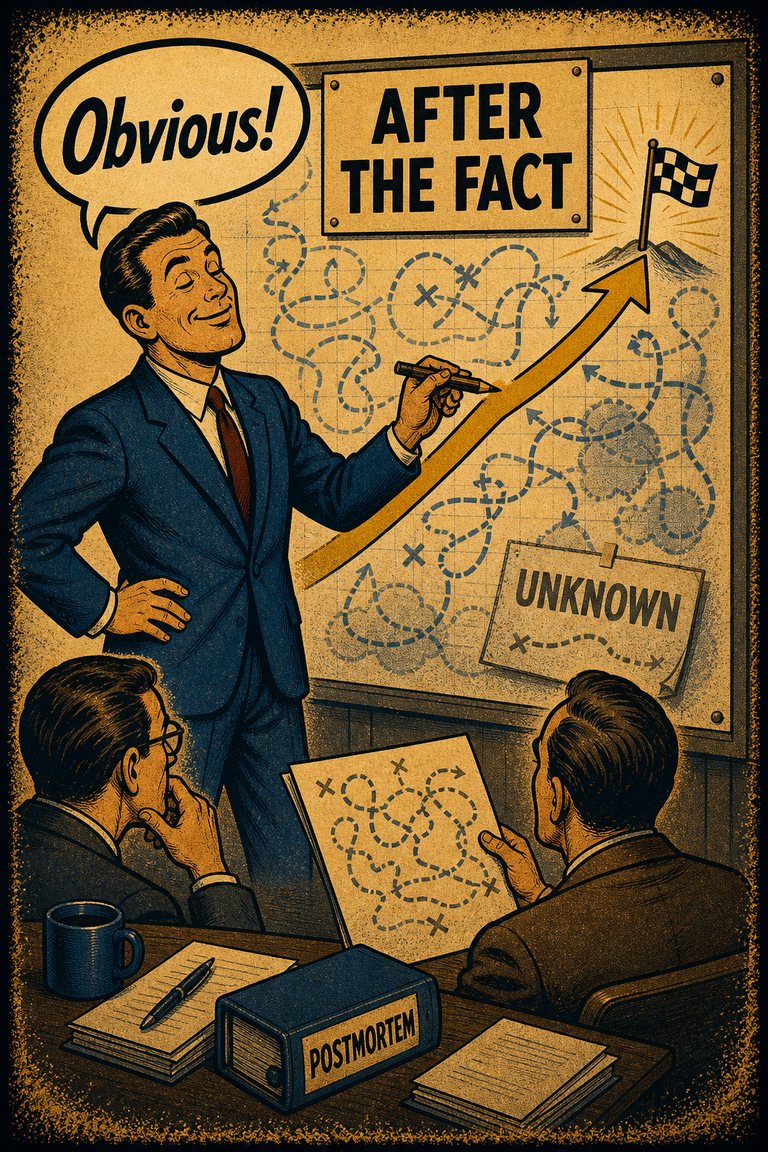
The tendency after an outcome is known, to see it as having been more obvious or predictable than it actually was beforehand.

The illusion that a phenomenon one has noticed only recently is itself recent.

The remembering of the past as having been better than it really was.

The tendency of perception to be affected by recurring thoughts.