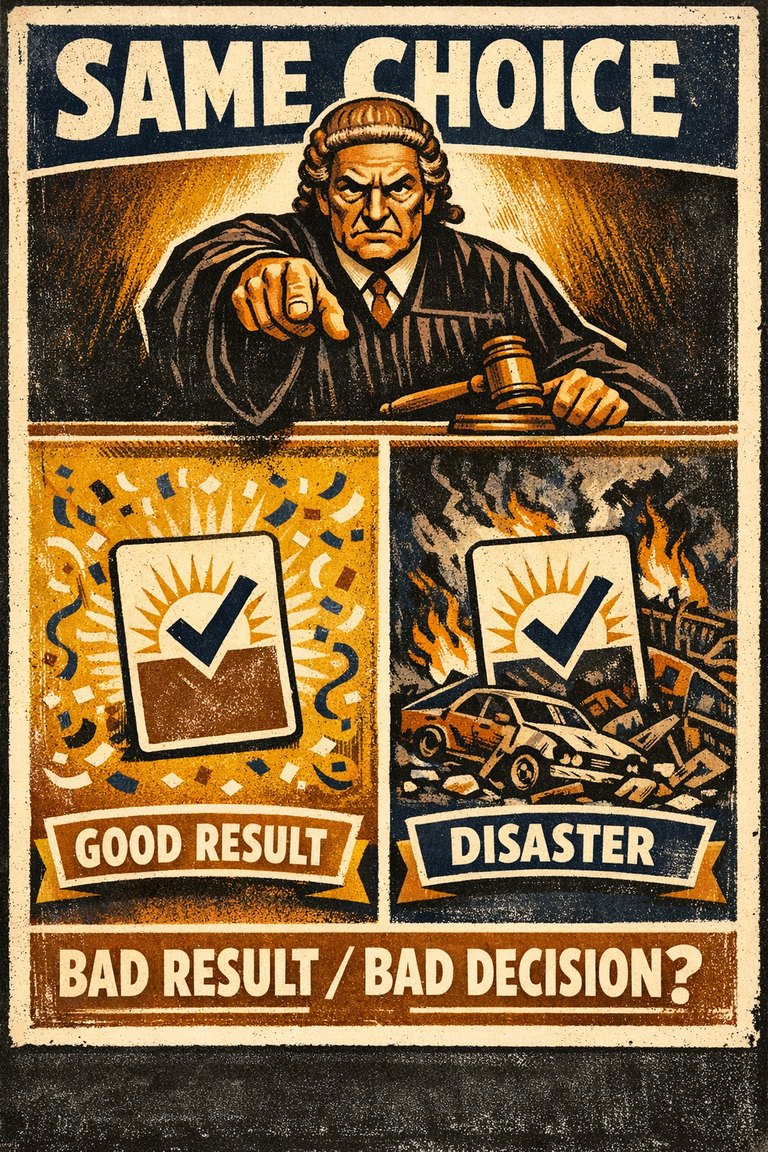
Outcome bias
The tendency to judge a decision mainly by its result rather than by the quality of the reasoning behind it.
EstimationOutcomePostmortems & learningTeams & management

Cognitive Biases
A practical cognitive-bias site with clear definitions, learning paths, assessments, self-audits, and debiasing tools.
Theory Article
A theory essay on why favorable outcomes and tidy moral stories often make weak reasoning look stronger after the fact than it was under uncertainty.
Once the ending is known, evaluation gets easier to fake. A good result can make the original process feel wiser than it was, while a neat moral narrative can make an unfair event feel more deserved than the evidence warrants.
Outcome bias shows how endings overpower process review. Belief bias shows how pleasing conclusions can flatter the path that led there. Just-world thinking shows how explanatory comfort can restore moral order even when the facts are less tidy.
In each case, the later story starts grading the earlier reasoning.
Concrete endings, coherent morals, and believable conclusions all reduce ambiguity. They make the world feel easier to read. That reduction in ambiguity is emotionally rewarding, which is why people so readily mistake it for evidence of explanatory strength.
The danger is not only academic. Postmortems, blame assignment, and institutional learning all get corrupted when endings are allowed to rewrite how the earlier judgment is remembered.
Good review keeps process and ending visible as distinct objects. It asks what was reasonable before the result, what evidence structure actually supported the claim, and which parts of the later story are serving comfort more than truth.
That discipline is one of the clearest ways a teaching site can help institutions think better rather than merely narrate better.
Use these entry pages after the article if you want the same theory translated into more concrete diagnostic and repair tools.
The tendency to judge a decision mainly by its result rather than by the quality of the reasoning behind it.
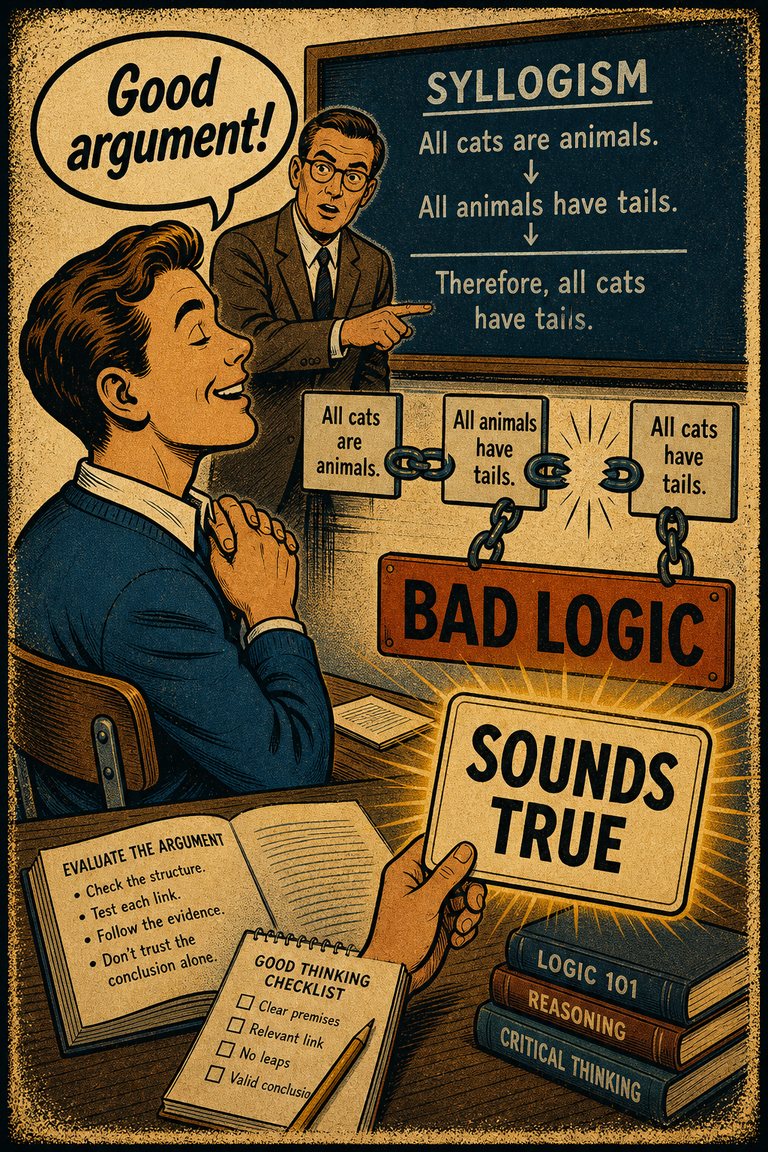
The tendency to judge an argument as stronger when its conclusion seems believable and weaker when its conclusion seems unbelievable, even if the reasoning structure is unchanged.
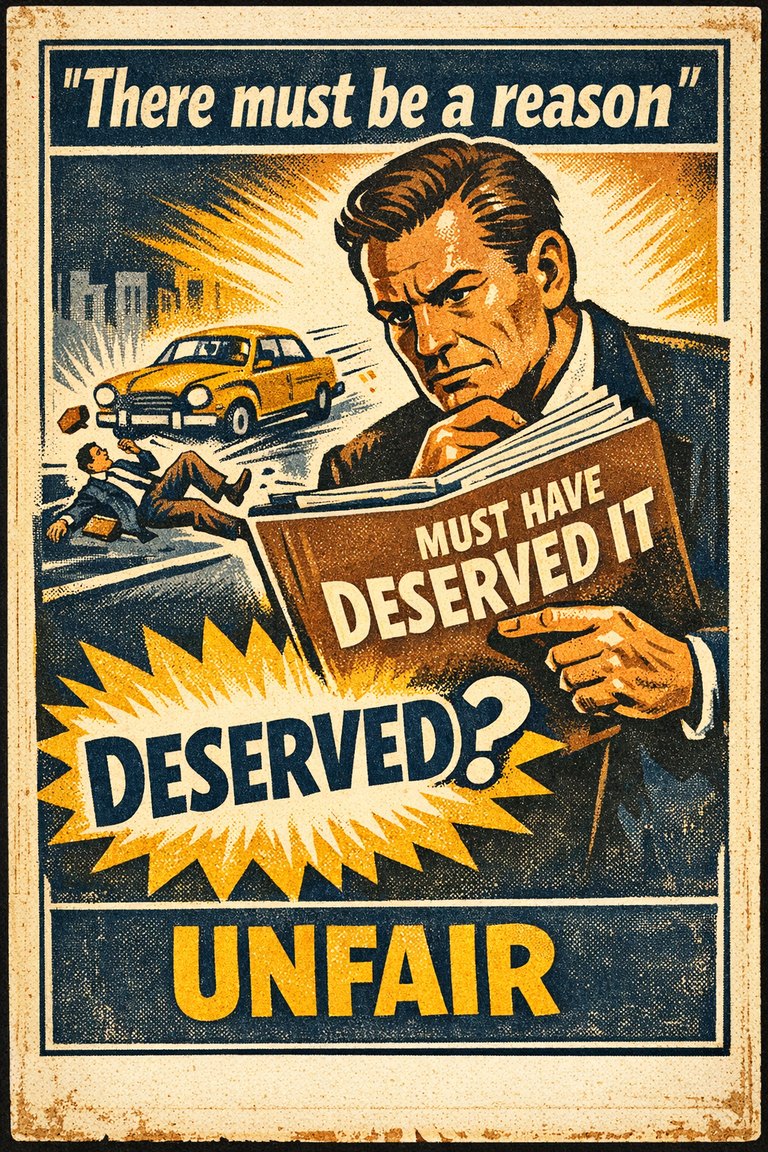
The tendency to assume that people usually get what they deserve, which encourages reinterpretation of suffering, injustice, or bad luck as somehow earned.
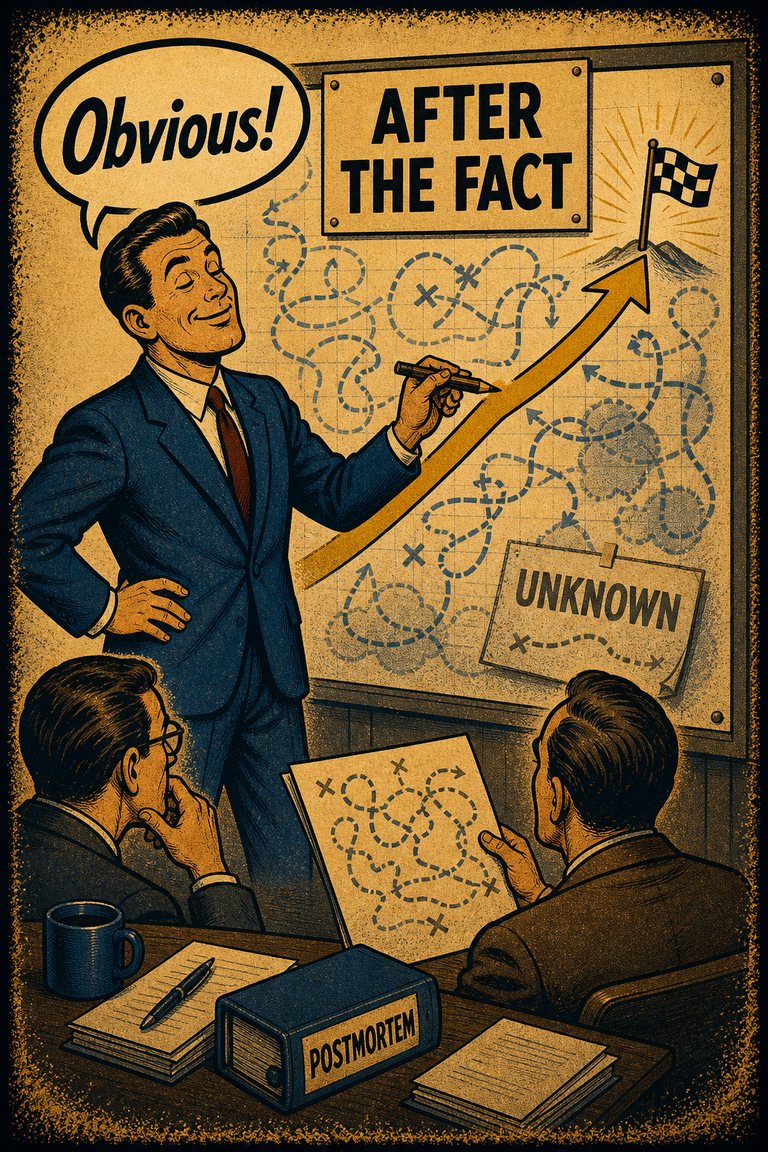
The tendency after an outcome is known, to see it as having been more obvious or predictable than it actually was beforehand.
The tendency to be more certain about judgments, forecasts, or abilities than the evidence warrants.