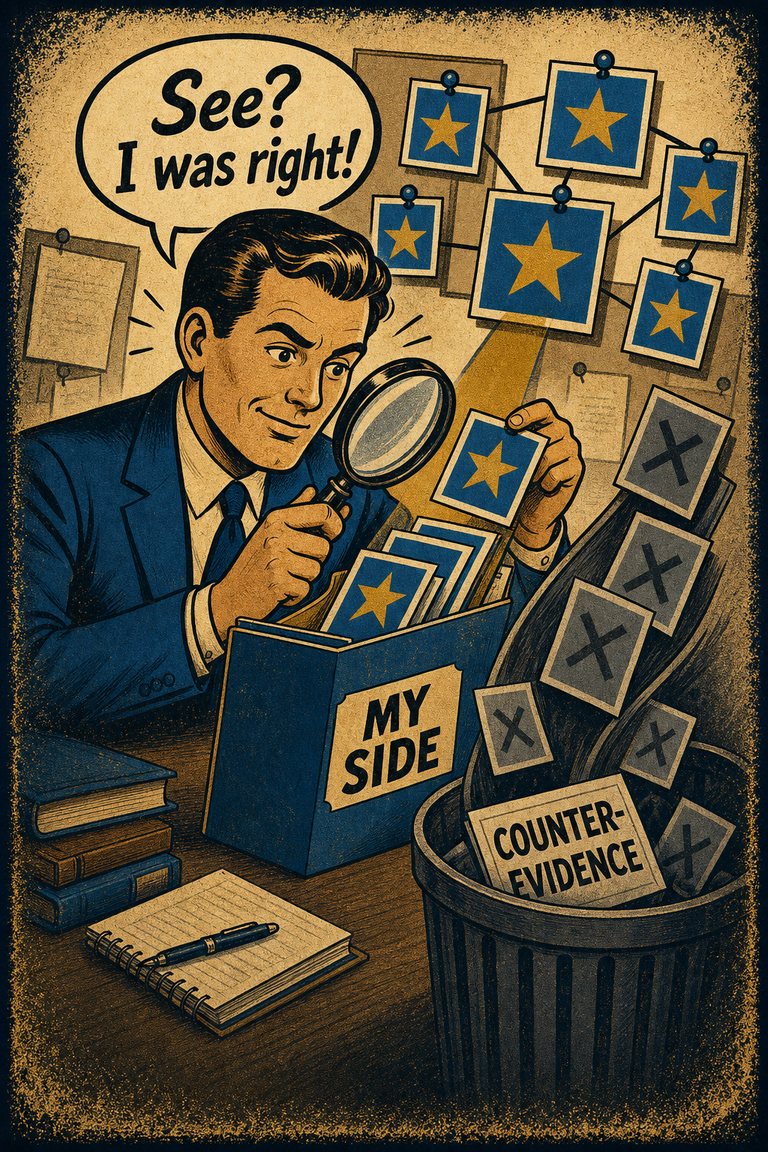
Confirmation bias
The tendency to notice, seek, and remember evidence that supports the story you already prefer more readily than evidence that threatens it.
Hypothesis AssessmentOutcomeMedia & politicsResearch & evidence

Cognitive Biases
A practical cognitive-bias site with clear definitions, learning paths, assessments, self-audits, and debiasing tools.
Theory Article
A practical article on why cognitive biases often shape what feels plausible before anyone states a neat argument aloud.
Logical fallacies often become easiest to observe once a claim is already being defended in public form. Cognitive biases usually begin earlier, in attention, memory, salience, attribution, and self-protective interpretation. That earlier timing changes what a teaching site has to do.
By the time a public argument arrives, much of the cognitive steering may already be over. A person may have retrieved only one class of examples, flattened the uncertainty around an outcome, or interpreted a social cue through a threat lens before the reasoning is ever verbalized cleanly.
That is one reason a bias site cannot simply imitate a fallacy list. It has to ask different diagnostic questions. What felt normal? What was easiest to remember? What perspective quietly became invisible because it was my own?
If biases act early, then a site has to teach earlier interventions. The useful move is often not a label shouted at the end of a conversation. It is a pause, a comparison, a rival hypothesis, a reference class, or a better meeting rule inserted before the judgment hardens.
This is why CogBias gives so much space to paths, self-checks, and process repair. The label matters, but the timing of the label matters even more.
A strong bias page should not merely say what the distortion is. It should show the trigger, the felt certainty, the resulting warp, and the interruption point. That teaching sequence is more faithful to the object being taught.
In that sense, CogBias tries to catch the drift earlier: at the point where attention, memory, and interpretation first start to bend.
Use these entry pages after the article if you want the same theory translated into more concrete diagnostic and repair tools.
The tendency to notice, seek, and remember evidence that supports the story you already prefer more readily than evidence that threatens it.
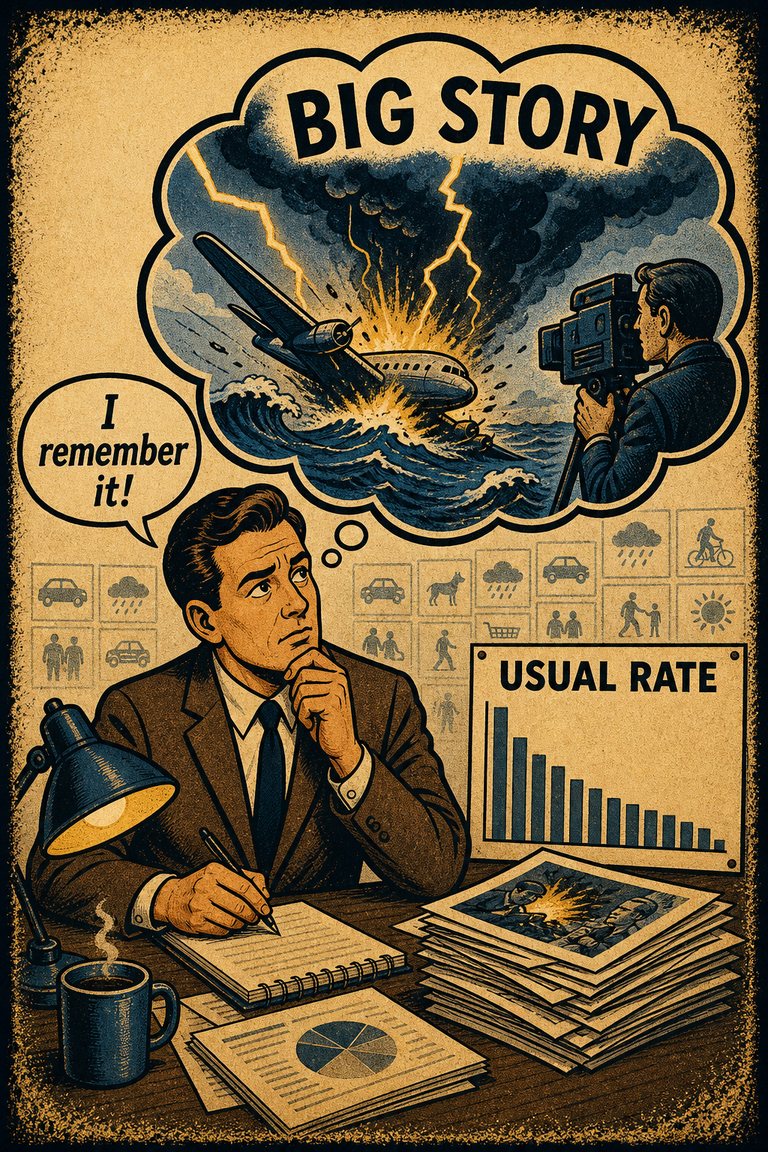
The tendency to judge frequency, risk, or importance by how easily examples come to mind.

The tendency to see one's own view as plain reality and disagreement as ignorance, bias, or irrationality.
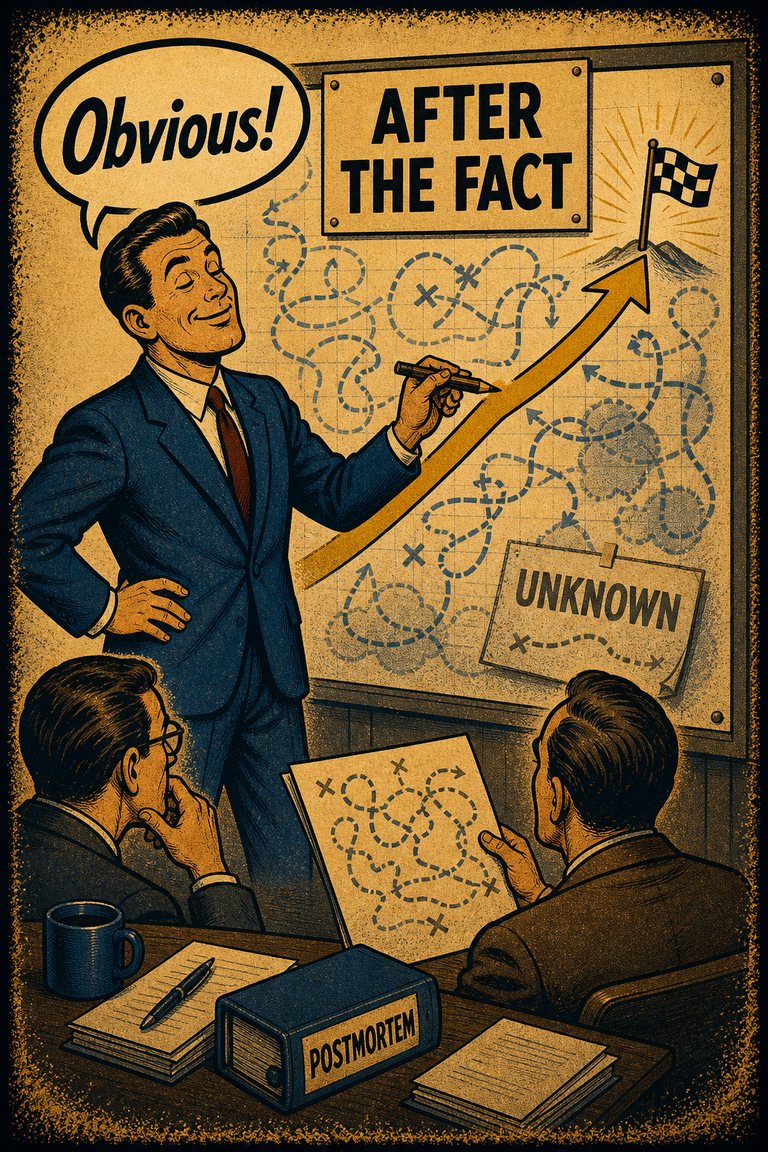
The tendency after an outcome is known, to see it as having been more obvious or predictable than it actually was beforehand.