Availability heuristic
Core pattern
Judgment uses mental availability as a shortcut for likelihood or frequency.
Ask: Is the example memorable, recent, emotional, or heavily covered?

Cognitive Biases
A practical cognitive-bias site with clear definitions, learning paths, assessments, self-audits, and debiasing tools.
Compare Biases
Availability mistakes ease of recall for prevalence; frequency illusion makes newly noticed things seem suddenly common.
Availability heuristic
Judgment uses mental availability as a shortcut for likelihood or frequency.
Ask: Is the example memorable, recent, emotional, or heavily covered?
Frequency illusion
After noticing something, people start detecting it everywhere and infer that it has become more frequent.
Ask: Did attention change before the perceived frequency changed?
Both make something feel common because it is mentally easy to notice or retrieve.
Ask whether the item is easy to recall because it is vivid, or newly salient because attention has been tuned to it.
Use these before deciding which label should carry the lesson.
Was the case already salient because it was vivid or emotionally loaded?
Did a new label, purchase, diagnosis, or conversation tune attention to the pattern?
What baseline count would distinguish real increase from noticing increase?
The same surface area can point to different underlying mechanisms.
After dramatic plane-crash coverage, flying feels more dangerous.
Why: Vivid recall is being used as a risk estimate.
After learning a new term, a student starts seeing it everywhere.
Why: Attention changed, making instances easier to notice.
Repair Move
Count occurrences against a baseline period before deciding whether prevalence changed.
Use the comparison as a bridge into the fuller pages.
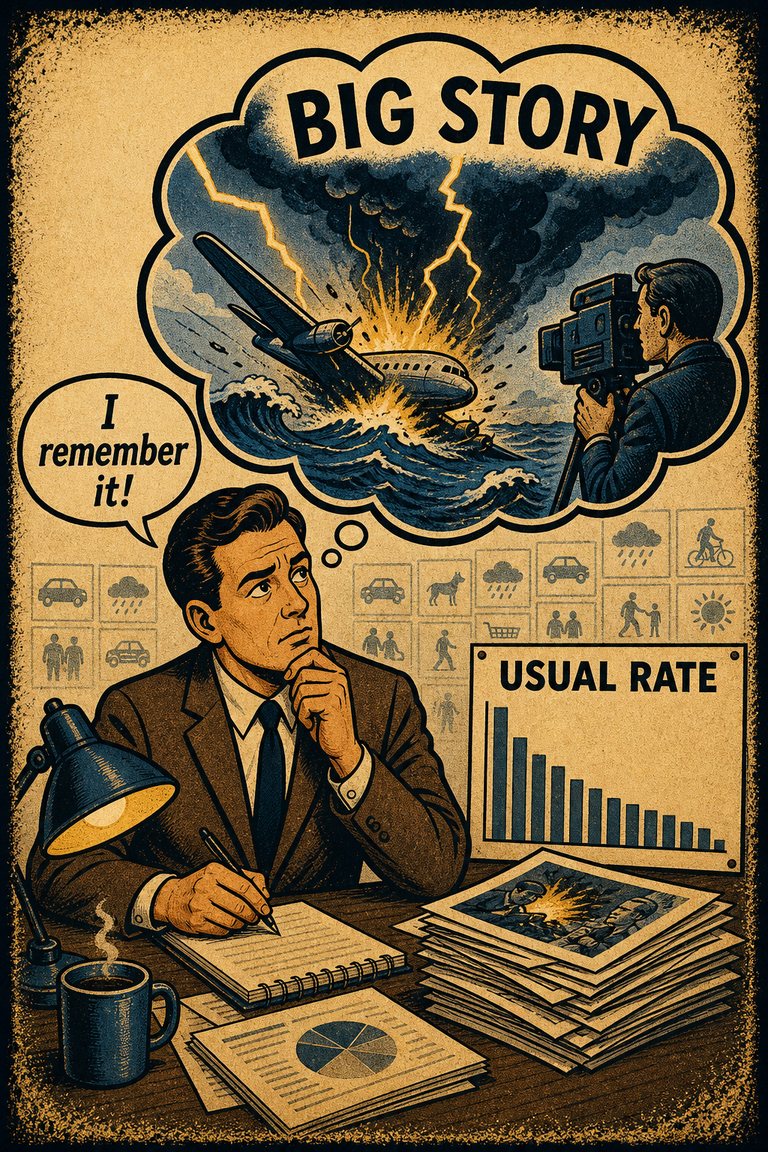
The tendency to judge frequency, risk, or importance by how easily examples come to mind.

The tendency to notice something once and then feel as if it is suddenly everywhere.